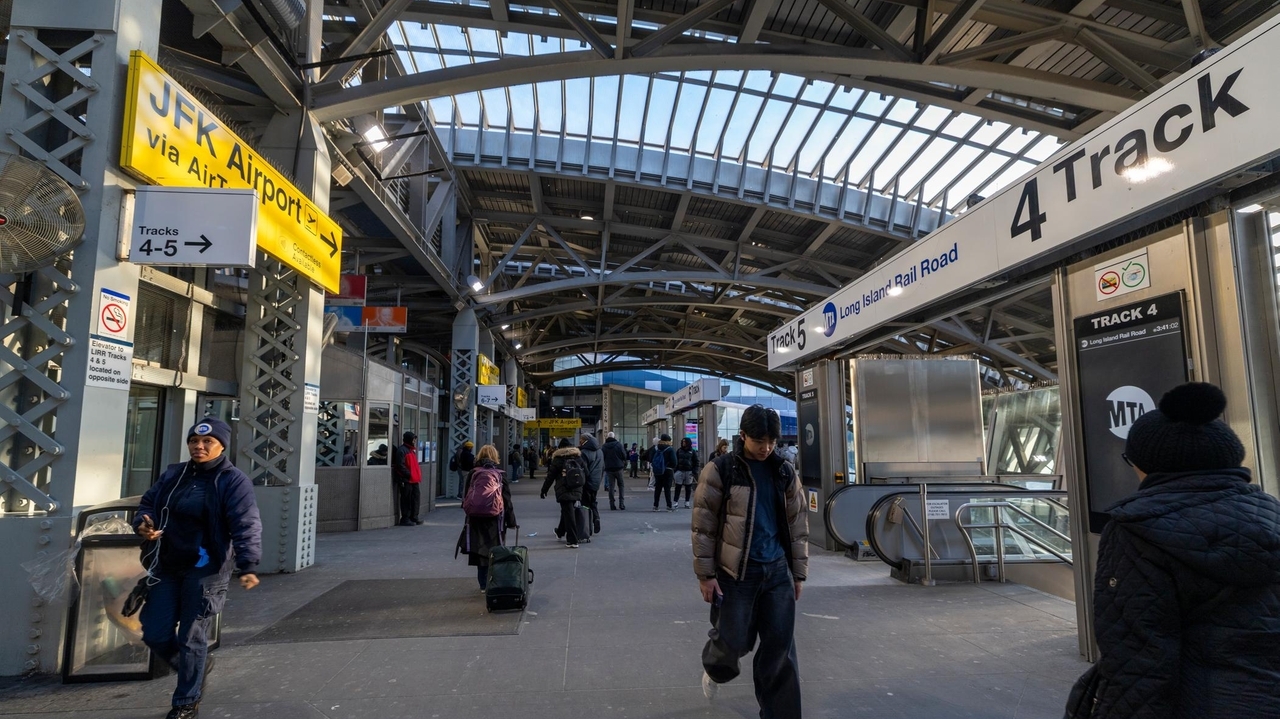
Governor Kathy Hochul will propose $50 million to design a comprehensive redesign of Jamaica Station, the 113‑year‑old, 10‑track LIRR transfer hub and the fourth‑busiest commuter rail station in North America, to reduce crowding and improve connections to the subway and JFK AirTrain. The announcement, slated for her State of the State address, complements MTA and Port Authority coordination and recent capital works — including a completed $169 million Hall Interlocking bridge and a separate half‑billion‑dollar reconfiguration effort — and implies future procurement and construction spending opportunities even though timelines and revenue implications remain unspecified.
Market structure: The $50M design allocation is small but high-signal—it prioritizes Jamaica as a politically backed gateway and likely seeds follow‑on CAPEX in the high hundreds of millions to low billions over 3–7 years. Direct beneficiaries are engineering/AE firms (AECOM ACEM? / Jacobs J), heavy-aggregate suppliers (MLM, VMC) and NYC-focused REITs with transit-oriented assets (SLG, VNO); losers are localized auto/parking providers and any operators exposed to short-term commuter disruption. Expect modest upward pricing power for materials (+5–15% realizations regionally) and incremental muni issuance in NY over 12–36 months.
Risk assessment: Tail risks include state budget reversal, procurement litigation, labor strikes, and classic megaproject cost overruns (20–100%+), which could push timelines to 5–10 years. Immediate impact is negligible (days), short-term (weeks–months) is RFP and award visibility, long-term (years) is contract revenues and urban real estate revaluation. Hidden dependencies: Port Authority coordination, federal grant approvals, and MTA’s separate $0.5B reconfiguration program; each is a gate for execution. Catalysts: state budget inclusion (30–60 days), RFP publication (3–6 months), federal infrastructure disbursements (6–18 months).
Trade implications: Favor idiosyncratic engineering and materials exposure via equity (J, ACM, MLM, VMC) and selective NYC REITs (SLG, VNO) on a 12–36 month horizon; muni bonds tied to NY projects may cheapen—buy if 3–5yr spread widens >50bp vs Treasuries. Use option call spreads (6–12 months) to capture contract-announce upside while capping downside; avoid large directional bets until RFPs are released.
Contrarian angles: Markets may underprice political stickiness—design funding rarely dies without broad stakeholder support, so the common view that $50M is immaterial is likely underdone. Historical parallels (East Side Access, Moynihan) warn of multi-year delivery and >50% cost overshoot; therefore ladder exposure and stage commitments to RFP/capital award milestones to avoid getting caught in overruns. Near-term construction may depress retail foot traffic—short-term pain for medium-term value.
AI-powered research, real-time alerts, and portfolio analytics for institutional investors.
Request DemoOverall Sentiment
neutral
Sentiment Score
0.05
