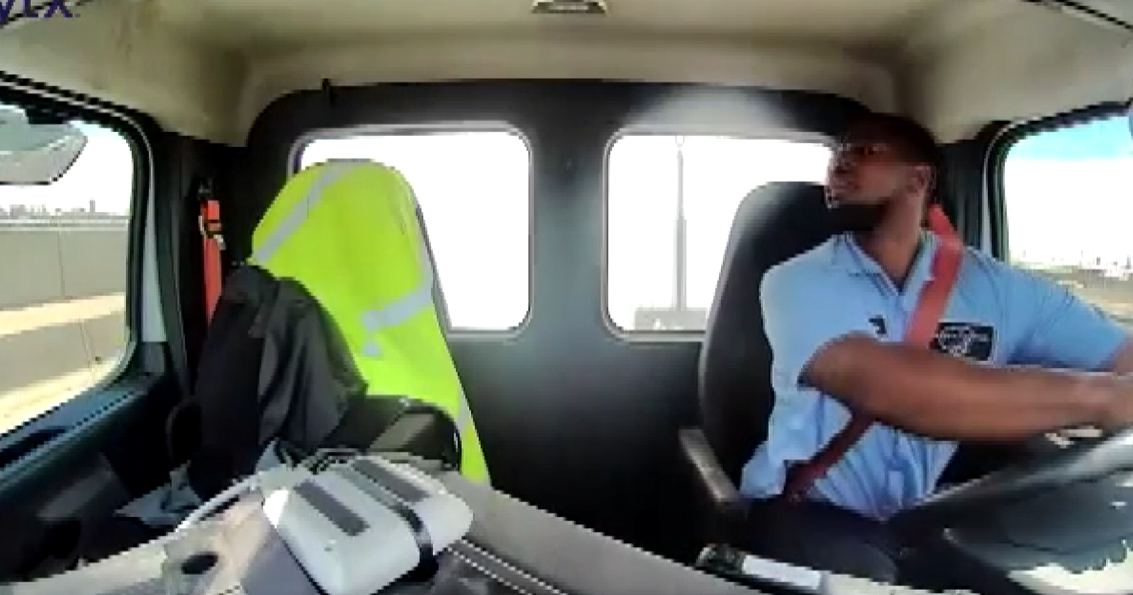
A United Airlines Boeing 767 flying Flight UA169 from Venice, Italy, clipped a Baltimore bakery truck and a light pole while attempting to land at Newark Liberty International Airport, injuring the driver and prompting an NTSB investigation. The truck driver suffered glass-related injuries and is recovering at home, while officials said the aircraft carried 221 passengers and 10 crew members. The incident appears isolated and safety-related, with limited direct market impact outside aviation and logistics.
This is less a one-off transportation mishap than a high-salience operational incident that raises the perceived probability of systemic airport-adjacent risk at Newark. The immediate market impact is concentrated in the “trust premium” for carriers operating into constrained, weather-sensitive, and procedurally complex airports: even if the root cause is narrow, passengers, shippers, and regulators tend to extrapolate from vivid tail events. That usually shows up first in higher insurance scrutiny, more aggressive maintenance/inspection protocols, and incremental schedule padding rather than a durable demand shock. The second-order risk is cost inflation, not revenue loss. If this evolves into a broader review of approach paths, ATC procedures, or airport perimeter safety, carriers with meaningful Newark exposure could see modest but real unit-cost pressure from re-routing, delays, crew utilization inefficiency, and buffer time in schedules. The larger beneficiaries may be airports and aircraft less exposed to constrained final approaches, while ground logistics operators around the corridor could face more scrutiny on road access, staging, and security protocols. Consensus will likely overestimate the earnings impact and underestimate the legal/regulatory overhang. Civil liability here is probably manageable in isolation, but the headline risk can trigger discovery requests, document preservation, and follow-on claims around operating standards; that can keep a name in the news for months even if direct damages are limited. The bigger catalyst is the NTSB finding: if it points to procedural or infrastructure issues rather than a singular mechanical event, this could extend into a multi-quarter negative narrative for any carrier concentrated at similar airports. Contrarian view: the selloff risk in the most visible airline names may be transient because the event is emotionally extreme but economically narrow. The cleaner trade is not a blanket short airlines, but selective hedges against operators with above-average exposure to Newark-style operational bottlenecks and legal sensitivity, while fading any overreaction in broader transport or logistics names that are not directly implicated.
AI-powered research, real-time alerts, and portfolio analytics for institutional investors.
Request DemoOverall Sentiment
mildly negative
Sentiment Score
-0.20
