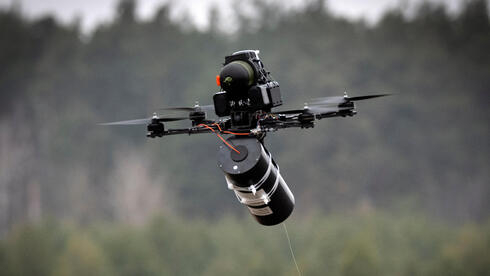
Hezbollah’s use of explosive FPV and fiber-optic drones is inflicting injuries on IDF forces in southern Lebanon, exposing a defense gap that Israeli units had warned about for years. The article says red teams had already simulated attacks on armored vehicles, posts, and even rescue helicopters, but their recommendations were not adopted. The IDF is now improvising short-term countermeasures, including jamming, GPS disruption, shotgun defenses, and faster mobility tactics, while working toward a broader solution.
The market implication is not just higher battlefield lethality; it is a forced re-pricing of the entire counter-UAS stack from niche to must-have. The first beneficiaries are not the obvious primes alone, but the mid-cap layer of EW, RF sensing, thermal optics, short-range intercept, and ruggedized comms that can be procured and fielded in weeks rather than years. Expect procurement to shift from “system-of-record” programs toward layered point solutions, which favors vendors with deployable COTS hardware and software integration over platform-heavy incumbents. Second-order effects matter more than headline drone attrition. A sustained FPV threat reduces the utility of armored concentration, logistics convoys, exposed repair depots, and helicopter medevac profiles, which raises operating friction and casualty sensitivity over months, not days. That tends to slow ground tempo and increase demand for expendables: drone jammers, decoys, anti-drone munitions, spare sensors, and hardened shelters. It also creates a budgetary crowd-out effect where legacy armor upgrades and some manned aviation modernization get deferred in favor of immediate base-defense and EW spend. The contrarian read is that this is not a clean “buy all defense” signal; it is a timing signal. The biggest opportunity is in names with near-term order conversion and backlog acceleration, while large programs tied to slower acquisition cycles may see less immediate benefit than investors expect. Tail risk is policy inertia: if procurement remains fragmented, demand can stay tactical and episodic, causing a gap between perceived urgency and revenue realization over the next 1-2 quarters. For broader markets, the lesson is that low-cost drone warfare compresses the advantage of capital-intensive platforms and elevates software-defined defense. That should be bullish for companies that can monetize detection, electronic warfare, and autonomous countermeasure integration, and bearish for pure-play vehicle/airframe narratives that assume survivability can be bolted on later. The key catalyst is any visible emergency procurement package or field deployment data showing one vendor’s system meaningfully reduces losses; that can re-rate the space in days.
AI-powered research, real-time alerts, and portfolio analytics for institutional investors.
Request DemoOverall Sentiment
strongly negative
Sentiment Score
-0.55
