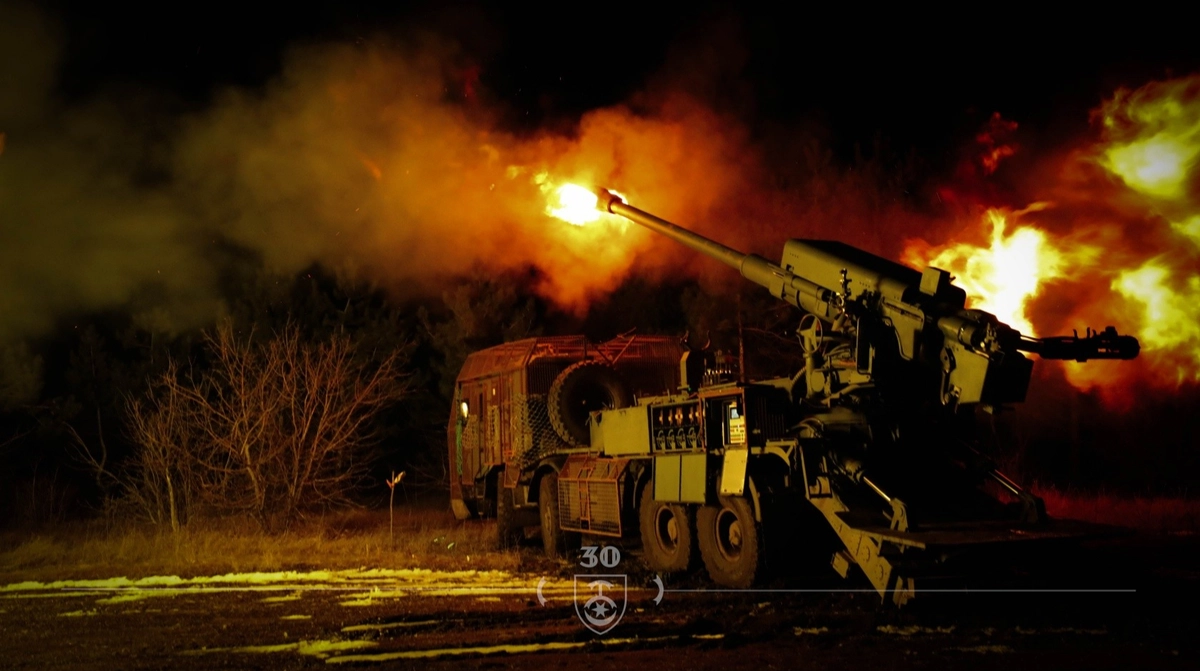
Key number: Ukrainian Commander-in-Chief reports Russian losses of ~6,090 killed/wounded over four days (17-20 Mar 2026) and ~8,710 killed/seriously wounded over the week. The enemy conducted 619 assault actions in four days, with heaviest attack counts on Pokrovsk (163) and Oleksandrivka (96) fronts; Kostiantynivka saw 84 assaults and >150 engagements across Ocheretyno, Lyman and Kupiansk. Ukrainian forces say they halted major advances, destroyed significant Russian equipment, received reinforcements and expect the foe to regroup and attempt renewed attacks relying on worsening weather to blunt Ukrainian aerial/drone reconnaissance.
The immediate operational consequence is a step-function increase in munitions and ISR consumption: persistent high-intensity fighting materially accelerates artillery, precision-guided, and loitering-munition burn-rates, creating a 1–3 month supply squeeze for NATO-provided stocks and an urgent procurement window for sovereign customers. Replenishment lead times for large-caliber artillery shells, missile components and advanced sensors are measured in quarters, not weeks, meaning defense contractors with existing inventory or rapid production lines will capture outsized revenue in the next 3–12 months.
Logistics and industrial capacity are the second-order bottlenecks. Firms with vertically integrated ammunition plants (vs those that rely on tiered subcontractors) will see margin expansion as premiums for expedited deliveries grow; conversely, platform-centric primes face a lag between defence budget commitments and meaningful revenue — their near-term multiple expansion is more sentiment-driven than cash-flow backed. Expect European munitions specialists to win EU-led emergency tenders while US-based chemical/munitions producers see order flow from NATO stock replenishments.
Key catalysts: tranche-tied Western assistance announcements (days–weeks) create discrete revenue inflection points for suppliers; public contract awards (weeks–months) re-rate small-cap vendors quickly. Reversals can happen if weather or operational pauses blunt demand, or if Western political fatigue slows funding — those are 1–6 month tail risks that would unwind the immediate procurement premium.
The consensus playbook (buy big primes) underestimates the arbitrage between consumables and platforms. The mispricing window is tactical — 3–12 months — and favors suppliers that can ship now rather than firms whose revenues depend on multi-year procurement cycles.
AI-powered research, real-time alerts, and portfolio analytics for institutional investors.
Request DemoOverall Sentiment
mildly positive
Sentiment Score
0.25
