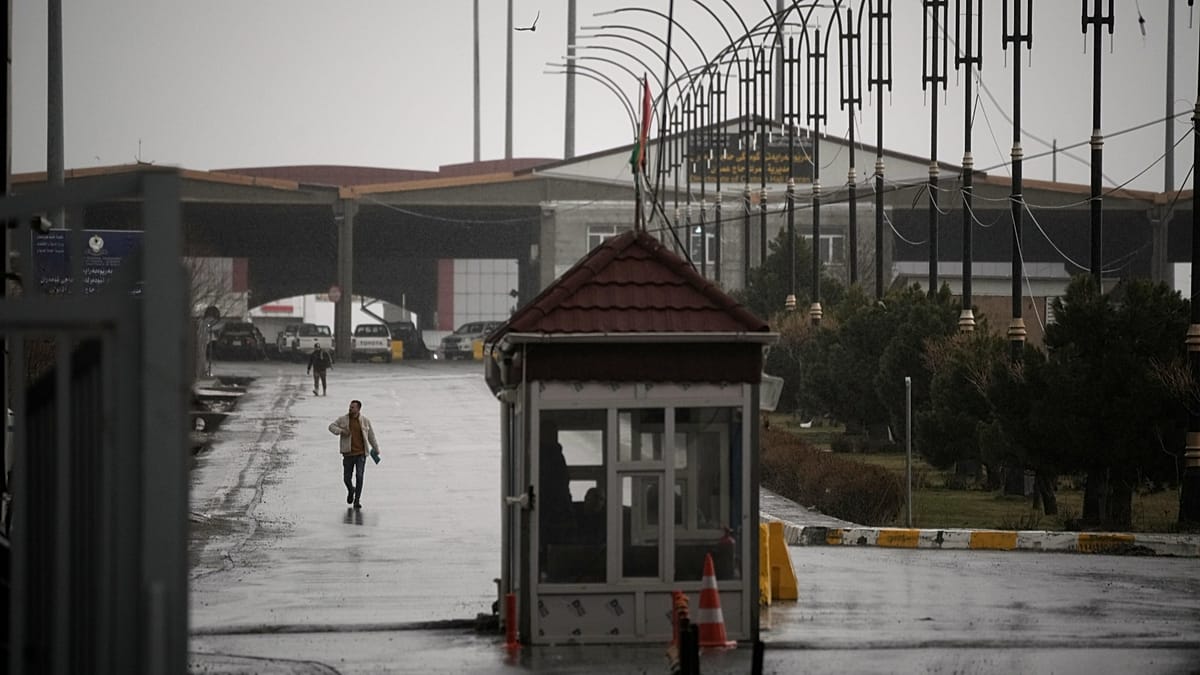
Iran's months-long internet blackout is forcing border-area residents to travel to Iraq for connectivity, with Iraqi SIM cards, improvised hotspots, and smuggled Starlink devices becoming essential workarounds. Authorities raided one access point, arresting more than 50 people and leaving around 10 in custody, while also criminalizing VPNs and Starlink use. The shutdown is inflicting major economic damage, with domestic estimates of $30 million to $40 million in daily losses and 10 million people dependent on stable digital communications for work.
The key market implication is not the blackout itself, but the normalization of a two-tier digital economy: a heavily restricted domestic network for the mass market and a scarce, semi-legal connectivity channel for export-oriented firms, traders, and politically connected users. That tends to widen the productivity gap inside the country, accelerate informalization of commerce, and further punish any business model reliant on real-time coordination, payments, customer acquisition, or cross-border logistics. The second-order effect is a more durable earnings hit than a simple one-time outage because firms will spend more on workarounds while still operating below capacity.
From a regional perspective, border-adjacent telecom leakage becomes a small but persistent profit pool for Iraqi operators and device/channel intermediaries, while domestic Iranian incumbents face a structurally damaged addressable market and higher political scrutiny. The more interesting wedge is cybersecurity and surveillance demand: when states clamp down on circumvention, they usually increase spending on packet inspection, identity mapping, and network controls, benefiting vendors with lawful intercept, monitoring, and digital identity exposure in adjacent geographies. That spending can persist even if the blackout eases, because the state has created an internal constituency for tighter control.
The main catalyst risk is a policy reversal driven by economic pain rather than liberalization; that would likely be partial and uneven, allowing privileged access first while keeping broad restrictions in place. In the near term, the crackdown increases tail risk of escalation at border zones, including detentions or seizure of devices, which discourages commerce and travel and can suppress local economic activity for months. The contrarian view is that the market may be underestimating how quickly users and merchants adapt: if alternative connectivity channels remain cheap enough, some lost activity reappears in gray-market form, limiting the downside to the most affected sectors while still enriching the middlemen.
AI-powered research, real-time alerts, and portfolio analytics for institutional investors.
Request DemoOverall Sentiment
strongly negative
Sentiment Score
-0.72
