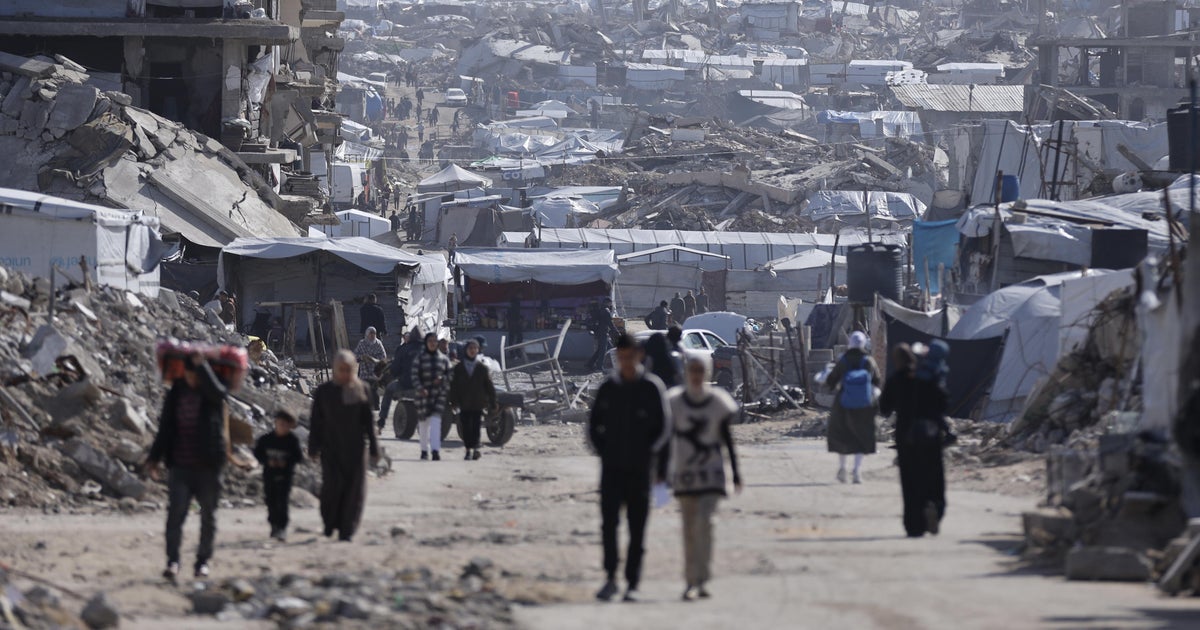
U.S.-brokered talks have moved to phase two of a Gaza ceasefire plan after Israel recovered the last abductee, with key next steps centered on reopening the Rafah crossing, deploying an international security force, and Hamas disarmament. Implementation remains highly uncertain: Israel conditions Rafah reopening on full compliance, Netanyahu emphasizes demilitarization over reconstruction, while U.S. officials press for disarmament — with talk of amnesty — and humanitarian agencies report prepositioned supplies awaiting border access. The dispute over sequencing and enforcement of the deal, plus continued high casualty counts (about 1,200 Israelis killed in the Oct. 7 attack and 71,000+ Palestinians reported dead by Gaza health authorities), leaves regional stability and logistics flows subject to continued risk and potential short-term disruption.
Market structure: The immediate winners are defense primes (LMT, NOC, RTX) and logistics/freight providers servicing redirected aid flows; losers are regional travel/tourism and Israeli equity exposure (EIS) in the near term. A backlog of supplies in Egypt implies a sharp, front-loaded bump in demand for trucking, fuel and construction inputs once Rafah opens — expect regional diesel/fuel demand to rise transiently +5–10% in the first 2–6 weeks. Cross-asset: safe-haven bids for USD (UUP) and gold (GLD) should strengthen on headline risk, while Brent/WTI will be the primary swing for risk assets (±5–15% on escalation).
Risk assessment: Tail risks include ceasefire collapse or spillover to Sinai/Lebanon (low-probability, high-impact) which could add $5–15/bbl to oil in days and widen EM funding spreads by 100–300bp. Time horizons: immediate (days) = volatility spikes and FX/gold moves; short (weeks–months) = earnings revisions for defense/logistics; long (12–36 months) = reconstruction capex if political constraints lift. Hidden dependencies: Egyptian government control of Rafah and U.S. leverage over Israeli concessions; failure to deploy an international force is a major single-point risk.
Trade implications: Favor tactical long positions in LMT/NOC/RTX sized 2–3% each for a 3–6 month horizon, paired with a 1–2% long GLD and 1% UUP hedge. Use options to express oil volatility: buy a 3-month straddle or call spread on USO sized to risk <1% NAV or buy VIX call spreads (30–60 day) as tail hedges. Reduce exposure to EIS by ~30% and hedge remaining Israel equity exposure with 3-month puts (20–25% OTM).
Contrarian angles: Markets may be pricing in rapid reconstruction; Netanyahu’s public rejection of reconstruction as the “next phase” suggests that construction/materials names (VMC, MLM) are prematurely exposed and could underperform for quarters — avoid or short into strength. Also, if disarmament proceeds and an international force stabilizes Gaza, defense revenue growth could revert to mean within 6–12 months, so keep defense positions staggered and size-capped at 2–3% to avoid medium-term headwinds from political normalization.
AI-powered research, real-time alerts, and portfolio analytics for institutional investors.
Request DemoOverall Sentiment
moderately negative
Sentiment Score
-0.45
