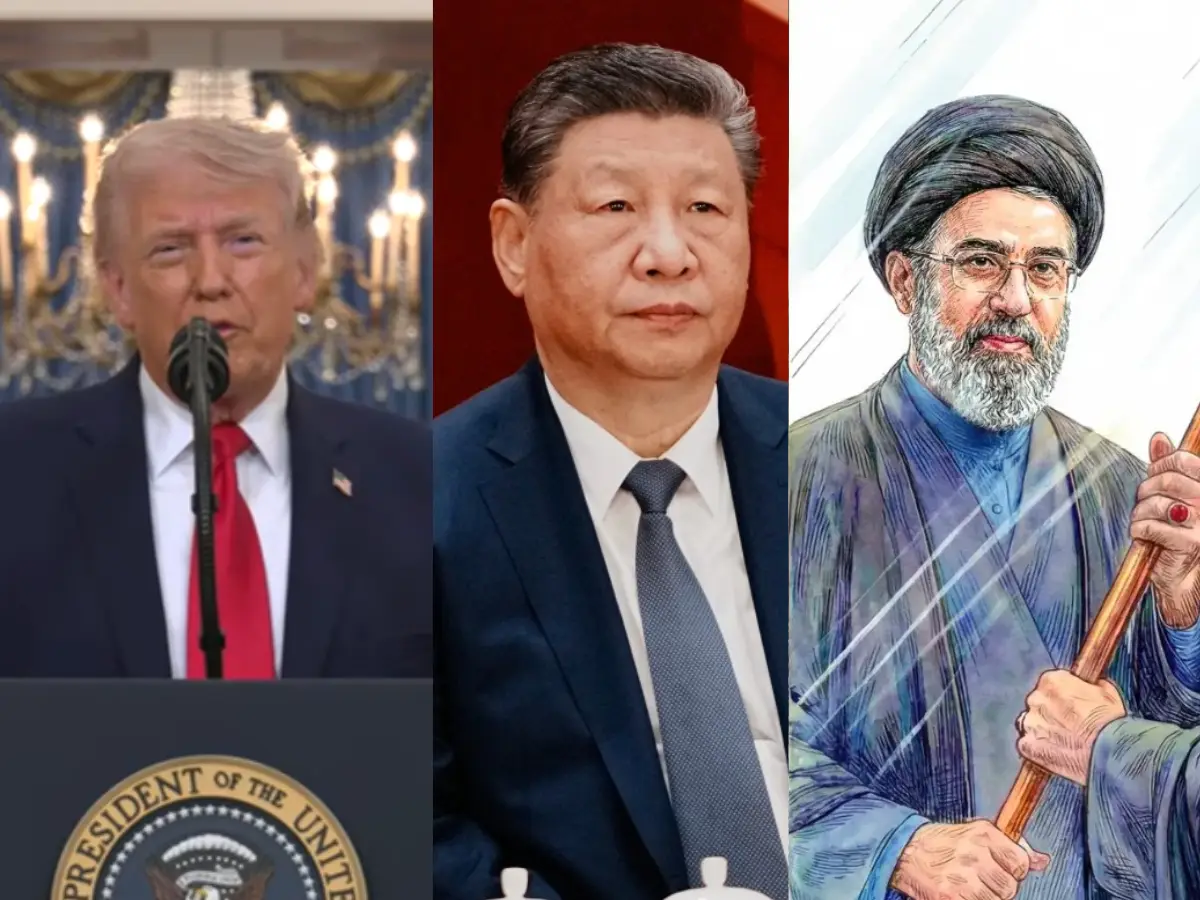
US–Iran tensions remain elevated as Donald Trump warned China it would have "big problems" if it ships weapons to Iran during the ceasefire. US intelligence reportedly indicates Beijing may be preparing to deliver air defense systems to Iran within weeks, potentially routed through third countries. The article also highlights a fragile diplomatic backdrop ahead of Trump’s May 14–15 trip to Beijing, where trade and geopolitical tensions are likely to dominate talks.
This is less about the immediate ceasefire headlines than about the probability of a rolling, sanctions-dodging rearmament cycle. If China is even partially successful in routing air-defense systems through intermediaries, the market should expect a widening gap between declared diplomacy and actual military replenishment, which tends to extend conflict optionality rather than reduce it. That raises the value of supply-chain opacity: freight forwarding, dual-use electronics, and third-country transshipment hubs become higher-risk nodes, while Western exporters with indirect China exposure face a higher compliance discount.
The second-order market effect is not a broad risk-off move; it is a dispersion trade across defense and industrials. Near term, US and allied missile defense, ISR, and EW suppliers can see incremental budget urgency, while commercial aerospace and shipping names with Greater China exposure may face a multiple headwind if the White House decides to broaden enforcement beyond rhetoric. The key catalyst is the May Trump-Xi meeting: if it becomes a venue for backchannel de-escalation, defense outperformance could fade quickly; if it hardens into a public accusation cycle, sanctions risk on China-linked supply chains rises over weeks, not days.
The contrarian point is that Beijing may be trying to preserve leverage, not escalate toward direct confrontation. China’s incentive is to look indispensable as a peace broker while quietly retaining strategic influence over Tehran, which means headline tensions can coexist with muted actual enforcement. That argues against chasing the strongest geopolitical beta too early; the cleaner trade is around companies that benefit from persistent rearmament uncertainty and elevated air-defense demand, not a one-off spike in oil or broad market hedges.
AI-powered research, real-time alerts, and portfolio analytics for institutional investors.
Request DemoOverall Sentiment
mildly negative
Sentiment Score
-0.25
Ticker Sentiment
