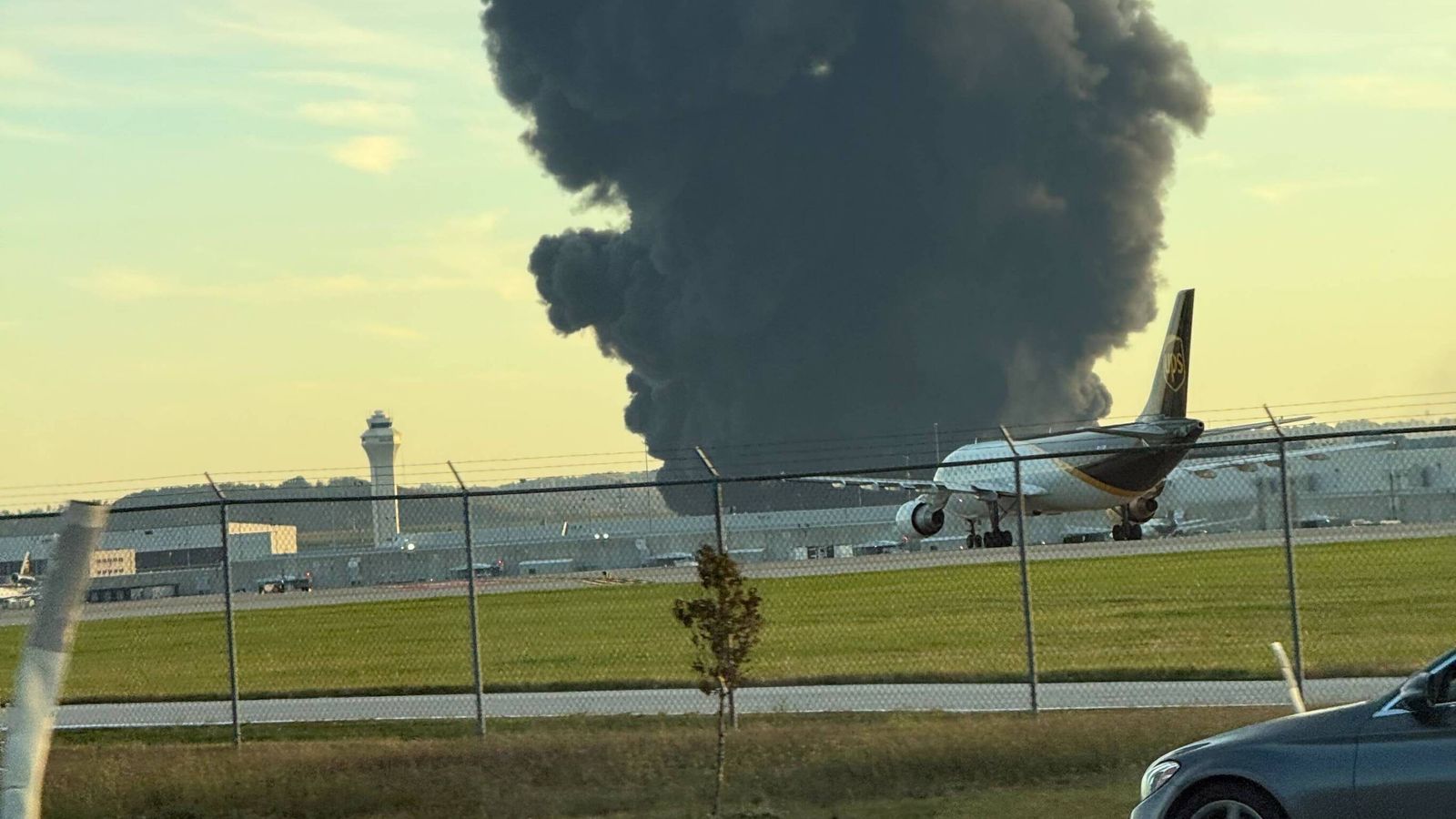
The NTSB reported Boeing had known since at least 2011 that a bearing securing engines — the part that failed on UPS Flight 2976 — had previously failed multiple times, yet Boeing issued a non‑mandatory service bulletin rather than an FAA airworthiness directive. The MD‑11 lost a left engine during takeoff from Louisville on Nov. 4, killing 15, triggering grounding of all MD‑11s and 10 related DC‑10s and sparking likely litigation and increased regulatory scrutiny that could pressure Boeing, cargo carriers and insurers while the NTSB completes its final causal report.
Market structure: Boeing (BA) is the clear immediate loser — expect equity and single-name credit to trade weaker as liability and regulatory risk reprice; Airbus and modern freighter lessors stand to gain incremental order/tender interest. Cargo integrators (UPS, FDX) face short-term capacity shock from MD‑11/DC‑10 groundings that will tighten transcontinental freighter capacity by a low-single-digit percent for operators reliant on those types, supporting spot airfreight yields for 1–3 months.
Risk assessment: Tail scenarios include an FAA airworthiness directive (AD) mandating retrofit or grounding (costs in the high hundreds of millions to low billions for Boeing and operators) and multi-year class-action settlements; these are low-probability but high-impact over 3–24 months. Hidden dependencies: supplier capacity for redesigned bearings, insurer subrogation, and UPS operational routing complexity that could amplify costs; key catalysts are NTSB final report (likely 3–9 months) and FAA AD decision (30–180 days).
Trade implications: Near-term trade is volatility and credit: buy downside protection on BA (3–6 month puts or CDS) and consider a modest short-equity position size (2–3% NAV) while hedging via put spreads to cap cost. Pair trade: long FDX (1–2% NAV) vs short UPS (1–2%) for 3–6 months — fleet modernity and lower litigation exposure imply relative upside. Use options (buy BA 3‑6m 15–25% OTM put spreads; size 1–2% NAV) to express view without open gamma.
Contrarian angles: Market may overprice permanent franchise damage — reference 737 MAX recovery (12–24 months) where BA equity recovered as deliveries resumed; if NTSB/FAA fault is limited to legacy parts and voluntary SBs, BA downside could be 30–50% priced-in and create buyable entry. Also, grounding reduces capacity and can transiently raise airfreight pricing, partially offsetting UPS/FDX litigation pain; monitor implied vol and credit spread dislocations for tactical reversal trades.
AI-powered research, real-time alerts, and portfolio analytics for institutional investors.
Request DemoOverall Sentiment
strongly negative
Sentiment Score
-0.60
Ticker Sentiment
