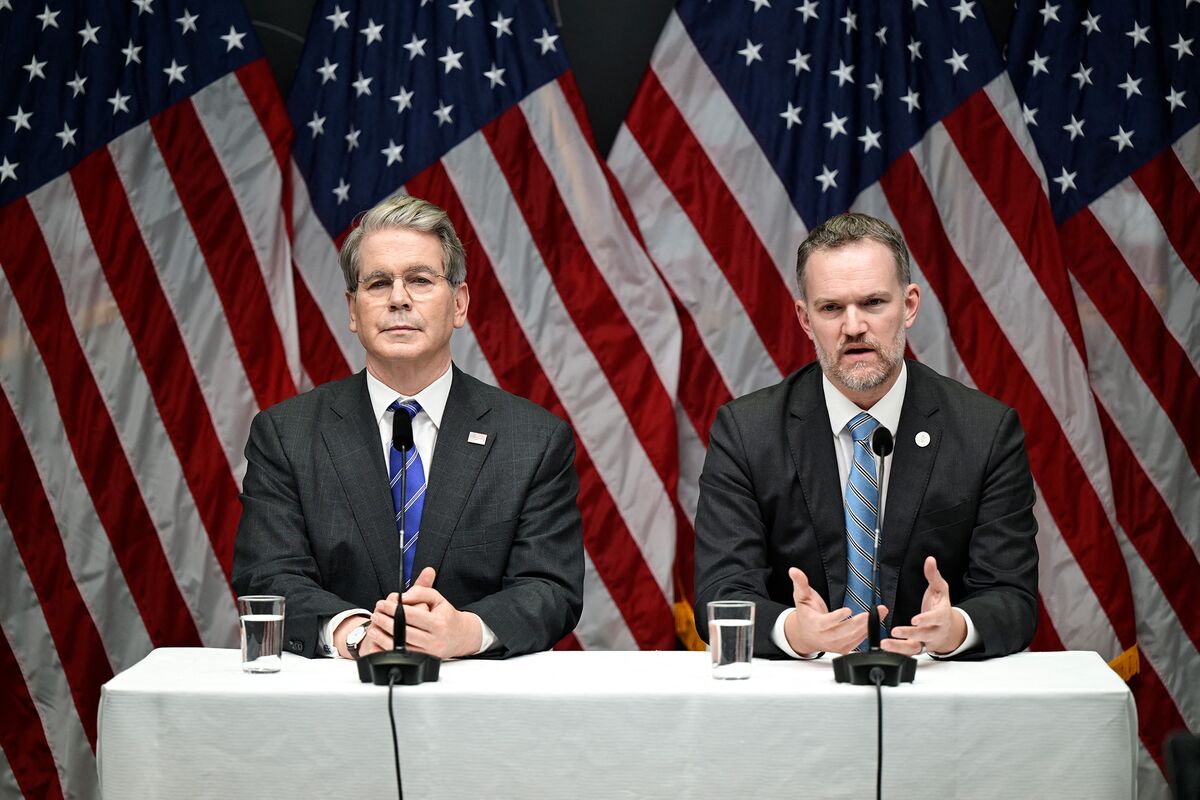
The third round of US-China trade talks concluded without a definitive extension of the tariff truce, which is set to expire in two weeks. While China's delegation claimed a 90-day extension had been reached, Treasury Secretary Scott Bessent clarified that President Trump retains the final decision, introducing uncertainty regarding the truce's continuation. This development, alongside Trump's recent actions against the EU and potential new tariffs on India, signals a continued aggressive US trade posture.
The conclusion of the third round of US-China trade talks has introduced significant near-term uncertainty into global markets, as reflected by the moderately negative sentiment and high market impact score. A direct contradiction has emerged between the Chinese delegation's announcement of a 90-day tariff truce extension and US Treasury Secretary Scott Bessent's statement that President Trump retains the final authority on the matter. With the current truce set to expire in just two weeks, this lack of a definitive agreement creates a high-stakes deadline that could trigger market volatility. The situation is further contextualized by a broader aggressive US trade posture, including recent actions against the EU and a new threat of 20-25% tariffs on India, suggesting that trade-related risks are systemic rather than isolated to the US-China relationship. The market is now positioned to react to a single political decision, amplifying policy-driven risk over fundamental factors.
AI-powered research, real-time alerts, and portfolio analytics for institutional investors.
Request DemoOverall Sentiment
moderately negative
Sentiment Score
-0.60
