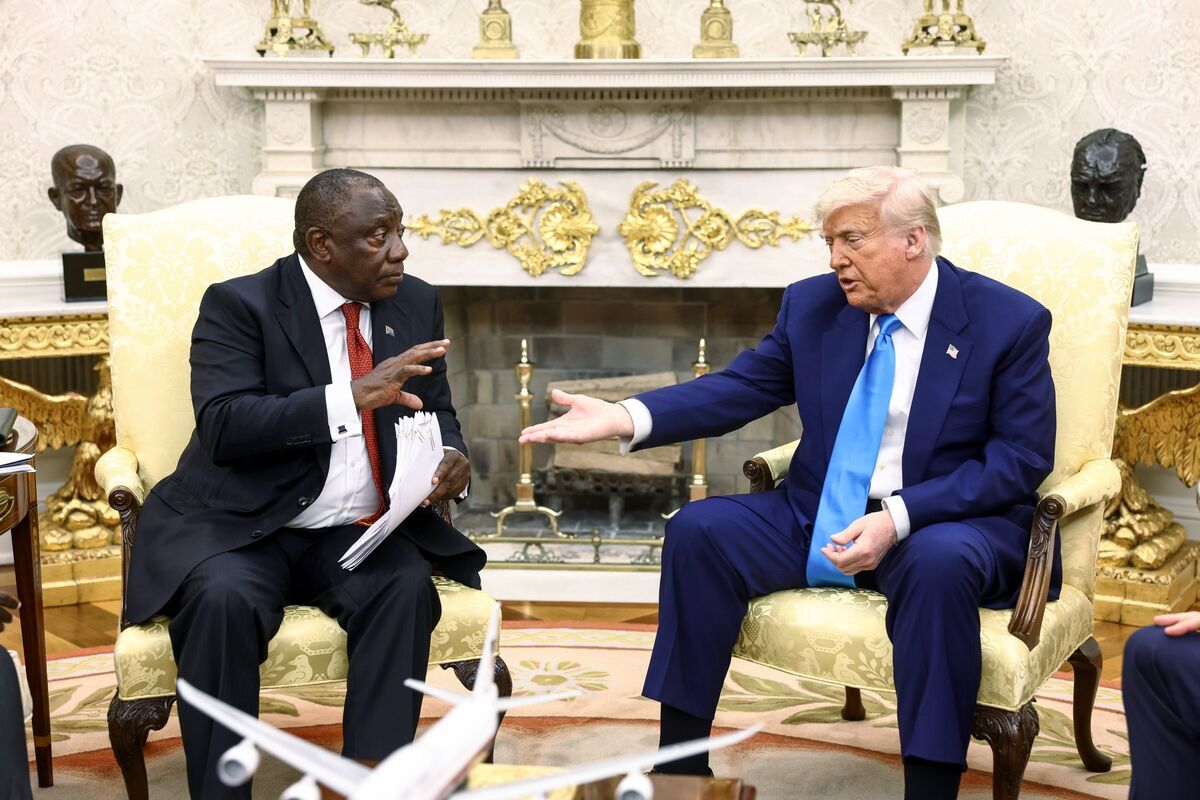
President Ramaphosa's meeting with President Trump in the White House quickly devolved into a confrontation, with Trump pushing false narratives regarding South Africa. Despite the clash, South Africa secured a pledge from the US to continue trade and diplomatic engagement, suggesting Ramaphosa's strategy of remaining poised and redirecting the conversation towards cooperation may have been successful.
The recent Oval Office meeting between South African President Cyril Ramaphosa and US President Donald Trump, initially marked by confrontation as President Trump introduced false narratives regarding South Africa, ultimately yielded a positive diplomatic outcome for South Africa. President Ramaphosa's poised demeanor and strategic redirection of the conversation towards trade and diplomatic cooperation successfully secured a US pledge to continue engagement on these fronts. This development, occurring despite the tense exchange, suggests that Ramaphosa's gambit was effective in navigating the US administration's transactional approach to foreign policy, described as being "all about the deal." The event registered a "mildly positive" sentiment and a low market impact score of 0.15, indicating that while politically charged, the commitment to ongoing dialogue mitigated immediate negative market reactions and was perceived as a cautiously favorable result for South African interests.
AI-powered research, real-time alerts, and portfolio analytics for institutional investors.
Request DemoOverall Sentiment
mildly positive
Sentiment Score
0.35
