

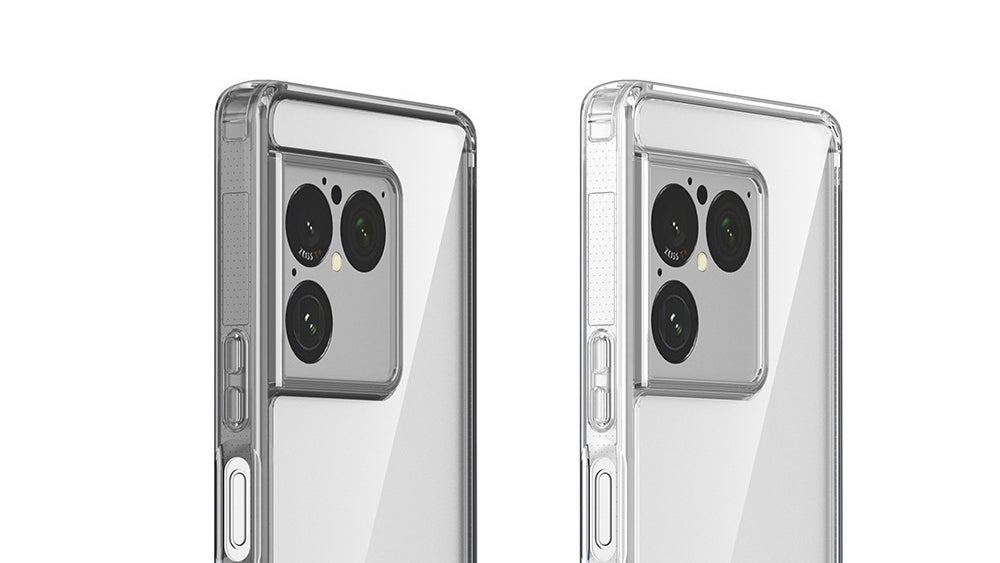
Sony’s upcoming Xperia 1 VIII is rumored to retain a 3.5 mm headphone jack, with FCC filings also pointing to wireless charging, Wi‑Fi 7, and 5G support. Leaked renders suggest a major redesign, including a new rear camera island and possibly a punch-hole front camera. The device may be announced in May, but the article contains no official confirmation or quantitative operating impact.
For SONY, the key signal is not the jack itself but the willingness to preserve one legacy differentiator while forcing a broader hardware reset. That combination usually supports premium positioning with the most price-insensitive users, but it also implies Sony is optimizing for a niche enthusiast segment rather than chasing mass-market share, which caps any incremental unit upside. The real economic question is whether the redesign broadens the addressable base enough to offset the continued low-velocity category profile; if not, this is more brand defense than growth acceleration.
The second-order beneficiary is less Sony's handset business than its audio ecosystem and accessory attach. A flagship that reinforces wired-audio credibility can keep high-end headphone enthusiasts inside Sony's orbit, which is modestly supportive for premium audio hardware and could improve cross-sell optics across Walkman-like brand equity. By contrast, rivals pushing thinner designs and removing legacy ports are effectively ceding a small but profitable enthusiast segment; that matters less for Apple near-term, but it does matter for Android OEMs competing on differentiation because Sony keeps owning a feature that creates press coverage disproportionate to its unit contribution.
The contrarian view is that the market may overestimate how much a jack or redesign moves shares. These features can improve sentiment and launch-day reviews, but they rarely change quarterly fundamentals unless they translate into carrier promotion, distribution expansion, or sustained upgrade cycles. The more material catalyst would be evidence Sony is combining the hardware story with better camera/software execution and a cleaner go-to-market, because that is what would convert niche praise into repeatable volume over the next 2-4 quarters.
The main risk is that this becomes a classic 'interesting product, unchanged P&L' event: launch buzz, limited inventory, then normalization. If the device ships with design inconsistencies or no meaningful camera/image-processing step-up, enthusiasm could fade quickly and the feature mix would look like a marketing shield rather than a demand driver. A second risk is that preserving legacy features signals Sony remains reluctant to make the radical simplification needed to compete on scale, which would leave the handset business strategically relevant but financially immaterial.
AI-powered research, real-time alerts, and portfolio analytics for institutional investors.
Request TrialOverall Sentiment
neutral
Sentiment Score
0.10
Ticker Sentiment
