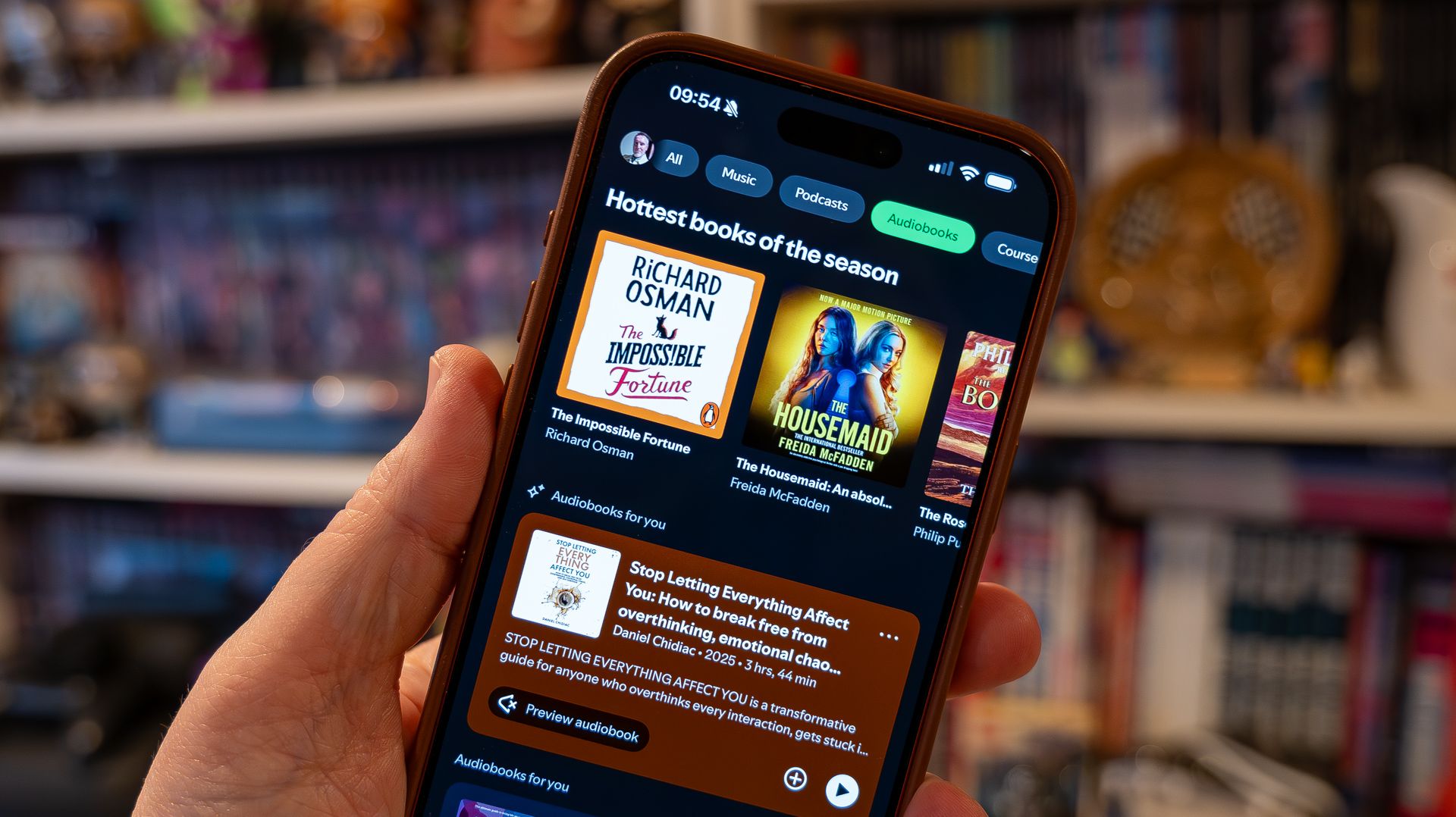
Spotify is testing a feature called Page Match that uses OCR via a phone camera to recognize a reader’s position in a physical book or eBook and automatically sync an audiobook to that point, and vice versa. The capability—found in beta code—would require unlocking the audiobook (purchase or Premium) and appears targeted at markets where Spotify sells audiobooks (US, UK, Canada, Europe, Australia), offering a potential engagement and differentiation play against incumbents like Amazon/Audible. As an unannounced feature still in testing, its commercial impact is uncertain, but successful rollout could modestly boost audiobook usage and Spotify’s value proposition in audio entertainment.
Market structure: Spotify's Page Match (OCR-based cross-format sync) is a product-level differentiator that directly benefits SPOT by increasing engagement, conversion to paid audiobooks, and ARPU; estimate potential incremental audiobook revenue of 5–15% over 12–24 months if adoption is broad. Incumbent winner set includes Spotify (SPOT), audiobook narrators and production vendors; marginal loser is friction-based share for Amazon Audible (AMZN) in markets where Spotify has stronger music subscriptions. Competitive dynamics shift around bundling and retention rather than pricing—Spotify can use sync to raise churn hurdles and modestly expand pricing power within Premium bundles over 1–2 years.
Risk assessment: Key tail risks include GDPR/privacy pushback from EU regulators (data from camera OCR), publisher licensing refusals, and piracy/legal exposure—any of which could delay rollout by 3–12 months or force feature rollback. Near-term (days/weeks) market impact is minimal; short-term (3–6 months) depends on rollout announcements; long-term (12–36 months) revenue and ARPU impacts are material if Spotify converts 2–5% of free users into paid audiobook purchasers. Hidden dependencies: accuracy of OCR across editions, publisher metadata mapping and DRM integration—failure in any raises implementation cost and increases content acquisition spend.
Trade implications: Direct actionable alpha is long SPOT via equity and options: product rollout is a discrete catalyst with asymmetric upside; consider a 2–3% portfolio long position scaled over 4–12 weeks and hedged with a 12-month call spread to cap cost. Avoid enlarging AMZN exposure on the audiobook growth narrative; rotate 1–2% of existing AMZN audiobook-risk positions into SPOT. Use options: buy 9–15 month SPOT LEAP calls (20% OTM) funded by selling shorter 3–6 month calls to monetize expected near-term low IV; trim 50% if SPOT rallies >35% or no public rollout in 6 months.
Contrarian angles: Consensus underestimates privacy/regulatory friction and publisher bargaining power—feature could be rolled out to a subset of markets or require expensive licensing, muting revenue impact. Historical parallel: Audible-Kindle cross-sync grew slowly because it leveraged Kindle device ownership and deep publisher deals; Spotify lacks hardware lock-in, so adoption may be slower (12–24 months) and costlier. Unintended consequences include increased customer support and returns, and potential negative PR if OCR scanning is perceived as invasive—treat initial adoption as conditional, not guaranteed.
AI-powered research, real-time alerts, and portfolio analytics for institutional investors.
Request DemoOverall Sentiment
mildly positive
Sentiment Score
0.25
Ticker Sentiment
