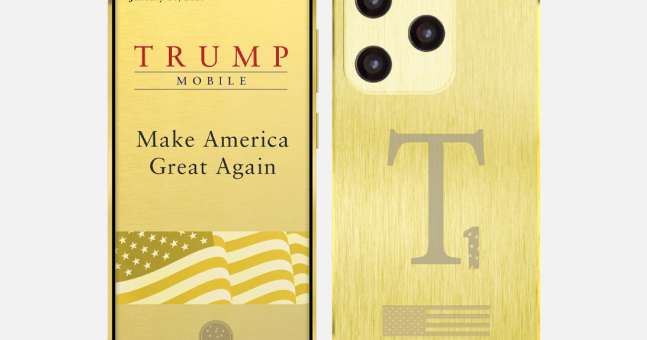
Trump Mobile says its $499 T1 Phone will begin shipping this week, nearly a year after the initial announcement, with CEO Pat O'Brien saying deliveries should occur over the next few weeks. The rollout has faced delays and consumer scrutiny after preorder terms were revised in April to state that a $100 deposit does not guarantee a device will be produced or available for purchase. The company also says the first phones are assembled in the U.S. and use domestically manufactured components.
The main market signal is not the handset itself but the monetization model: this is effectively a cash-funded preorder scheme with weak contractual obligation. That shifts the relevant risk from hardware execution to consumer-trust erosion, refunds, and potential regulatory scrutiny, which can create a long tail of legal expense and reputational drag rather than a one-time product miss. If the device ships in limited volume, the near-term headline risk may fade, but the more important second-order effect is that each delay or quality issue increases the odds of chargebacks, complaints, and platform friction with carriers, payment processors, and app/distribution partners. Competitive impact is asymmetric: incumbent Android OEMs and Apple are not economically threatened by a niche launch, but the episode reinforces how hard it is to build a premium-brand smartphone outside an integrated ecosystem. The larger beneficiaries are component suppliers and contract manufacturers only if scale materializes; otherwise, they just absorb low-volume customization costs and inventory complexity. A U.S.-assembly narrative can also backfire on unit economics because domestic final assembly does little to offset the real cost centers—radio certification, software support, returns, and warranty fulfillment. The catalyst path is binary over the next 1-6 weeks: either there is visible delivery confirmation and the story becomes noise, or consumers start posting evidence of non-delivery/defects, which escalates into a trust event. The contrarian takeaway is that the market may be underpricing the reputational spillover into adjacent brands and promoters if this becomes a pattern, especially given the unusually favorable preorder language. In other words, the direct financial exposure is small, but the optionality around legal/media escalation is meaningfully larger than the product itself.
AI-powered research, real-time alerts, and portfolio analytics for institutional investors.
Overall Sentiment
mildly negative
Sentiment Score
-0.15
