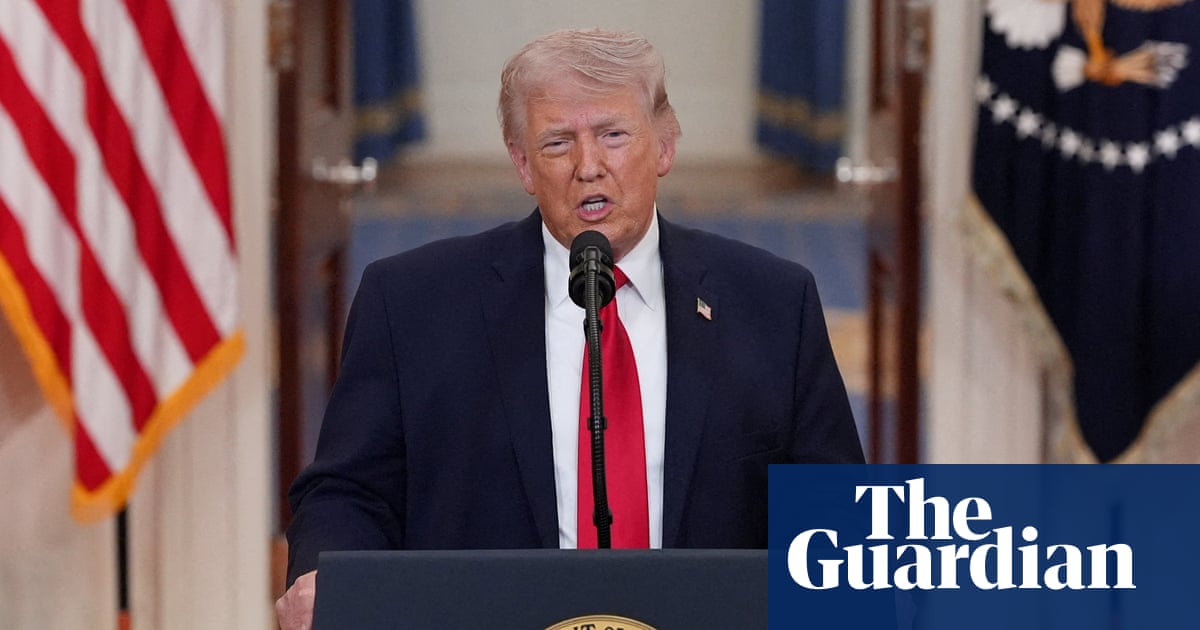
President Trump described the month-long US-Israeli campaign against Iran as “nearing completion” with a 2–3 week target to end operations, even as Israel continued heavy strikes and Lebanon reported at least 1,268 killed. Trump’s comments that he does not prioritize Iran’s highly enriched uranium (HEU) and his repeated interest in seizing Iranian oil (Kharg Island) raise upside risk to oil prices and sustained geopolitical volatility, implying a multi-week risk-off environment for markets. Separately, NASA’s Artemis II launched on a 10‑day, ~240,000‑mile test flight (market‑neutral).
The administration’s apparent willingness to leave Iran’s underground HEU stockpiles effectively uncontrolled is a structural negative for risk assets: it raises the baseline probability of recurring regional flare-ups and a chronic premium on crude, shipping insurance and satellite surveillance costs. A sustained disruption of 0.5–1.5 mb/d in Gulf exports would plausibly add $5–$15/bbl to Brent within weeks, with knock-on effects to refined product cracks and airline fuel bills that compress margins across travel and logistics.
Market winners are non-obvious: tier-1 defense primes (Lockheed, Northrop, Raytheon) gain both near-term order visibility and multi-year backlog optionality as countries rush to replenish capabilities and space/ISR budgets expand; aerospace suppliers to NASA/Artemis also get a political tailwind for multi-year funding. Losers include airlines, airports, travel operators and discretionary retailers exposed to higher fuel and insurance costs; European banks with EM sovereign exposure and trade-finance pipelines face increased NPL risk if trade corridors re-route or insurance costs spike.
Catalysts and timeframes: expect headline-driven volatility in days-to-weeks (missiles, ship seizures, targeted sanctions) and policy/legal tail risks over months (sanctions, asset seizures, secondary sanctions on insurers). Reversals come from credible de-escalation — diplomatic backchannels, quick restoration of tanker corridors or a binding arms-limited deal — which would collapse risk premia rapidly; absent that, position sizing should assume 20–30% downside shock to travel-equity cohorts and 10–25% upside in defense/oil on a protracted episode.
AI-powered research, real-time alerts, and portfolio analytics for institutional investors.
Request DemoOverall Sentiment
strongly negative
Sentiment Score
-0.60
