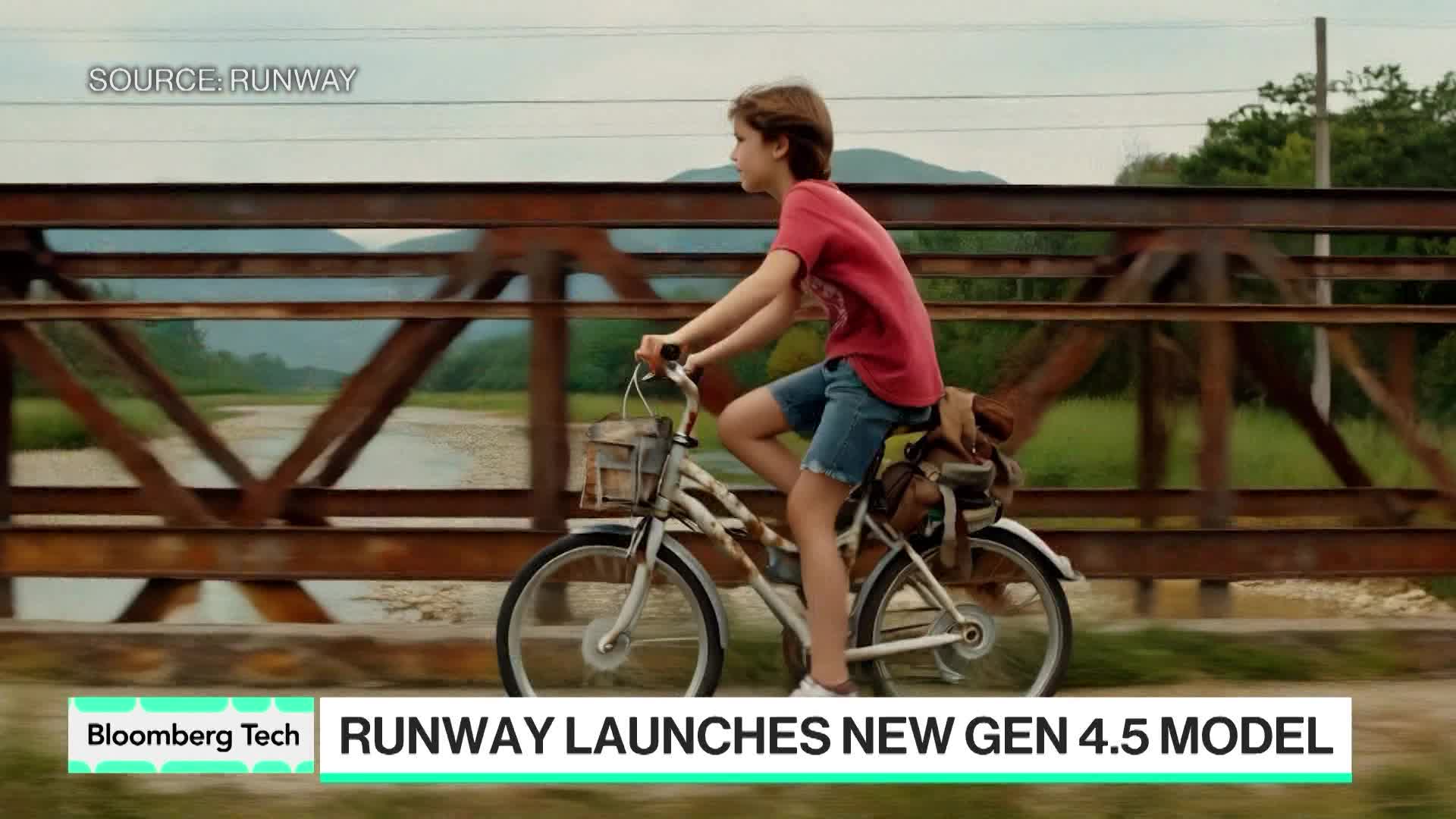
Runway has released its newest model (Runway 10 / Gen 4.5), which the company says tops public leaderboards as the first non–large research lab to do so and is already available to enterprise customers. The business monetizes via subscriptions and usage credits, serves gaming, studios and brands with tens of millions of users, and says inference unit economics are profitable and competitively cheap; the company raised $300 million in April at roughly a $3.3 billion valuation. The combination of top-ranked model performance, efficient deployment and clear monetization increases competitive pressure on larger labs and underpins a compelling private-market growth/profitability narrative for investors.
Market structure: The Runway 4.5 release is a classic insurgent-vs-platform story — direct winners are GPU and inference-stack providers (NVDA, AWS [AMZN], Azure [MSFT]) and creative buyers (studios, streaming platforms) that can collapse production costs; direct losers are incumbent model/platform vendors that monetize via higher-cost inference (GOOGL) and boutique VFX shops facing margin compression. Expect ~12–24 month pressure on per-inference pricing (potentially down 10–30% in competitive segments) and a material uplift in GPU demand that could add a 20–40% incremental run-rate to data‑center GPU consumption if adoption scales.
Risk assessment: Tail risks include antitrust/regulatory action (esp. data licensing and model usage) and IP litigation that could force takedowns or licensing fees — these would hit monetization and spike compliance costs within 3–12 months. Operational risks: sustained GPU shortages or rising spot rents would compress app margins even if models are superior; conversely, slow enterprise uptake or weak monetization could make Runway’s model a feature rather than a revenue engine over 6–18 months.
Trade implications: Tactical hardware/cloud longs (NVDA, MSFT, AMZN) for 3–12 month horizons; consider a small hedge/short on GOOGL (0.5–1% portfolio via put spread) to express platform monetization risk. Options: use 3–6 month NVDA call spreads to capture upside while capping cost; a pair trade (long NVDA 2% vs short GOOGL 1%) captures hardware vs platform divergence.
Contrarian angles: Consensus underrates Google’s defensive strengths (ad stack, enterprise sales) so broad, large-size GOOGL shorts are high risk; the market may also underprice ongoing CAPEX benefits to streamers (NFLX/DIS) that will see improved content ROI — watch GPU spot rents, Runway credit revenue, and any licensing suits in the next 60–90 days as decisive signals.
AI-powered research, real-time alerts, and portfolio analytics for institutional investors.
Request DemoOverall Sentiment
strongly positive
Sentiment Score
0.60
Ticker Sentiment
