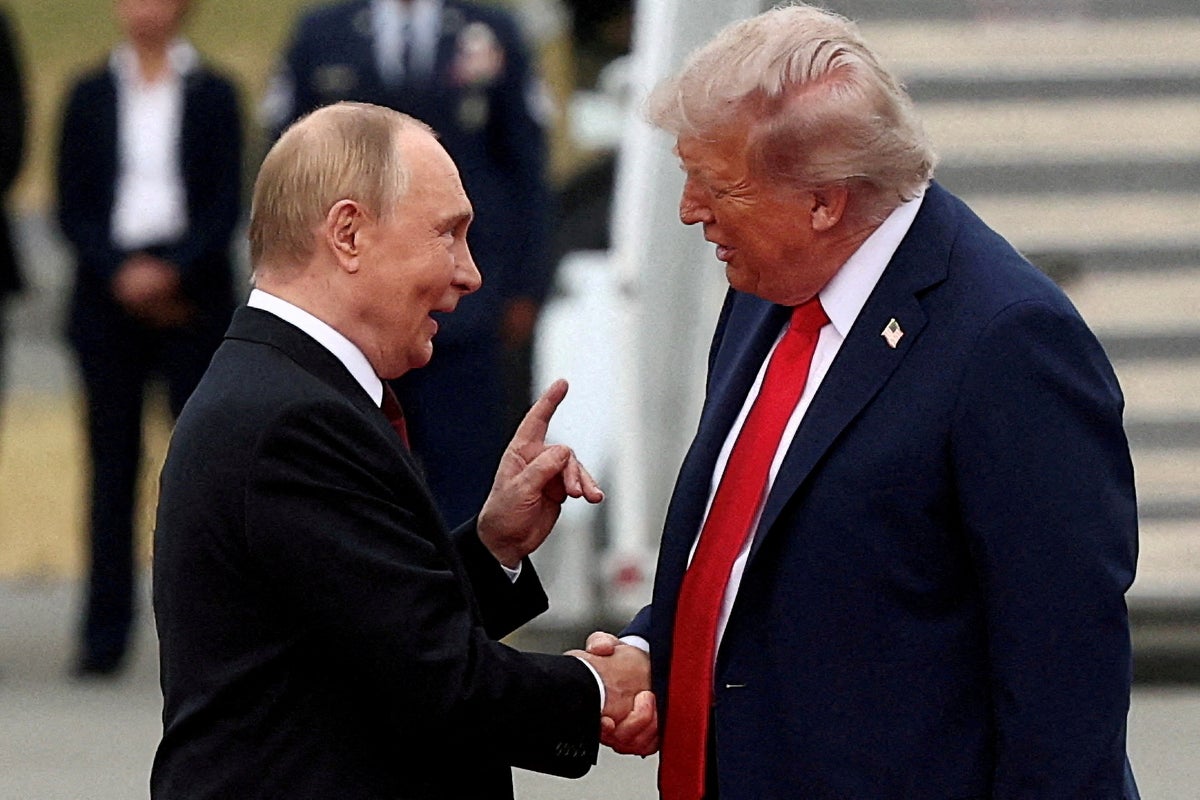
A leaked 14 October call in which Trump envoy Steve Witkoff advised a senior Russian aide on courting President Trump has ignited bipartisan criticism and Kremlin condemnation, raising geopolitical uncertainty around ongoing peace talks. The piece also reports Russian claims of downing 118 Ukrainian drones and an ISW assessment that a Russian military victory is not inevitable (noting a 9.3 sq km/day average advance between 15 Aug and 20 Nov), while Brussels and Washington scrapped a US-proposed $100bn frozen-asset reconstruction scheme from a first draft. Financially, the IMF reached a staff-level agreement on a new four-year $8.2bn programme for Ukraine—replacing a $15.6bn facility—with a stated external financing gap of roughly $136.5bn for 2026–2029, which should help unlock further donor support but leaves material sovereign financing risk ahead.
Market structure: The leak and renewed diplomacy increase near-term political risk, which favors defense and energy suppliers and pressures European cyclical exporters and travel. Expect sustained procurement demand for air-defence, electronic warfare and munitions (supporting ETFs/stocks like ITA, LMT, RTX) for 3–12 months; commodities (Brent, wheat) exhibit upside skew if sanctions or supply interruptions persist.
Risk assessment: Tail risks include full-scale escalation with NATO entanglement or Russian gas cut-offs to Europe (low-probability, high-impact) that would likely push Brent >$100/bbl and EU power spreads sharply higher within days–weeks. Immediate (days): headline-driven FX and volatility spikes; short-term (weeks–months): repositioning of EU budgets and sanctions mechanics; long-term (quarters–years): reconstruction finance flows versus frozen-asset disputes (IMF program reduces sovereign-credit tail risk for Ukraine but leaves $136.5bn gap).
Trade implications: Tactical trades: long defense/energy, hedge with Treasuries and gold, and express Europe/FX short exposure. Use options to buy upside exposure cheaply (3–6 month call spreads on defense) and buy put conviction (EURUSD puts) rather than large cash shorts. Key catalysts: Witkoff–Putin meeting, IMF board approval, EU funding decisions — trade windows of 3–12 months.
Contrarian angles: Markets may overprice an imminent Russian victory; if negotiations cool kinetic intensity stabilizes and defense cyclicals can retrace 10–25%. Conversely, a quick peace deal could invert trades — short-duration hedges (options) and stop-loss discipline are essential to avoid being wrong-footed by a political resolution.
AI-powered research, real-time alerts, and portfolio analytics for institutional investors.
Request DemoOverall Sentiment
moderately negative
Sentiment Score
-0.30
