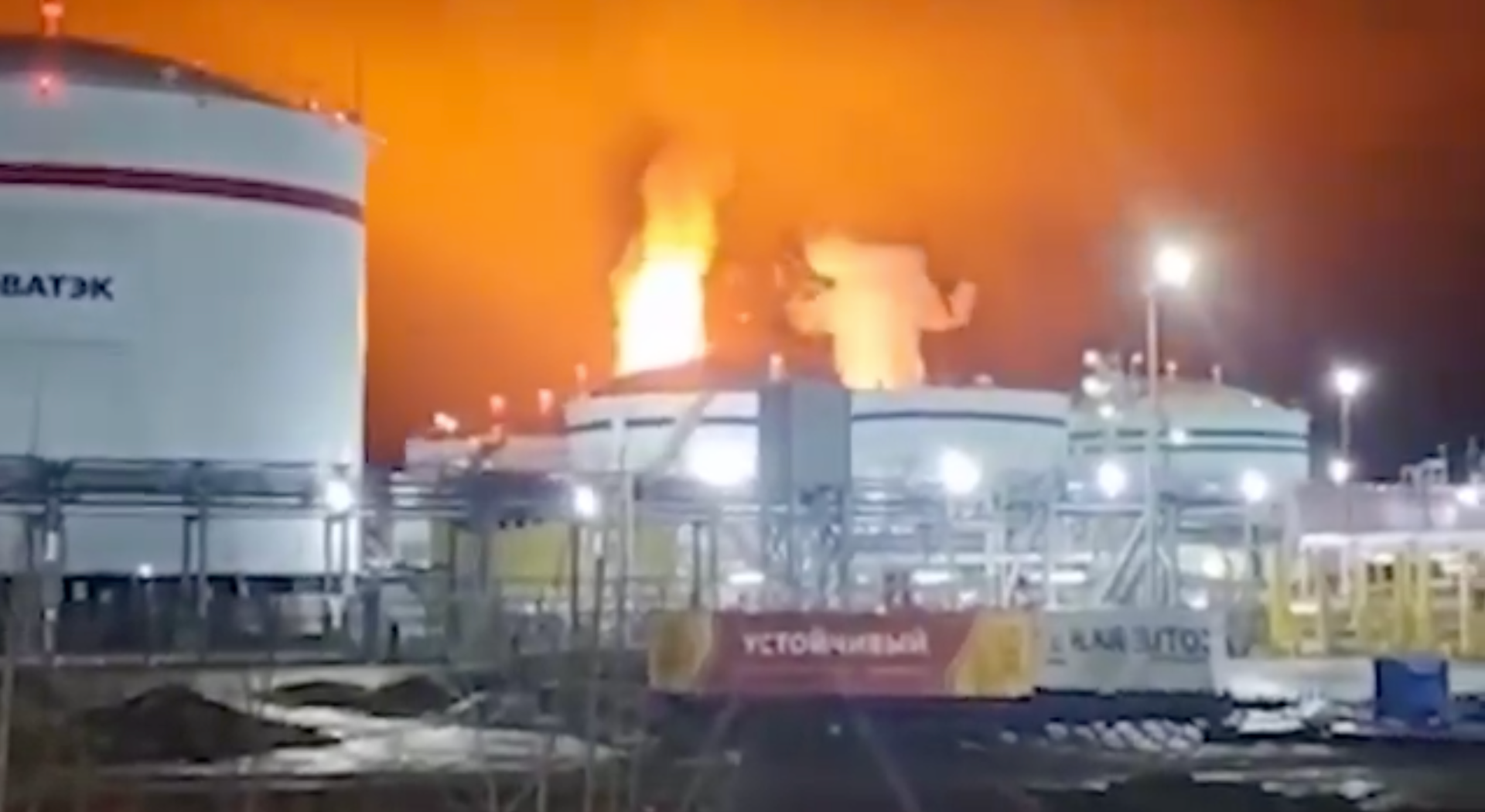
A Ukrainian drone strike on March 25 hit the Ust-Luga port energy terminal, targeting Novatek's fractionation/transshipment complex (capacity ~7 million tonnes/year); regional authorities reported 56 drones shot down locally and Russia said 389 Ukrainian drones were downed across 13 regions. Fires reportedly ignited at oil storage tanks, Pulkovo Airport operations were suspended, and preliminary reports indicated no casualties. The strike — carried out ~900 km from Ukraine’s border and involving multiple Ukrainian intelligence and unmanned units — risks disrupting seaborne exports of crude, condensate and refined products from key Baltic hubs (Ust-Luga, Primorsk) and could exert short-term upward pressure on European energy prices and shipping/logistics flows.
The tactical consequence for markets is a durable increase in a “security premium” on seaborne hydrocarbon flows that use exposed Baltic loadpoints and the intermediating shadow fleet; expect freight and marine insurance spreads to reprice higher within days and to remain elevated for 1–3 months while clean-up and inspections proceed. That repricing is non-linear: a modest reduction in available, insurance-covered tonnage can force longer voyages and cargo splitting, boosting spot MR/Handy tanker rates by an outsized percentage (we model 15–35% moves on tight days) and creating congestion-induced quality arbitrage across product grades. Second-order effects cut through the value chain. Buyers who relied on opaque maritime routes will face higher landed costs or be pushed onto formal LNG/pipeline contracts, accelerating destination switching that benefits larger, contracted LNG suppliers and those able to flex cargo nominations within a 1–6 month horizon. Simultaneously, owners of older single-hull/undocumented tonnage (the typical “shadow” counterparties) will see financing and P&I access tighten, widening seller discounts on Russian-origin seaborne cargoes and creating pockets of basis dislocation exploitable by arbitrage desks. Tail risks skew to escalation: a persistent campaign against port infrastructure or retaliation that seeks to degrade NATO-adjacent logistics would move this from an energy-supply premium to a structural rerouting problem, compressing global middle-distillate availability over quarters. Offramps that would quickly reverse the trade are clear — credible restoration of marine insurance capacity, formal diplomatic de-escalation, or fast repair and certification of affected terminals — any of which could normalize freight and commodity premia in 4–12 weeks. Execution should therefore target instruments that capture elevated freight/insurance premia and LNG demand substitution while limiting outright directional oil price exposure. Avoid long-only crude bets; favor relative-value and options structures that monetize volatility spikes and widening basis between contracted LNG and spot European gas.
AI-powered research, real-time alerts, and portfolio analytics for institutional investors.
Request DemoOverall Sentiment
strongly negative
Sentiment Score
-0.65
