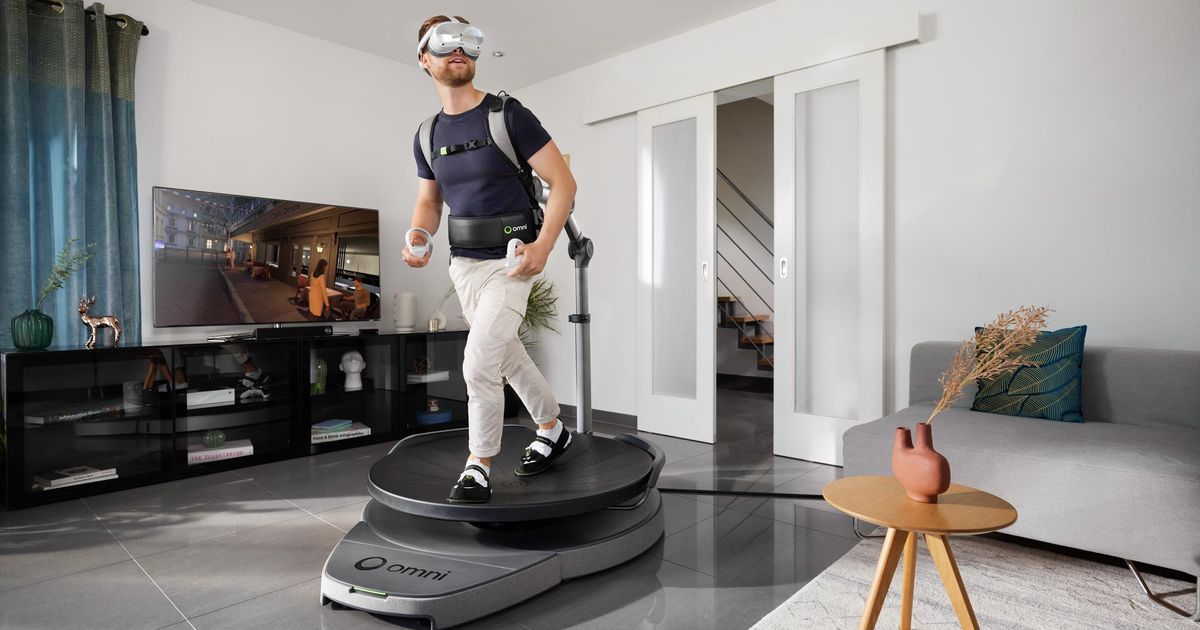
Virtuix Holdings (NASDAQ: VTIX) began trading on Nasdaq after launching its Omni One home VR system and reported 138% year-over-year growth in its S-1; the company has sold roughly $20 million of systems to date and claims production capacity for $100 million in annual revenue. Management is pursuing a dual-use strategy—scaling consumer gaming sales while pursuing higher-margin defense contracts (units already at the US Air Force Academy and Yokota AB) and touts an AI-driven Gaussian splatting workflow that converts 360° footage into photorealistic training terrain. The listing is accompanied by $11 million from Chicago Venture Partners and a $50 million equity line of credit to fund expansion.
Market structure: VTIX’s Nasdaq listing amplifies capital access for a small-cap hardware specialist with stated $100m production capacity versus ~$20m lifetime sales — a 5x+ scale challenge that benefits contract manufacturers, AI-content vendors (Gaussian splatting tools), and defence primes that integrate sims. Losers are incumbents in passive peripherals if locomotion proves sticky and low-cost software-only reconstructions undercut bespoke terrain services. Cross-asset impact should be idiosyncratic equity volatility (elevated IV in VTIX options), slight positive sentiment spill to defense equities (LMT, GD) and negligible macro bond/FX moves absent a material DoD contract.
Risk assessment: Tail risks include a product recall or safety litigation, DoD procurement cancellations, or rapid dilution from the $50m equity line — any could wipe out market cap (low-probability, high-impact). Immediate (days) risk: post-IPO price volatility and IV spikes; short-term (weeks–months): execution on shipments, component sourcing, and proof of customer returns; long-term (12–36 months): adoption curve and margin sustainability if content creation becomes software commoditized. Hidden dependencies: factory yield, supplier lead times, key publisher/content partnerships and defense contracting timelines.
Trade implications: Direct tactical play is a small, size-constrained long VTIX position (1–2% portfolio) or a defined-loss options call spread (3–6 month) betting on execution; pair trade: long VTIX vs short HEAR (Turtle Beach) to express rotor to locomotion hardware vs legacy audio peripherals. Hedge with 0.5–1% positions in LMT/GD to capture defense upside. Entry triggers: 15–25% pullback or two consecutive quarters of >30% YoY revenue growth and visible order backlog; exit if YoY revenue <20% or cash runway <12 months.
Contrarian angles: Consensus is optimistic on dual-use scale but underestimates commoditization risk — Gaussian splatting can be licensed, removing a content moat and leaving commoditized treadmill hardware with weak pricing power (historical parallel: 2016–19 VR hype cycle). Conversely, the market may underprice a handful of mid-sized DoD training awards (>$5–10m) that could re-rate margins; unintended consequence: frequent draws on the equity line could dilute early retail holders and trigger negative sentiment before fundamentals shift.
AI-powered research, real-time alerts, and portfolio analytics for institutional investors.
Request DemoOverall Sentiment
moderately positive
Sentiment Score
0.45
Ticker Sentiment
