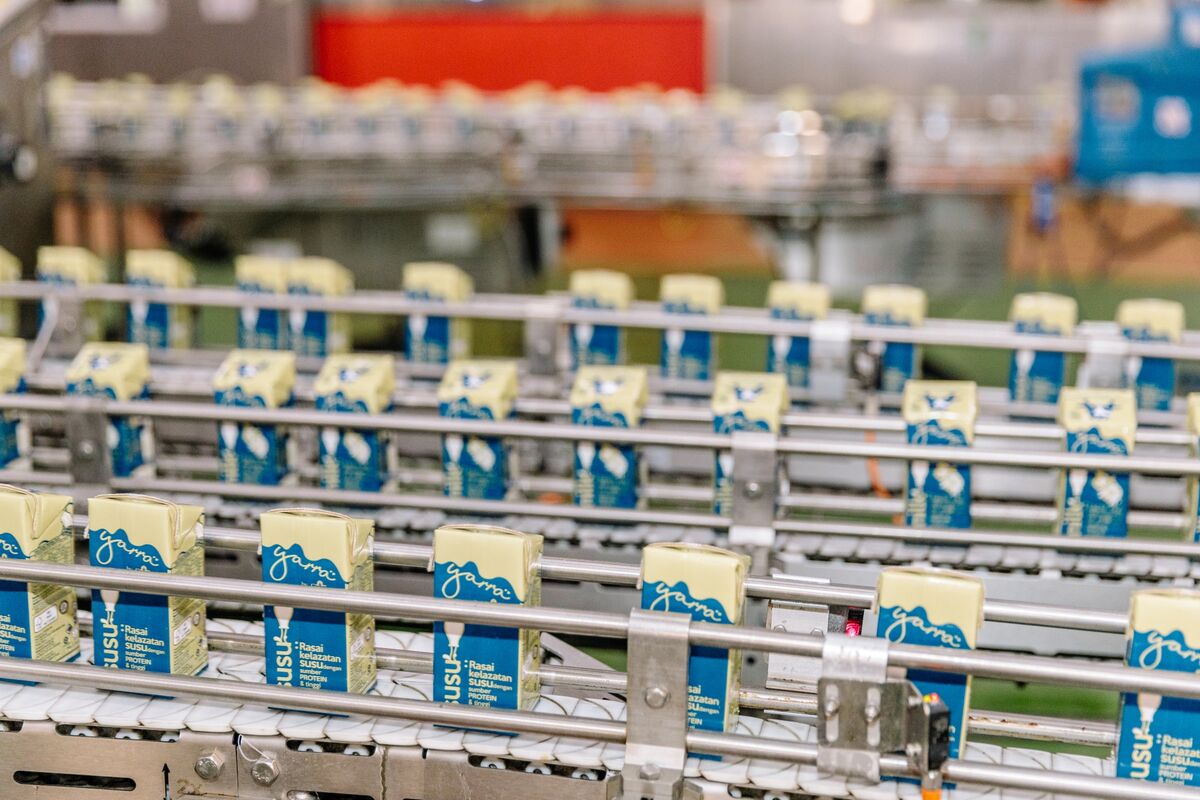
Malaysia’s largest dairy producer Farm Fresh Bhd. is accelerating expansion across Southeast Asia to access a market of more than half a billion consumers, building on operations in the Philippines and capitalizing on disrupted Thai supply chains to enter Cambodia with a planned plant. The company is also pursuing opportunities in Indonesia, citing potential demand growth tied to President Prabowo Subianto’s $30 billion free-lunch program and broader economic targets. The push is intended to diversify supply, seize market share and drive regional revenue growth amid geopolitical supply disruptions and policy-driven demand stimulus.
Farm Fresh Bhd., Malaysia's largest dairy producer, is accelerating expansion across Southeast Asia to access a market of more than half a billion consumers, building on operations in the Philippines and moving into Cambodia after Thai border tensions disrupted milk supplies. The company is preparing to open a plant in Cambodia and is targeting Indonesia, citing President Prabowo Subianto's $30 billion free‑lunch program and broader economic targets as demand catalysts. These moves reflect a strategy to convert regional supply disruptions and fiscal stimulus into incremental market share.
Strategically, the expansion is intended to diversify supply chains away from Thailand and capture first-mover advantages in under-served markets, which could lift regional volumes and revenue if execution is timely. Sentiment metrics are moderately positive (0.45) with a modest market impact score (0.3), implying investor optimism but limited immediate market-moving implications. Potential scale benefits in procurement and distribution could improve margins over time, contingent on efficient plant ramp-up and distribution network build-out.
Key risks include execution and capex demands for new plants, logistical and regulatory complexity in Cambodia and Indonesia, and reliance on policy-driven demand from Indonesia's free-lunch program that may be delayed or changed. The Thai border disruption that enabled the Cambodia opportunity highlights persistent geopolitical supply risks. Investors should monitor plant commissioning timelines, initial sales traction in Cambodia and the Philippines, and the progress of Indonesian policy implementation as near-term indicators of success.
AI-powered research, real-time alerts, and portfolio analytics for institutional investors.
Request DemoOverall Sentiment
moderately positive
Sentiment Score
0.45
