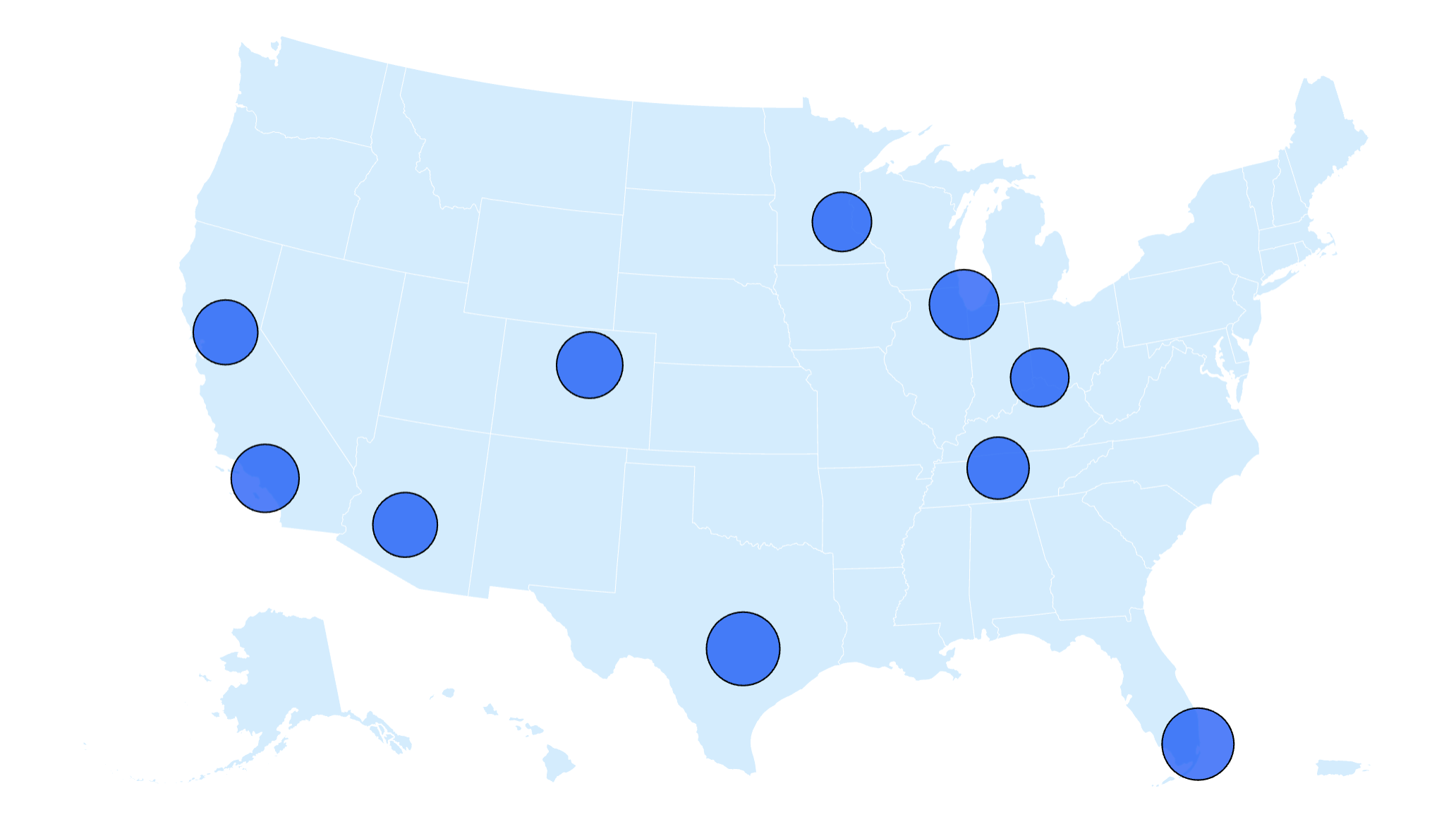
The U.S. housing market continues to cool, with several major metro areas experiencing significant annual list price declines in July, led by Austin, TX, with a 4.9% year-over-year drop, followed by Miami, Chicago, Los Angeles, and Denver. This trend is largely driven by oversupply and reduced demand in former pandemic boomtowns, exacerbated by factors like return-to-office trends and elevated mortgage rates. This regional market rebalancing, particularly in the South and West, signifies a shift towards a buyer's market and holds implications for consumer activity and broader economic indicators, despite some cities maintaining higher median prices or longer-term appreciation.
The U.S. housing market is undergoing a significant but highly regionalized price correction, primarily driven by the unwinding of pandemic-era demand in specific metropolitan areas. Former boomtowns, particularly in the South and West, are leading this trend. Austin, for instance, reported the largest year-over-year list price decline at -4.9% in July, with a substantial 31.2% of its listings seeing price reductions—well above the 20.6% national average. This cooling is attributed to a confluence of increased housing supply from a recent construction boom and waning demand due to return-to-office mandates and elevated mortgage rates. Denver exhibits a similar pattern with a 4.0% YoY price drop and 32.9% of listings with price cuts. However, the narrative is not uniform; while Miami (-4.7%) and Los Angeles (-4.2%) also saw YoY declines, their share of price cuts was below the national average, and their list prices remain significantly above the national median of $439,450. Furthermore, the data reveals underlying resilience in some of these markets, as list prices in Los Angeles and Chicago were notably higher in July than they were in July 2022 (up 18.4% and 7.7%, respectively), contrasting sharply with the significant drops seen in Austin (-14.8%) and Denver (-7.7%) over the same period. This divergence underscores a market rebalancing rather than a monolithic downturn, with supply-constrained regions like the Northeast and Midwest experiencing far less price volatility.
AI-powered research, real-time alerts, and portfolio analytics for institutional investors.
Overall Sentiment
Moderately negative
Sentiment Score
-0.40
