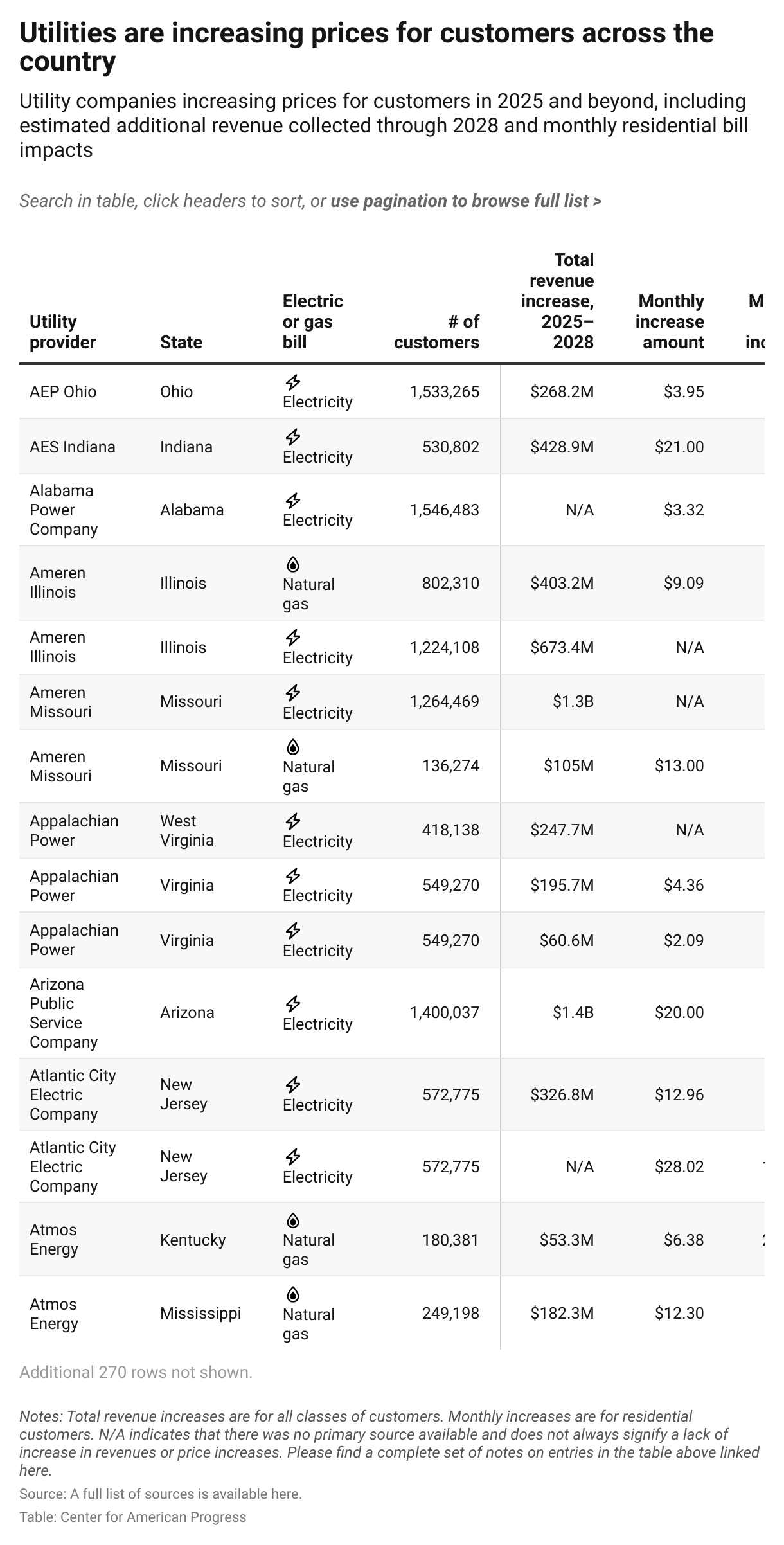
A recent analysis indicates that over 107 million electricity customers and 46 million natural gas customers across 49 U.S. states and D.C. will face increased utility rates by 2027, projecting an $89.9 billion rise in collective bills by 2028. This significant cost escalation stems from an aging grid necessitating modernization, volatile natural gas prices driven by increased LNG exports, and surging electricity demand from AI data centers. Additionally, specific policy actions, including tariffs on grid components, cancellation of clean energy initiatives, and support for fossil fuels, are identified as exacerbating these rising costs and impeding the transition to more affordable energy.
The article highlights a significant increase in utility rates affecting 107 million electricity customers and 46 million natural gas customers across 49 U.S. states and D.C. by 2027. These rate hikes, driven by over 210 utilities, are projected to collectively raise customer bills by $71.2 billion for electricity and $18.7 billion for natural gas by 2028, totaling $89.9 billion. This trend marks a departure from the prior decade, with electricity prices now rising at double the rate of inflation after closely mirroring it from 2013-2023.
Key drivers for these increases include an aging U.S. electric grid requiring substantial modernization, volatile natural gas prices exacerbated by rising LNG exports (projected to increase over 75% between 2024-2026), and surging electricity demand, particularly from AI data centers. Data centers alone could increase household electricity rates by 15-40% in the next five years, with some areas already seeing 267% cost increases over five years.
The analysis critically attributes exacerbation of these costs to specific policy actions, including the Trump administration's tariffs (25-50%) on critical grid modernization materials (steel, aluminum, copper), cancellation of over $7 billion in clean energy grants, and policies supporting fossil fuels. Propping up coal plants, for instance, costs ratepayers an estimated $140 million per year for the J.H. Campbell plant alone, despite being more expensive than new solar or wind. These actions are projected to add over $430 per year to household energy bills within the next decade.
AI-powered research, real-time alerts, and portfolio analytics for institutional investors.
Request DemoOverall Sentiment
strongly negative
Sentiment Score
-0.85
Ticker Sentiment
