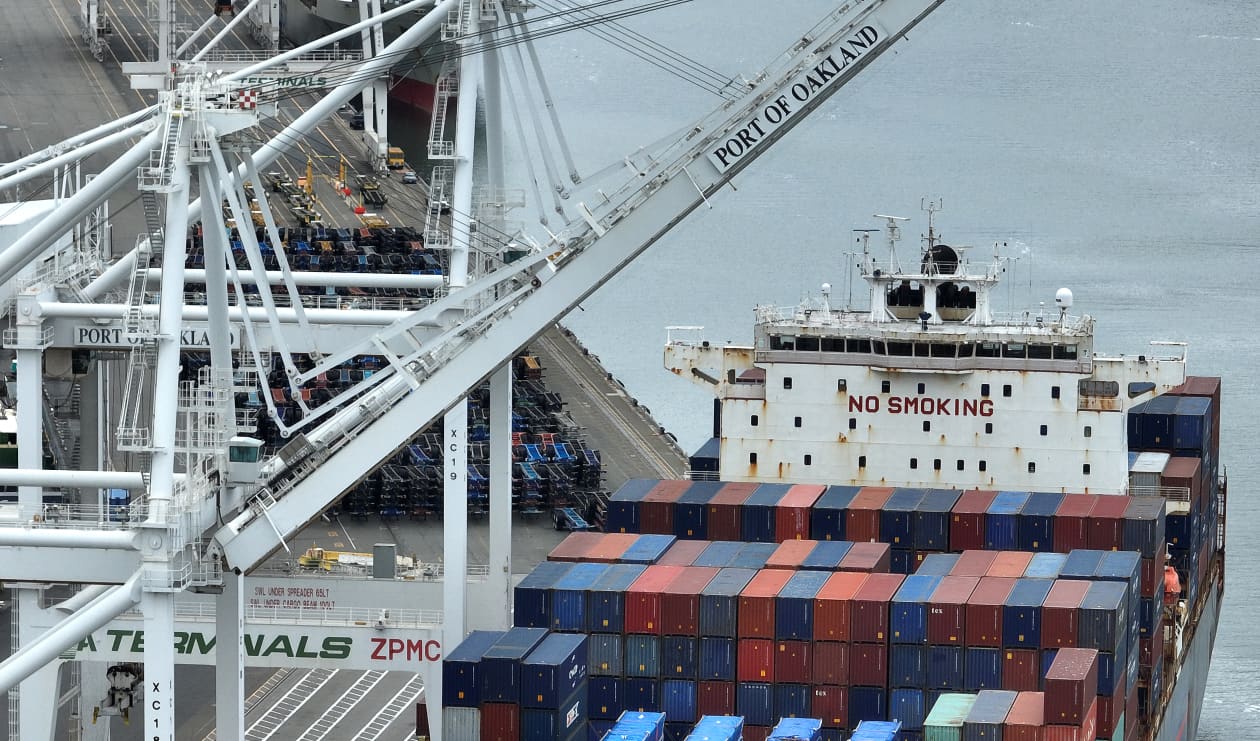
The U.S. trade deficit sharply narrowed by 55.5% to $61.6 billion in April, driven by a 16.3% plunge in imports following the implementation of tariffs, particularly on goods from China, which fell to $28.3 billion. This import decline is expected to boost second-quarter GDP growth; however, economists caution that the figures may reflect a sluggish economy where businesses are delaying spending due to tariff uncertainty, and a rebound in imports is possible in the coming months.
The U.S. international trade deficit experienced a significant narrowing of 55.5% in April, contracting to $61.6 billion from a record $140.9 billion in March, surpassing economist expectations of a $63.3 billion deficit. This substantial reduction was primarily driven by a 16.3% plunge in imports, which economists attribute to the implementation of tariffs, notably on goods from China; imports from China specifically fell to $28.3 billion from $40 billion in the prior month. Concurrently, exports demonstrated resilience, rising 3% to $289.4 billion, marking the fourth consecutive monthly increase. The sharp decline in imports, particularly in consumer goods, pharmaceuticals, industrial supplies, and automobiles, is anticipated to positively contribute to second-quarter GDP growth, contrasting with the trade deficit's drag on first-quarter GDP. However, economists express caution, suggesting this improvement might not be sustainable as imports could recover in subsequent months, and the current figures might obscure underlying economic sluggishness. Oren Klachkin from Nationwide noted that the economy appears to have 'hit pause on discretionary imports,' with businesses and consumers delaying spending and working off inventories amidst tariff uncertainty. The market reaction indicated stocks were poised for a higher open, while the 10-year Treasury yield decreased to 4.337%.
AI-powered research, real-time alerts, and portfolio analytics for institutional investors.
Request DemoOverall Sentiment
mixed
Sentiment Score
-0.10
