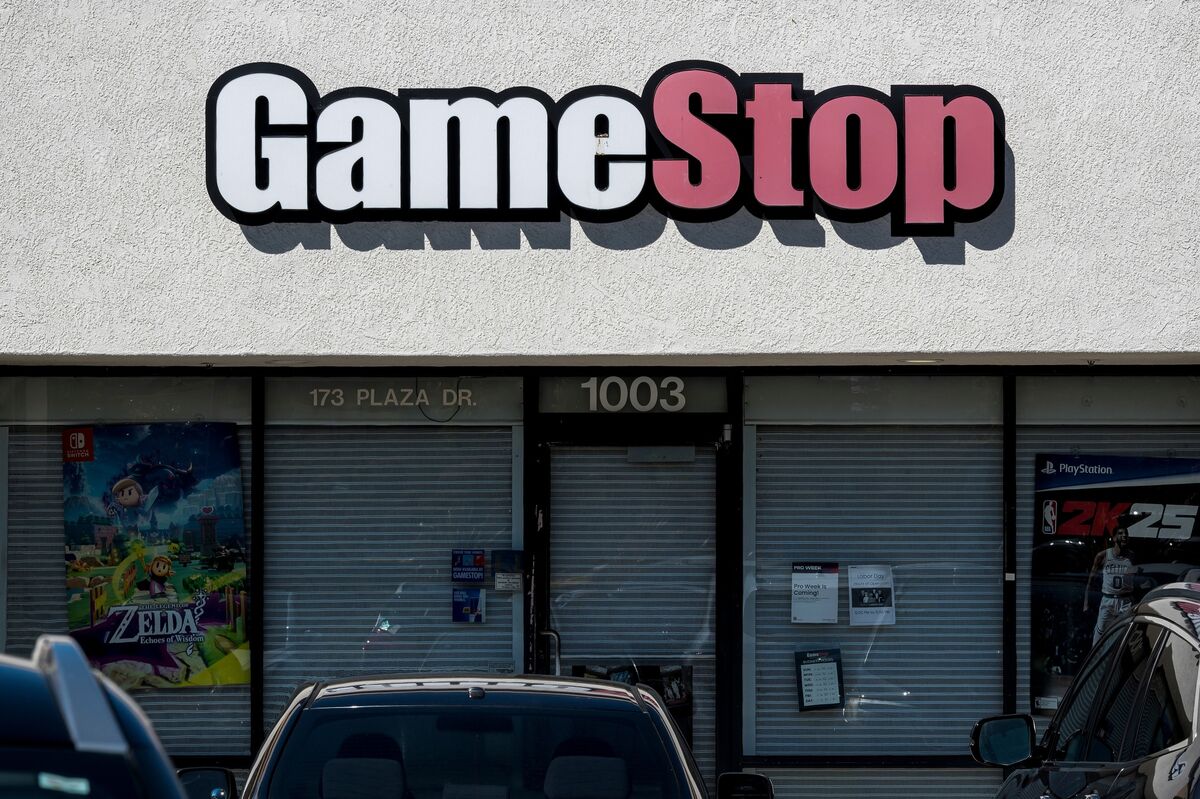
GameStop shares jumped as much as 13% in postmarket trading after cryptic posts appeared on Keith Gill’s 'Roaring Kitty' account, then reversed lower after the posts were deleted within an hour. The move was driven by meme-stock sentiment rather than fundamentals, highlighting continued volatility in GameStop and speculative trading flows. The article suggests a short-lived sentiment spike rather than a durable price catalyst.
This is less a fundamental move than a liquidity event with a very short half-life. When a name is already crowded with reflexive retail positioning, a transient social-media spark can force systematic and discretionary shorts to cover into thin aftermarket liquidity, but the unwind is usually faster than the initial spike because there is no new information to anchor valuation. The key second-order effect is that the tape itself becomes the catalyst: elevated implied volatility, wider spreads, and a higher cost to borrow can persist even after the price mean-reverts.
The market is still underestimating how quickly sentiment can flip from celebratory to exhaustion. For GME, the edge is in the first 30-90 minutes of any future catalyst burst, not in holding the move; once the posts disappear or fail to broaden into a sustained narrative, momentum buyers are left owning gamma that decays rapidly. The base case over days is chop-to-down unless there is a fresh, verifiable catalyst that reactivates retail participation and short-covering at the same time.
The contrarian read is that these episodes can actually be a supply-release mechanism for the stock. Each spike gives trapped holders a more favorable exit and refreshes the short base, which can reduce the probability of a true squeeze later unless positioning is rebuilt aggressively. So the trade is not "bullish GME" in a durable sense; it is "sell volatility after the reflexive burst" unless borrow tightens materially or a broader meme complex catches fire.
Competitively, the only durable beneficiaries are venues, brokers, and options market makers rather than the equity itself. If the meme complex reopens, nearby names with similar retail ownership and high short interest can see faster percentage moves than GME because capital rotates to cheaper optionality and perceived higher beta; that makes relative-value baskets more attractive than outright exposure.
AI-powered research, real-time alerts, and portfolio analytics for institutional investors.
Request DemoOverall Sentiment
neutral
Sentiment Score
0.05
Ticker Sentiment
