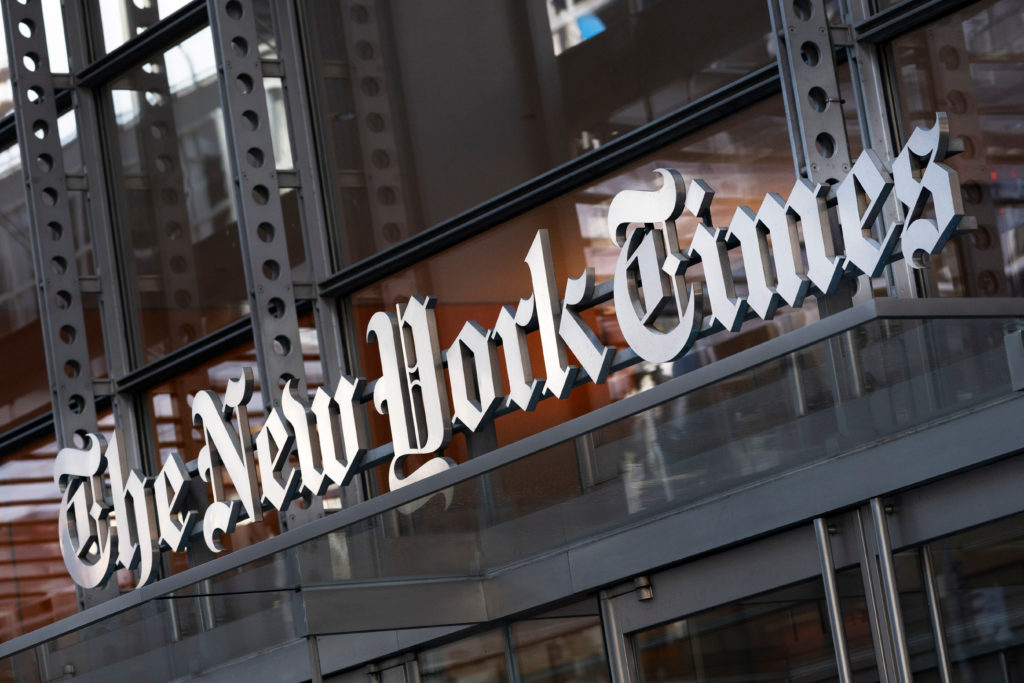
Berkshire Hathaway disclosed a roughly $350 million stake in The New York Times in the quarter ending 2025, a notable reinvestment in a national media brand, while adding about 8 million Chevron shares to bring its stake to over 130 million. The filing also shows sizable reductions in Bank of America (sold ~50 million shares, leaving ~81 million) and Apple (trimmed ~10 million, holding ~228 million), and comes in Buffett’s final quarter as CEO before Greg Abel took the role. The moves signal a vote of confidence in the Times’ digital strategy and reinforce Berkshire’s exposure to energy amid geopolitical developments in Venezuela that have buoyed Chevron, while trimming positions in large financial and tech holdings.
Market structure: Berkshire's $350M NYT stake and incremental CVX purchases shift incremental capital toward high-quality, cash-generative media and integrated oil names. Direct winners: NYT (digital subscription/games monetization) and CVX (Venezuela optionality); losers: ad-driven local papers and cyclical service providers. Cross-asset: higher energy exposure increases correlation with Brent, pushing breakevens and putting upward pressure on 2s–10s if sustained, while option skew on CVX should widen around geopolitical headlines.
Risk assessment: Tail risks include renewed US sanctions on Venezuela, a surprise NYT subscriber slowdown, or activist pressure changing NYT capital allocation; all are low-probability but high-impact. Immediate (days) effects are headline-driven moves; short-term (1–3 months) hinges on NYT subscriber prints and Venezuela licensing signals; long-term (12–36 months) depends on secular digital revenue growth and CVX’s realized Venezuelan barrels. Hidden dependency: NYT valuation depends disproportionately on ARPU growth and retention, not just subscriber counts.
Trade implications: Tactical long NYT exposure and convex CVX exposure are favored; reduce passive mega-cap tech (AAPL) overweight slightly and redeploy to energy and select media. Use defined-risk options to play geopolitical catalysts (3–12 month expiries) and pair trades to isolate sector vs company risk (NYT vs ad-dependent media). Entry timing: act within 2–6 weeks ahead of quarterly subscriber/CVX licensing catalysts, trim on 15–25% rallies.
Contrarian angles: The market may underprice NYT’s product diversification (Wordle, The Athletic) — this is not a legacy-print play but a subscription + services re-rate candidate. Conversely, CVX’s Venezuela optimism may be overbaked: if >150k b/d of Venezuelan supply materializes within 12 months, oil could cap and CVX rerate downward. Historical parallel: media re-ratings after digital monetization (e.g., Netflix transition) were multi-quarter processes, not instant jumps, so patience and option convexity pay off.
AI-powered research, real-time alerts, and portfolio analytics for institutional investors.
Request DemoOverall Sentiment
mildly positive
Sentiment Score
0.22
Ticker Sentiment
