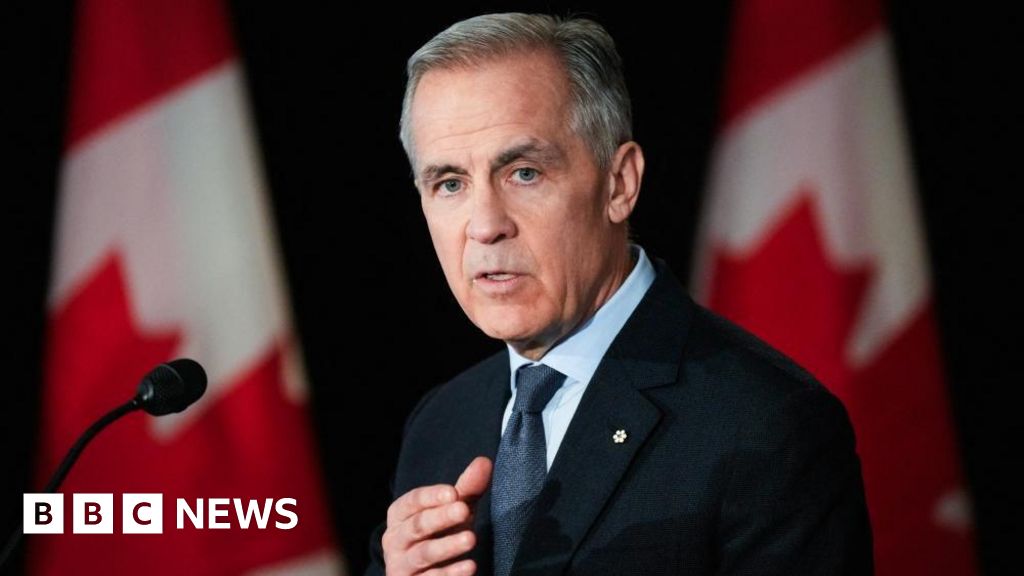
Mark Carney told reporters he stands by his Davos remarks criticizing shifts in the postwar order after a US official said he had 'aggressively' walked them back in a call with President Trump; Carney and Trump held a phone conversation that covered Ukraine, Venezuela, Arctic security and the upcoming mandatory USMCA review. Tensions center on trade: the Ottawa-Beijing arrangement would cut canola levies from 85% to 15% by March and apply a limited MFN 6.1% tariff on some Chinese EVs (down from 100%), while Trump has threatened 100% tariffs if Canadian-Chinese trade circumvents US levies. Carney denied pursuing a free-trade deal with China and characterized Trump’s tariff threats as negotiation positioning, leaving focus for investors on potential USMCA negotiations and downside risk to Canadian exporters (notably canola and targeted EV flows).
Market structure: Short-term winners are exporters able to pivot to Asia (commodity processors and diversified miners) while pure north-south supply chains (canola processors, OE parts suppliers to US OEMs) are vulnerable to tariff shocks. If a tariff scare materializes, expect a 1–3% CAD depreciation, 10–30 bps widening in Canadian sovereign spreads and a 10–20% downside risk to spot canola prices in a severe 100% tariff scenario; US auto import flows would re-route, tightening some Asian-to-NA distribution channels.
Risk assessment: Tail risk of a 100% tariff is low probability (<10%) but high impact—model shock P&L to drop 15–30% for concentrated Canadian ag exporters within 90 days. Immediate volatility window is days-weeks around media/Trump commentary; medium-term risk centers on the USMCA mandatory review (3–9 months) and long-term is structural supply-chain reorientation (12–36 months). Hidden dependencies include warehousing/triangulation routes that could temporarily amplify cross-border inventory gluts.
Trade implications: Tactical plays should focus on FX hedges and index downside protection: short CAD (~1–2% NAV) via 1–3 month USD/CAD calls and buy 3-month puts on EWC (5% OTM) to hedge Canada equity exposure; avoid outright long exposure to China-exposed EV importers until clarity post-USMCA (re-evaluate at 90 days). Rotate away from single-commodity canola names into diversified agribusiness and fertilizer (lower correlation to tariff shock) and size hedges to limit portfolio delta to <0.5 versus baseline.
Contrarian angles: The market may overprice a permanent rupture—historical Canada-US trade disputes (softwood lumber 2017–19) resolved with limited permanent index damage, arguing for opportunistic buys on >5% pullbacks in EWC or names like NTR. If Carney’s phone call reduces policy escalation risk, a short-volatility carry trade (sell EWC 1-month straddle sized to 0.5–1% NAV) could be profitable but cap loss with buy-stop at a 6% EWC move or 30 bps CAD move.
AI-powered research, real-time alerts, and portfolio analytics for institutional investors.
Request DemoOverall Sentiment
neutral
Sentiment Score
-0.15
