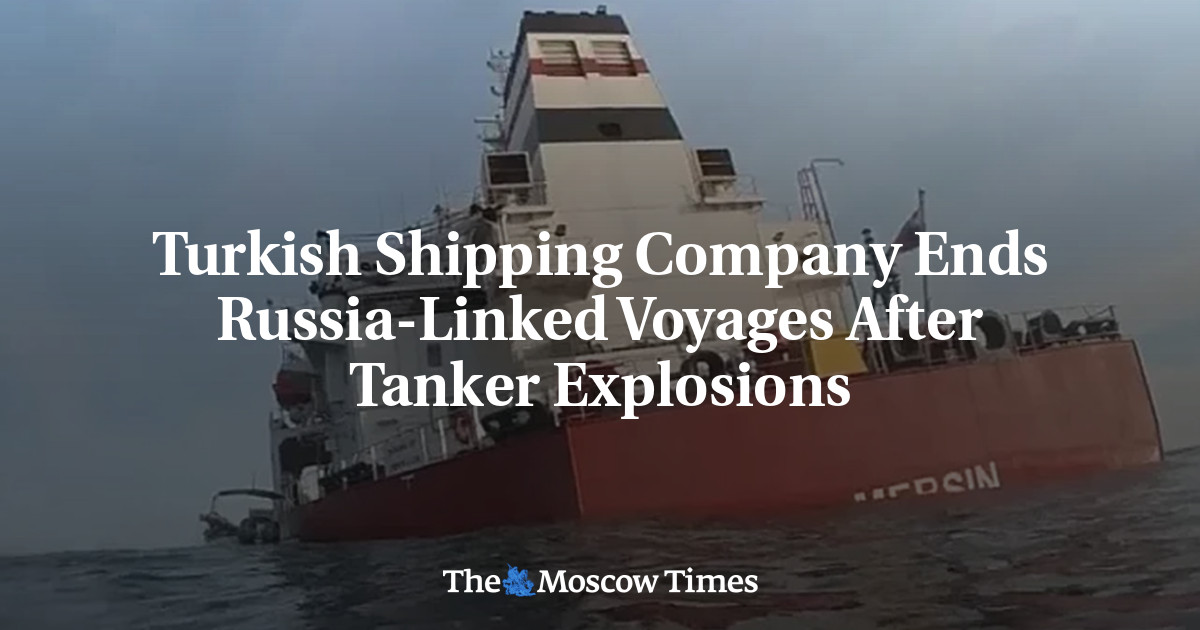
Turkish tanker manager Besiktas Shipping said it will immediately halt all voyages involving Russian interests after its Panamanian-flagged tanker Mersin—carrying nearly 39,000 tons of fuel—was struck by four external explosions while anchored off Dakar, with water entering the engine room but no injuries or major pollution reported. The company said it has complied with Western sanctions and the Russian oil price-cap but described the security environment as untenable; the move follows recent attacks on Russia-linked tankers and Russian threats of retaliation, raising downside risk to Russia-related maritime crude flows and operational exposures for shipping firms.
Market-structure: Short-term winners are owners/operators of product tanker fleets (MR-focused names) and dry spot-charter owners as Russia-related voyages are removed from the pool; expect spot MR rates to gap higher by a material amount (single-digit %–low double-digit %) if 5–10% of Russia-linked voyages are withdrawn for weeks. Losers include Turkey-linked operators with Russia exposure, ship insurers/P&I clubs facing higher war-risk premiums, and cargo owners who will absorb higher freight or insurance surcharges.
Risk assessment: Tail risks include escalation that closes Black Sea export corridors or triggers broad insurance refusals (war-risk blackout), which could push freight insurance premia +300–500bps and spike reroute costs; probability low but impact systemic to tanker equity valuations (months). Near-term (days–weeks) expect volatility and headline-driven jumps; medium-term (3–12 months) fundamentals depend on whether insurers/charterers normalize via higher rates or legal workaround (STS transfers). Hidden dependencies: compliance with price-cap mechanics forces more ship-to-ship transfers, increasing demand for specialized tonnage and fueling secondary-market tightness.
Trade implications: Direct tactical longs in product-tanker equities (e.g., STNG) sized 2–3% of portfolio with 3–6 month horizon, stop 20% and target +30–50% if 30-day average MR TC rates exceed 20% above baseline; pair trade: long STNG, short crude-tanker peer FRO if product/clean spreads widen. Use short-dated options: buy 1–3 month call spreads on STNG (cap premium) and a 1-month Brent 2% OTM call spread to capture upward re-pricing of freight-linked oil price moves.
Contrarian angles: Consensus focuses on immediate safety—missed is that markets often overshoot and new tonnage ordering/longer charters can relieve pressure within 6–12 months; if insurers absorb losses rather than blacklisting routes, tanker equities could mean-revert quickly. Historical parallels (Gulf attacks 2019) show initial 40–80% spike in volatility then a 3–9 month normalization; size positions to survive such mean reversion risk.
AI-powered research, real-time alerts, and portfolio analytics for institutional investors.
Request DemoOverall Sentiment
moderately negative
Sentiment Score
-0.45
