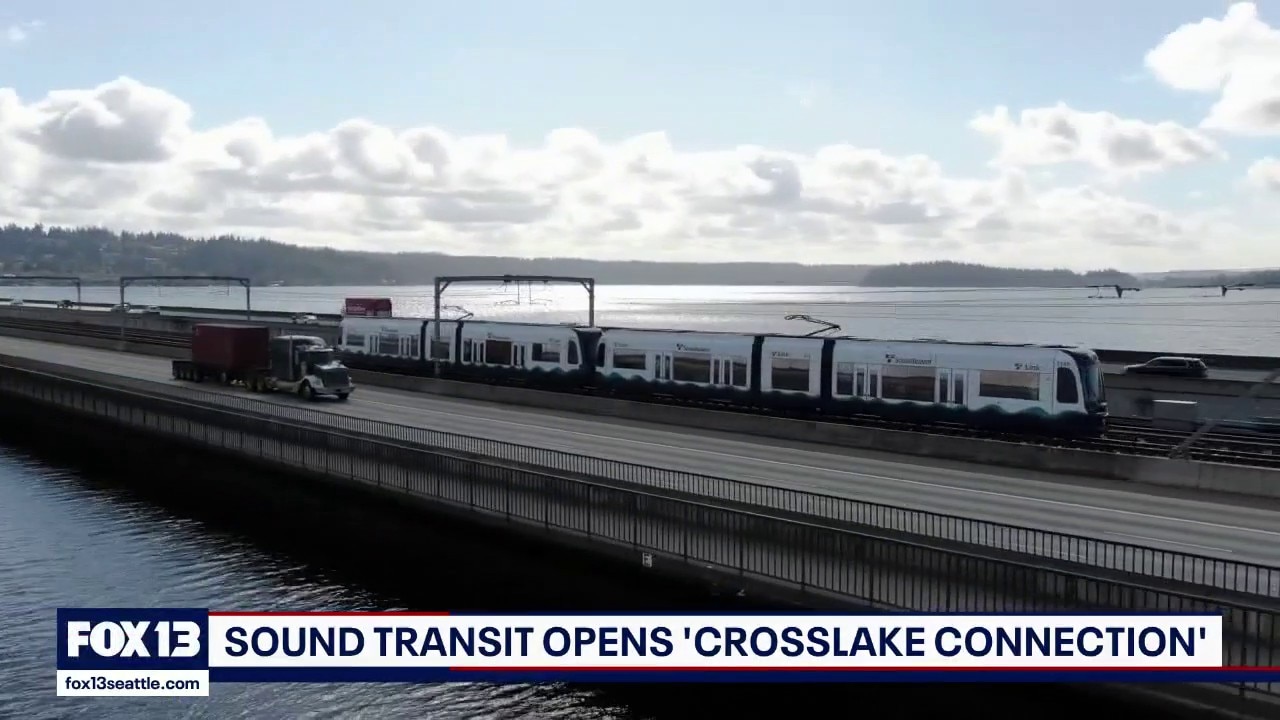
A seven-mile extension (Sound Transit Link 2 'Crosslake Connection') opened on Mar 28, 2026, delivering the first-ever light rail crossing of a floating bridge and expanding Seattle's system to 63 miles and 50 stations. New Mercer Island and Judkins Park stations now link the Eastside to the 1 Line, with service to Bellevue roughly every eight minutes; the project was voter-approved in 2008 after ~18 years of delays. Sound Transit says broader expansions (Ballard, West Seattle, Tacoma) remain in planning, signaling continued long-term regional capital spending on transit infrastructure.
A large, recently completed regional transit corridor will reconfigure peak modal flows and land-use economics along the central east–west spine of the metro area. Expect a durable uplift in effective labor supply for Bellevue-area employers (lowered commute friction) that should compress recruiting bottlenecks and reduce wage pressure for in-office roles over 12–36 months, while increasing competition for transit-adjacent housing and commercial space.
Engineering and systems vendors that executed complex marine/bridge-adjacent rail work are sitting on a repeatable IP edge: the specialised integration of track, pontoon interfaces, and real-time controls is a high-friction barrier to entry that can translate into multi-year services and spare-parts revenue streams if other metros pursue similar solutions. This will disproportionately benefit firms with both project delivery and aftermarket capabilities versus pure-build contractors.
Risks that could negate expected benefits are concentrated and measurable: (1) persistently below-plan ridership driven by hybrid work patterns would push operating subsidies higher within 6–24 months; (2) political backlash to overruns or operating deficits could stall follow-on extensions and delay new contracts; and (3) higher rates increase the cost of rolling stock financings and muni-backed project refinancing, compressing equity returns. Watch procurement calendars and municipal budget cycles as near-term catalysts.
The highest-convexity windows are around large follow-on award announcements and quarterly ridership/financial reports — these are likely to re-rate engineering and rail-equipment names. In the nearer term (weeks–months) volatility will concentrate around budget hearings and bond issuance dates; over 12–36 months, the principal upside is in transit-oriented real estate capture and recurring services revenue for suppliers.
AI-powered research, real-time alerts, and portfolio analytics for institutional investors.
Request DemoOverall Sentiment
moderately positive
Sentiment Score
0.40
