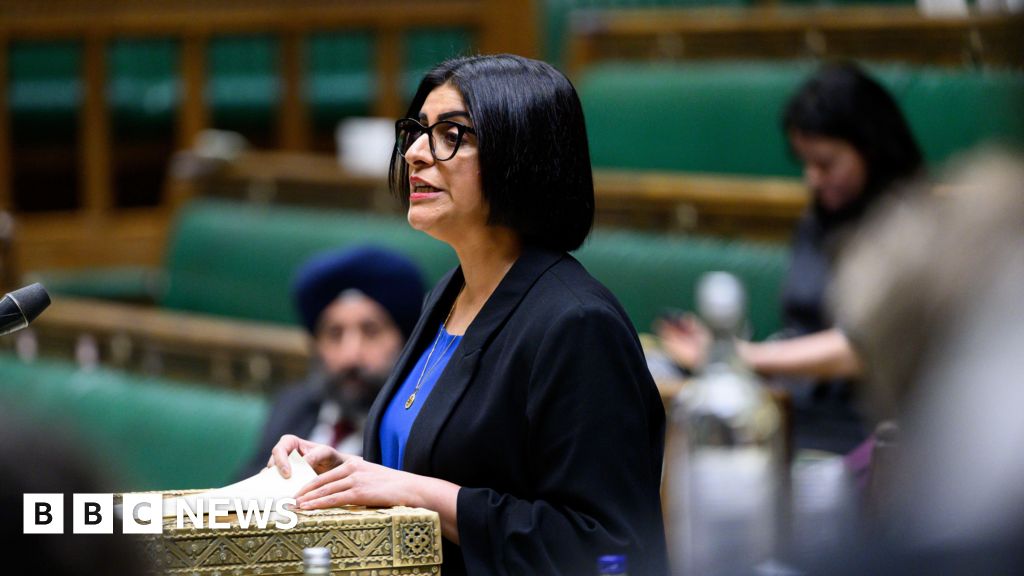
Home Secretary Shabana Mahmood has declared she has lost confidence in West Midlands Police chief constable Craig Guildford after an interim HMIC review found confirmation bias and eight inaccuracies in police intelligence that led to a safety advisory group banning Maccabi Tel Aviv fans from an Aston Villa match. Guildford has apologised for providing incorrect evidence — including that AI (Microsoft Copilot) assisted searches which produced a non-existent fixture — and remains in post pending a 27 January accountability meeting amid cross-party and community calls for his dismissal and proposals to restore ministerial dismissal powers for chief constables. The episode raises governance, legal and political risk around policing decisions and the use of AI-generated intelligence.
Market structure: Short-term winners are niche vendors and systems that sell AI auditability, provenance and human-in-the-loop controls (go-to-market tailwind for cybersecurity/observability vendors); losers are incumbent AI consumer-facing brands (MSFT, to a lesser extent GOOGL) that are perceived to supply “black box” outputs to public-sector customers. Competitive dynamics will favor vendors with verifiable citation logs and contract-level indemnities; expect procurement terms (SLAs, liability clauses) to harden, raising switching costs for customers who already invested in auditable stacks. Cross-asset: expect idiosyncratic equity volatility in MSFT (shock +/-3–7% intraday on headlines), negligible impact on sovereign bonds or commodities, and small GBP weakness on intensified UK political risk (basis points move vs. USD if story escalates).
Risk assessment: Tail risks include UK/EU bans or procurement freezes for specific Copilot-like offerings or contract litigation that could hit FY revenue for affected segments by low-single-digit percentage points; operational risk from audit-trail failures; reputational contagion across public-sector contracts globally. Immediate (days) risk = headline-driven volatility; short-term (weeks–3 months) = HMIC final report and procurement reviews; long-term (6–24 months) = regulatory tightening on AI transparency and procurement standards. Hidden dependencies: enterprise cloud logging, partner reseller training and indemnities; catalysts include HMIC final report, UK government legislative proposals, and Microsoft’s own remediation disclosures.
Trade implications: Direct: size tactical hedges on MSFT (see decisions) rather than outright long-term shorts—fundamentals not impaired absent broad regulatory action. Pair: short MSFT / long GOOGL as a 1:1 relative-value if MSFT share falls >3% on UK headlines; expect mean-reversion in 1–3 months. Options: buy 2–3 month MSFT put spreads (2–4% OTM) to cap downside while funding with tight calls; consider long exposure to CRWD or PANW (1–2% positions) to play governance demand. Entry/exit: act within next 7–30 days around HMIC milestones; trim on 8–12% moves.
Contrarian angles: Consensus overestimates structural damage to MSFT; historical parallels (short-lived vendor reputational issues tied to public-sector misuses) show recoveries in 3–9 months once controls are deployed. The market may underprice upside for vendors that quickly ship auditability features—if MSFT demonstrates transparent logs and indemnities, a >5% bounce is plausible. Unintended consequence: increased compliance costs will accelerate secular demand for third-party AI governance tools, creating durable TAM expansion rather than a contraction.
AI-powered research, real-time alerts, and portfolio analytics for institutional investors.
Request DemoOverall Sentiment
moderately negative
Sentiment Score
-0.45
Ticker Sentiment
