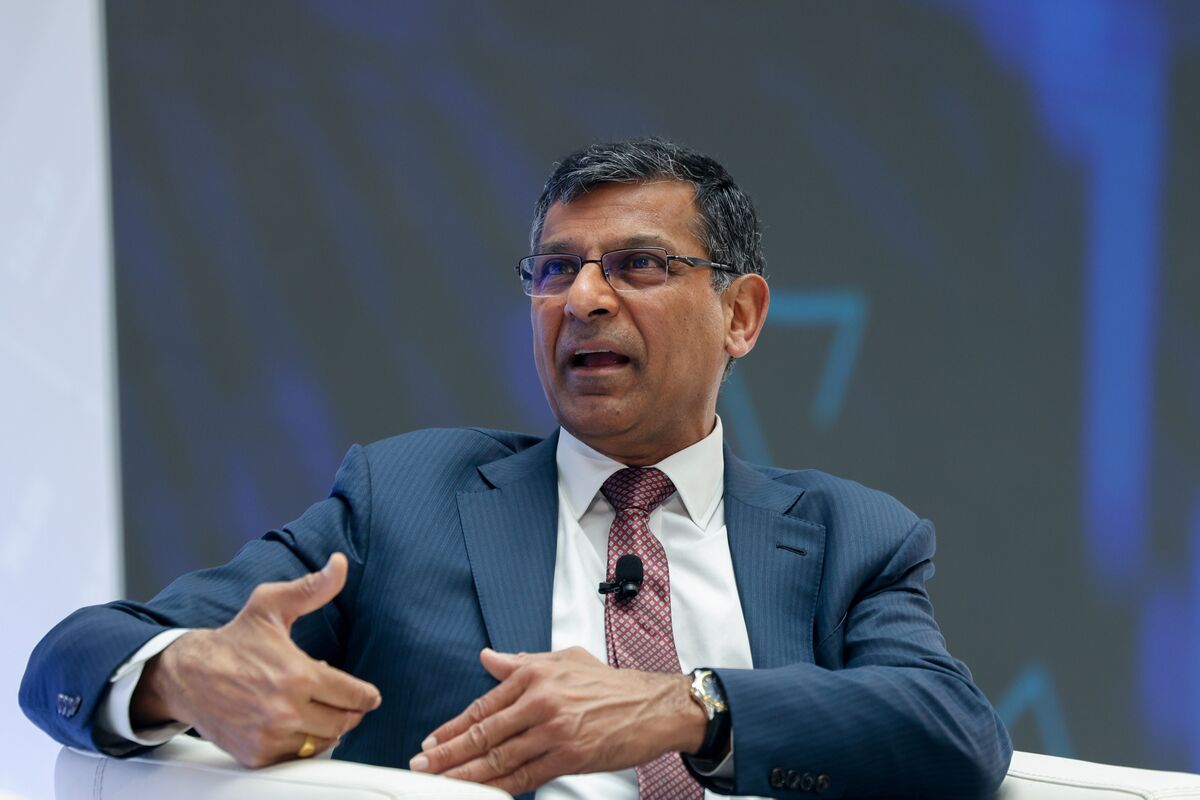
Former RBI Governor Raghuram Rajan warned that excess liquidity is building up in private credit globally, fueled by strong private-sector profitability and a wave of AI success stories that have encouraged a lending boom. He cautioned that market participants appear to assume the expansion will continue, flagging rising asset-class risk and prompting allocators to reassess underwriting, concentration and liquidity exposures in private credit.
Market structure: Excess private-credit liquidity benefits large asset managers and fee-earning platforms (Blackstone BX, KKR) that can scale originations and capture management/performance fees; it hurts traditional banks and highly levered BDCs (ARCC, MAIN) as pricing gets compressed and credit selection weakens. Expect origination spreads to compress 50–200bp in aggressive niches over 6–24 months, shifting share from syndicated markets to direct lenders. Lower yields in private credit will attract more AUM, creating a feedback loop until underwriting quality is tested.
Risk assessment: Tail risk is a credit repricing event — a 200–400bp move wider in HY/CDS over 12–36 months could force markdowns and redemption stress in illiquid funds; regulatory clampdowns (stress tests, leverage limits) within 3–12 months are material. Hidden dependencies include wholesale funding lines and repo in many BDCs/credit vehicles and mark-to-market mismatches if rates or defaults spike. Key catalysts: Fed rate path, macro slowdown, and sector shocks (AI froth reversing) — monitor CDX HY spread >400bp and BDC dividend cuts as triggers.
Trade implications: Favor platform managers with scale and diversified fee pools (long BX, KKR) while de-emphasizing direct-exposure lenders and BDC equity (ARCC, MAIN). Hedge macro tail risk via 6–12 month puts on HYG or buying CDX HY protection sized to cover 2–5% portfolio loss; use short-dated put spreads to monetize compressed implied volatility. Rotate from regional bank/loan-linked financials into asset managers and defensive credit (IG corporates, cash) over next 1–3 months.
Contrarian angles: Consensus assumes fee growth automatically offsets future defaults — that may be false if AUM growth requires lower covenants and higher leverage; public asset managers may NOT fully capture private-credit returns due to GP-led liquidity and fee ratchets. Reaction may be underdone in public HY markets (tight spreads) and overdone in BDC equity (dividend risk). Historical parallel: 2006–08 leveraged-loan froth shows multi-year lag between spread compression and credit cycle deterioration, offering a 12–36 month window to hedge or short repricing-sensitive names.
AI-powered research, real-time alerts, and portfolio analytics for institutional investors.
Request DemoOverall Sentiment
moderately negative
Sentiment Score
-0.35
