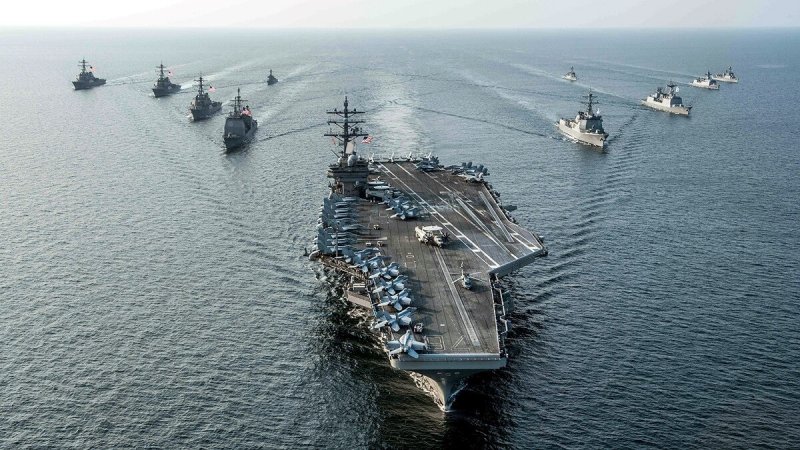
A potential coordinated US–Israeli strike on Iran would prioritize degrading capabilities — targeting nuclear facilities to delay enrichment, missile production/storage to limit rapid retaliation, and IRGC command centers to disrupt coordination — rather than attempting regime change. Operational constraints (deeply buried sites, dispersed/mobile missile assets, layered air defenses) and likely cyber complements mean effects would probably be temporary and carry high escalation risk, increasing the probability of regional retaliation, disruption to maritime trade and energy-price volatility.
Market structure: A US–Israeli strike (or credible threat) bids up energy, defense, and safe-haven assets immediately while depressing regional EM assets, airlines, and global trade-sensitive cyclicals. Expect a 5–15% knee-jerk move in Brent/WTI within days if shipping or Hormuz risks materialize, a 3–8% re-rating for large-cap defense contractors over weeks, and a flight-to-quality push that can lower 10y Treasury yields by 10–30bp intraday before repricing on inflation risks.
Risk assessment: Tail scenarios include a protracted regional conflict that sends Brent >$120/bbl (global recession trigger) or widescale cyberattacks that disrupt US critical infrastructure; both would widen IG/EM spreads by 50–300bp. Immediate (days) risks: spikes in VIX, tanker insurance/shipping disruptions; short-term (weeks–months): defense order book visibility and rerating; long-term (quarters–years): sustained higher energy costs, defense capex cycles, and permanent supply-chain reroutes.
Trade implications: Primary actionable plays are long integrated energy (XOM, CVX, XLE) and large-cap defense (LMT, RTX, NOC) with hedges in gold (GLD) and Treasuries (TLT) for 1–3 month windows; short airline/travel (AAL, LUV, JETS) and EM FX/sovereigns. Use options to buy asymmetric exposure (3-month call spreads on LMT/RTX, 10–20% OTM) and put spreads on JETS or regional banks to limit cost.
Contrarian angles: Consensus may overpay small-cap defense names and neglect that oil spikes often fade if strategic reserves and rerouting occur (histor precedent: 2019–2020 Gulf tensions). If Brent retreats below $85 within 4–6 weeks, unwind energy longs and shift gains into cyclicals; conversely, a sustained breach above $100 should trigger doubling defense and energy exposures given multi-quarter earnings upside.
AI-powered research, real-time alerts, and portfolio analytics for institutional investors.
Request DemoOverall Sentiment
strongly negative
Sentiment Score
-0.60
