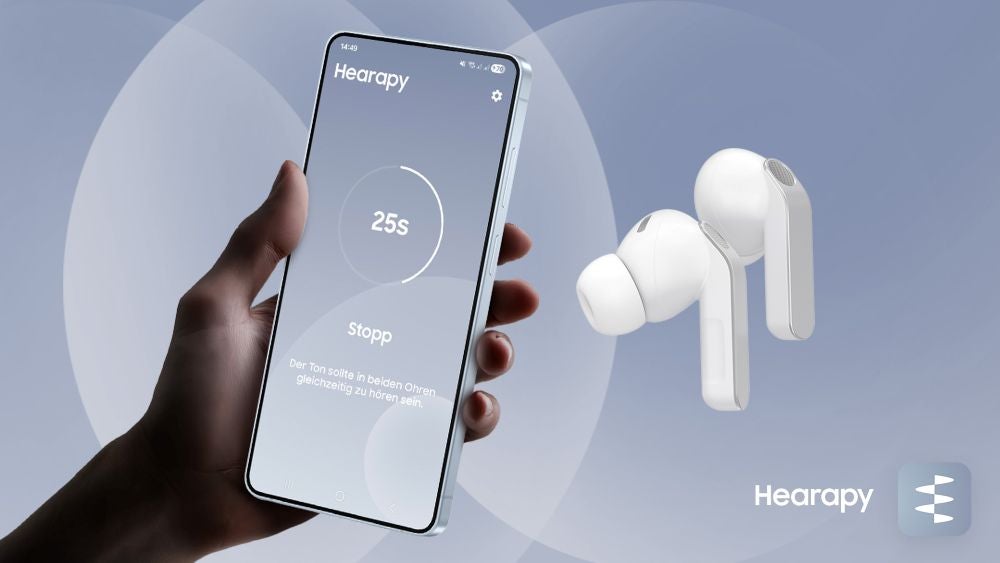
Samsung launched Hearapy, a free Android app that plays a 100 Hz sine wave at 75–85 dB for at least 1 minute pre-journey to reduce motion sickness, with effects reported to last up to 2 hours. The app is based on research from Nagoya University, is not restricted to Galaxy devices (though tuned for Buds 4 Pro), and can be used with most headphones or without them (potentially less effective).
This is an audio-ecosystem story more than a single-app story: a low-friction signal that can be delivered through commodity headphones creates incremental demand for devices and silicon that reproduce clean low‑frequency energy and for OS vendors willing to bake the capability in. Expect the first-order winners to be SoC/audio-IP owners and premium earbud makers that can guarantee 100 Hz fidelity and bass extension under real-world fit conditions; OEMs that can push the feature into the firmware/OS capture the largest share of downstream accessory revenue.
Second-order demand effects are subtle but investable: better in-vehicle comfort nudges more on-device consumption (streaming, gaming) during travel, which lifts content monetization and increases willingness to buy higher‑margin ANC/true‑wireless upgrades. Conversely, commoditization of the remedy (free app + broad Android support) raises the bar on differentiation — aftermarket earbuds that fail to reproduce the tone will lose perceived quality, pressuring cheaper OEMs and amplifying premium vs mass-market share divergence.
Key risks and catalysts are concentrated and time-boxed. Near-term (days–weeks) we get download and usage signals; medium-term (3–12 months) the critical catalysts are (1) Apple/Google embedding a system-level solution, (2) peer‑reviewed clinical pushback or regulatory scrutiny if the feature is marketed as medical, and (3) technical limits—many sub-$100 buds simply can’t reproduce a clean 100 Hz tone. Any of those can materially reverse the hardware-winners narrative.
The contrarian angle: consensus may underprice the lifting effect on premium accessory ASPs and audio SoC licensing, but overestimate the total addressable replacement of pharmaceuticals or vestibular clinics. Real upside is niche and concentrated in premium audio and platform control rather than a broad consumer-health disruption — therefore target concentrated hardware/processor exposures, not consumer-health staples.
AI-powered research, real-time alerts, and portfolio analytics for institutional investors.
Request DemoOverall Sentiment
mildly positive
Sentiment Score
0.15
Ticker Sentiment
