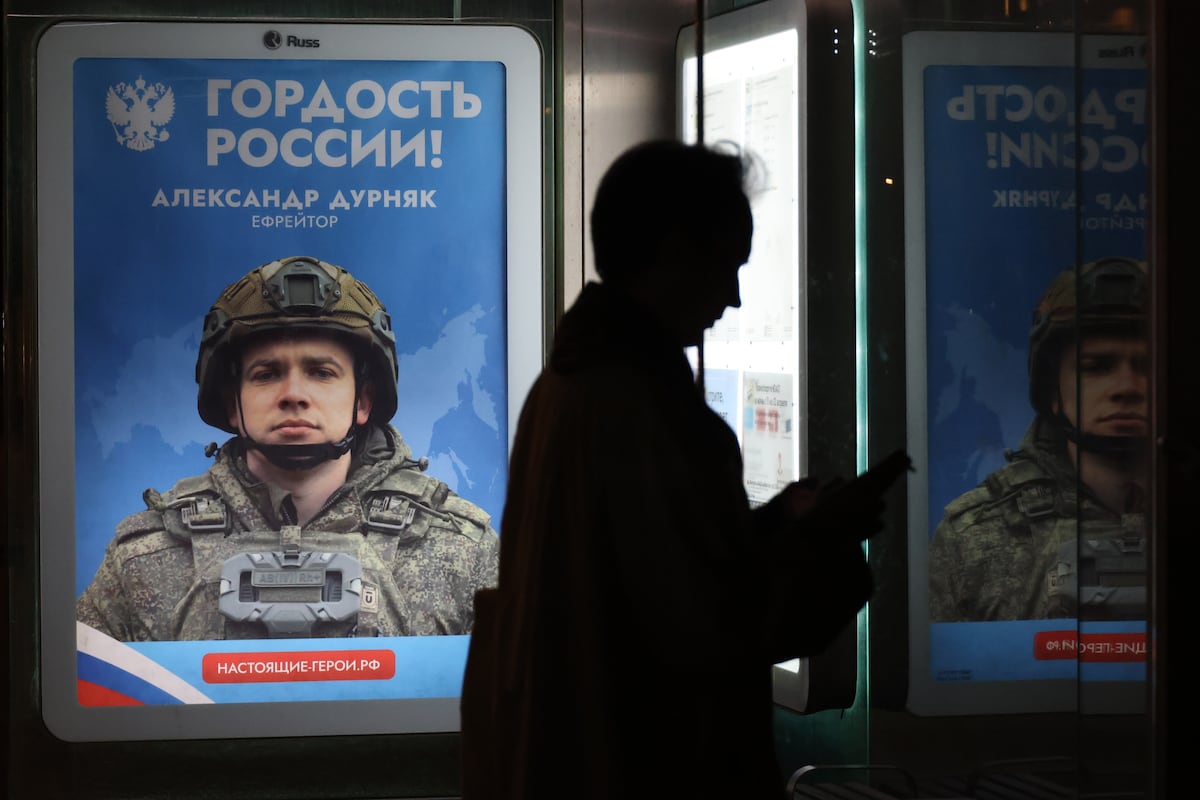
Dutch military intelligence says Russia could be ready for a regional conflict with NATO within a year after the war in Ukraine ends, citing concrete preparations, expanded force generation, and destabilizing nuclear-capable systems. The report also flags intensified Russian-Chinese military, cyber, and space-tech cooperation, alongside rising risks from AI, quantum computing, and a renewed nuclear arms race. The assessment points to elevated geopolitical risk for European defense, cybersecurity, and broader market sentiment.
The market implication is not an immediate kinetic shock premium, but a longer-duration re-rating of European security spending and “resilience” capex. The underappreciated second-order effect is that the threat is broadening from munitions and platforms into ISR, drones, cyber defense, EW, space-resilient comms, and critical-infrastructure hardening, which should sustain budgets even if headline war spending plateaus. That shifts the winners from pure legacy armor names toward suppliers with software-defined systems, expendables, and integration into allied procurement frameworks.
The more important catalyst path is a sequencing trade: any credible ceasefire or freezing of Ukraine likely lowers near-term gas and risk premia, but increases the probability of a NATO-preparation spend wave within 6-18 months as policymakers treat the post-war window as the rearmament clock. In other words, the market may incorrectly buy defense on active-war headlines and sell it on de-escalation, when the better entry is often the lull. The clearest beneficiaries are European primes, drone/autonomy enablers, satellite/secure comms, and cyber vendors tied to defense budgets; the losers are utilities, transport, and select industrials exposed to longer-dated European capex compression if fiscal resources are redirected.
Contrarianly, the article argues for more defense exposure, but not necessarily on the front-line platform names already crowded by consensus. The intelligence angle on Russian space weakness and Chinese commercial support suggests a bigger opportunity in satellite components, launch-adjacent services, encryption, and data-link security than in tanks or jets. The downside tail is a rapid diplomatic thaw or U.S. policy stabilization that compresses the urgency trade, so positions should be structured with time decay awareness and event-driven add-ons around ceasefire negotiations, NATO summit cycles, and European budget announcements.
AI-powered research, real-time alerts, and portfolio analytics for institutional investors.
Request TrialOverall Sentiment
strongly negative
Sentiment Score
-0.75
