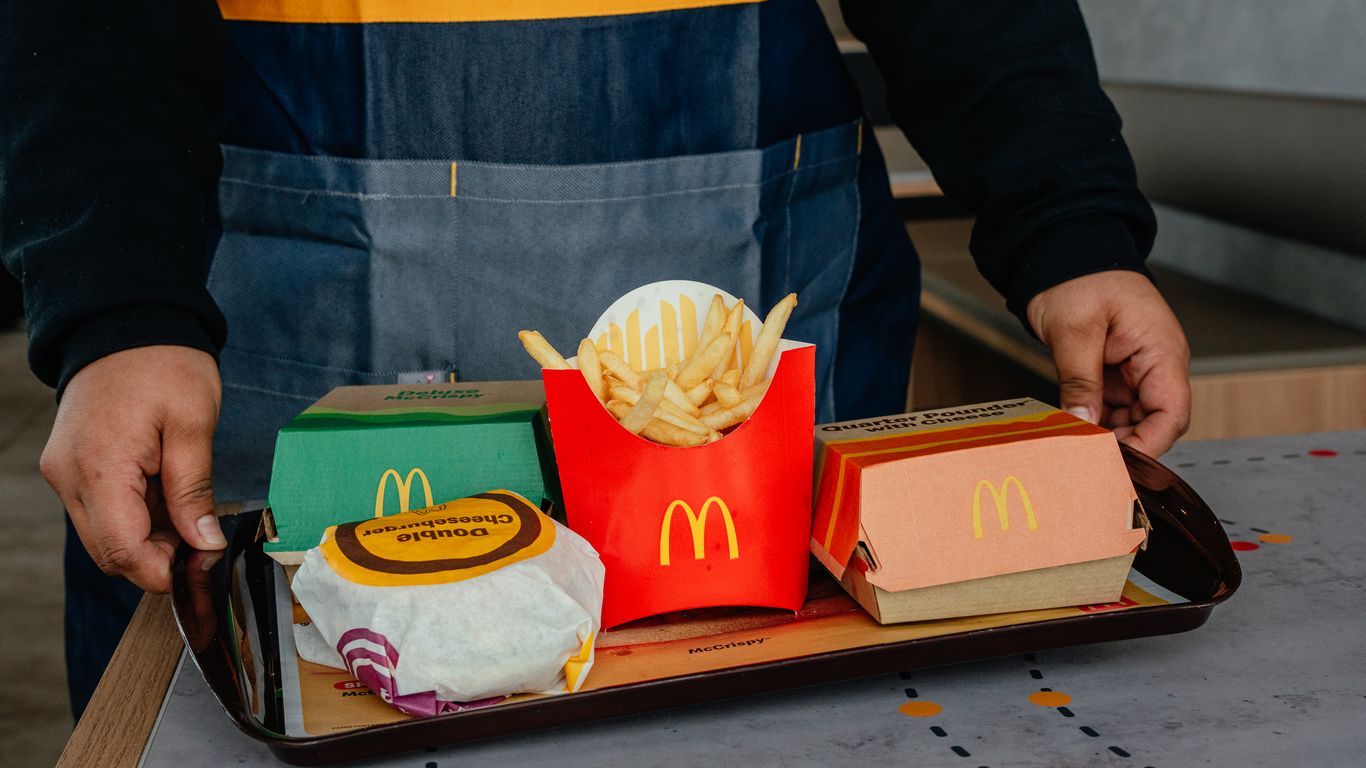
McDonald's reported stronger first-quarter sales, with U.S. comparable sales up 3.9% and global comparable sales up 3.8%, while revenue rose 9% to $6.5 billion. Global systemwide sales increased 6% in constant currency to more than $34 billion, and loyalty-linked sales topped $9 billion for the quarter. Results suggest its value-led strategy, loyalty program, and menu innovation are resonating despite ongoing consumer pressure.
The important takeaway is not just that traffic held up, but that the company is proving it can reprice the same demand stream in multiple ways: value anchors protect the bottom of the funnel while loyalty and premium launches lift ticket. That mix is structurally better for margins than pure discounting, because it shifts the battle from raw visits to share-of-wallet and frequency capture. If this persists, the second-order beneficiary is the broader quick-service ecosystem: suppliers tied to breakfast, beverages, and digital engagement should see better throughput, while mid-tier casual dining faces a tougher relative value comparison.
This also signals that consumer stress is becoming more segmented rather than uniform. Lower-income diners are still trading down into the brand, but the willingness to pay up for novelty and limited-time offers suggests that upper-quartile households are not yet meaningfully pulling back. That matters for the next several quarters because restaurant comps can stay deceptively resilient even as transaction growth softens; the key risk is that average check-led growth eventually hits elasticity limits once promotional cadence saturates.
From a market perspective, the setup is constructive but not without a catalyst risk. The stock likely benefits if management can show that loyalty-driven sales are incremental rather than subsidized, but if traffic later disappoints, investors will re-rate the current mix as margin dilution disguised as growth. The most relevant monitoring window is the next 1-2 quarters: a slowdown in check expansion or diminishing returns from specialty beverages would be the first sign that the affordability engine is losing steam.
The contrarian angle is that the market may be underestimating how durable this model is in a high-cost consumer environment. If meal inflation stays sticky, value leaders with strong app ecosystems can widen their moat because they own both the downtrade and the indulgence occasions. The bigger risk is for peers that rely on a single positioning lever; they will be forced either to match discounts or accept share loss.
AI-powered research, real-time alerts, and portfolio analytics for institutional investors.
Request DemoOverall Sentiment
moderately positive
Sentiment Score
0.55
Ticker Sentiment
