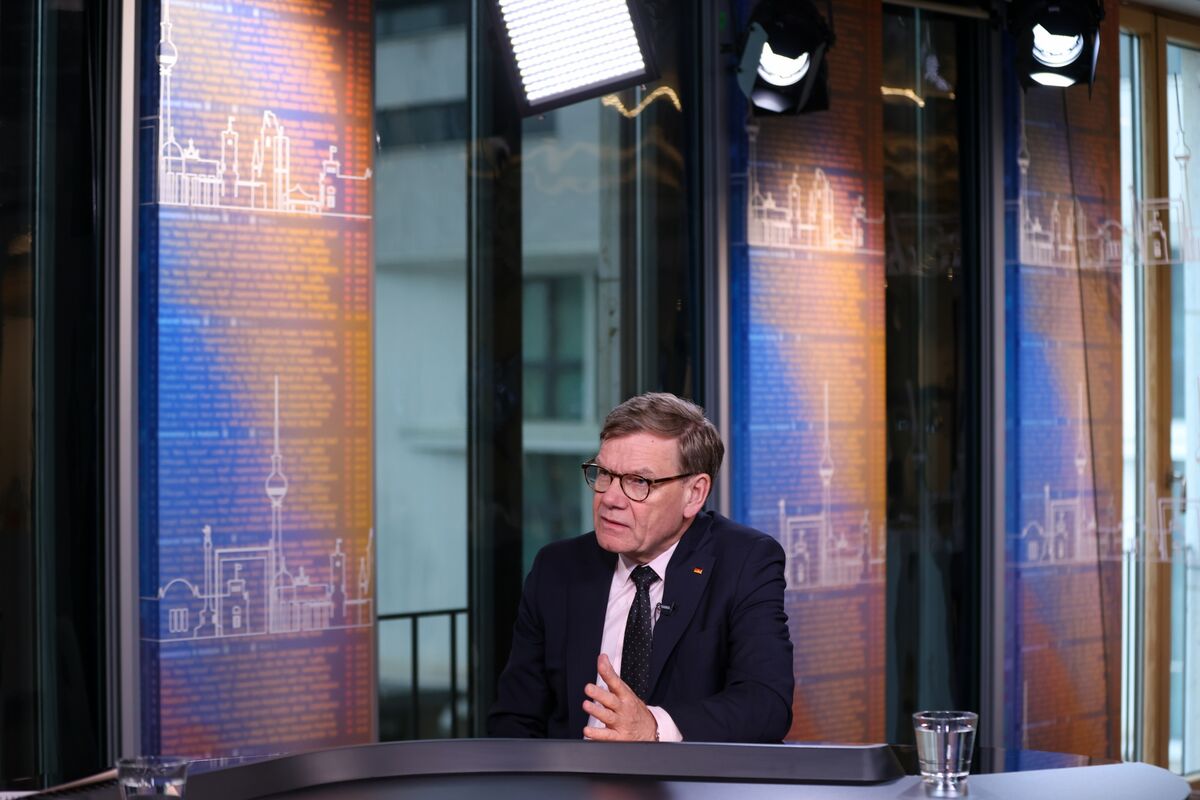
Germany’s foreign minister said tensions between Donald Trump and Chancellor Friedrich Merz were a misunderstanding and that relations between the two leaders are "solid." Berlin also reiterated support for the US position that Iran must not obtain a nuclear weapon, signaling continuity in transatlantic policy rather than a policy shift. The article is mostly diplomatic clarification with limited direct market implications.
The near-term market read-through is less about diplomacy headlines and more about de-risking the Iran tail: any signal that Berlin and Washington are aligned lowers the probability of a fragmented Western response if talks stall or escalation resumes. That matters for defense and energy vol more than for outright direction in broad Europe, because the market has already priced a meaningful geopolitical premium into Middle East-adjacent assets; the incremental impact is in the persistence of that premium, not its size.
Second-order winners are European defense primes and missile-defense supply chains, which benefit if the Iran issue reinforces NATO burden-sharing and accelerates procurement urgency. The cleaner the transatlantic coordination looks, the easier it is for defense ministries to justify faster contract awards and higher readiness spending over the next 6-18 months. Conversely, any appearance that the U.S. is willing to negotiate hard but remains unified with Europe reduces the odds of a sudden diplomatic split that would otherwise compress defense-risk premia.
The contrarian angle is that this may be more about rhetoric management than policy convergence, so the market could be overreacting if it extrapolates a durable easing of geopolitical risk. The real catalyst is not this comment cycle but whether Iran talks move from signaling to a verifiable framework; without that, headline risk can reprice quickly over days, while procurement and budget effects take quarters. Tail risk is a breakdown in talks followed by a military incident, which would hit European cyclicals and transport while lifting defense, oil services, and cyber/security exposures.
From a positioning standpoint, the cleaner trade is to lean into defense beneficiaries on any post-headline consolidation rather than chase strength immediately. The asymmetry is better in options than cash equity because the binary catalyst path is long-dated and headline-driven, with low carry cost until the next negotiation milestone.
AI-powered research, real-time alerts, and portfolio analytics for institutional investors.
Request DemoOverall Sentiment
neutral
Sentiment Score
0.05
