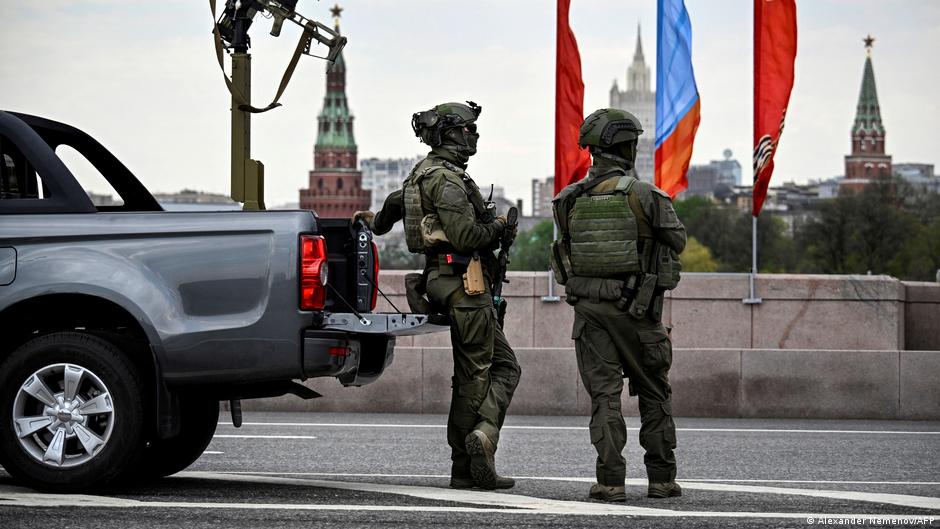
Russia and Ukraine continue trading accusations ahead of Moscow’s May 9 Victory Day parade, with Russia extending security measures and warning of potential retaliatory strikes. Zelenskyy urged countries aligned with Russia not to attend the parade and said Moscow disregarded ceasefire goodwill gestures while launching new attacks. The article also notes renewed Ukraine-US negotiations in Miami on prisoners and diplomacy, plus a recent US weapons sale approval to Kyiv.
The market-relevant read is not the parade itself but the signal that both sides are telegraphing asymmetric escalation while still preserving optionality for negotiations. That combination tends to suppress risk appetite in adjacent European cyclicals, energy transit assets, and any asset tied to Black Sea shipping or Eastern Europe reconstruction, because the probability distribution widens without a clear base-case resolution. The most immediate second-order effect is on Russian domestic logistics and telecom reliability around May 9, which raises the odds of temporary operational disruption rather than a broad macro shock.
A key tail risk is miscalculation during the 72-hour window: a symbolic date plus elevated drone activity creates a classic headline gap-risk setup where one successful strike can trigger disproportionate retaliation. That matters for defense names only if it extends the war’s duration; in the very short term, the better expression is volatility rather than outright direction. The meeting in Miami is more relevant over 1-3 months: even a modest prisoner or humanitarian breakthrough can reduce terminal-war premium, but absent that, the diplomatic process remains a low-conviction catalyst rather than a regime shift.
Contrarian view: consensus may be overestimating the durability of “parade risk” as a market driver and underestimating the structural normalization of elevated defense spending across Europe. If anything, repeated security scares reinforce procurement urgency, benefiting firms with exposure to air defense, EW, drones, and munitions rather than legacy armor. The bigger medium-term loser is any asset class pricing in a rapid ceasefire path; this event modestly reduces those odds, but not enough to justify aggressive macro positioning without better evidence from the US-Ukraine talks.
AI-powered research, real-time alerts, and portfolio analytics for institutional investors.
Request DemoOverall Sentiment
mildly negative
Sentiment Score
-0.20
