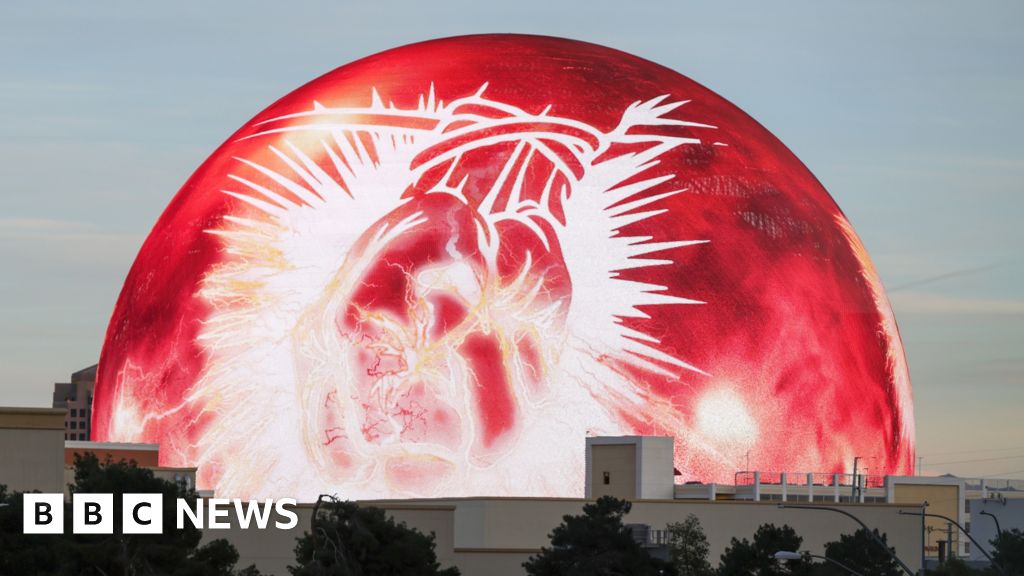
Sphere Entertainment reported net income of $57.6m for the 2025 calendar year on the back of the $2.3bn Las Vegas Sphere, marking a profitable turnaround after earlier concerns about viability. Competitor Cosm is expanding LED dome venues (existing: LA, Dallas, Atlanta; planned: Cleveland, Detroit; target: >100 worldwide) while Sphere plans 5,000-seat "mini Spheres" — ticket prices generally start at $100, making this a sector-level commercial test with lingering questions about scalability and broad consumer appeal.
Domed, concave-LED venues create a classic high-fixed / low-marginal-cost commercial structure: once the hardware is amortized, every additional residency or film showing drops to near-high-margin revenue, so local market dominance (tourist footfall + limited direct substitutes) can generate outsized returns. That geometry favors operators who (a) secure repeat, exclusive content pipelines and (b) capture ancillary revenue (premium F&B, sponsorship/LED-ad inventory) rather than pure ticket volume. Scaling beyond a few tourist hubs is the core strategic challenge—site selection, planning permissions and bespoke LED engineering mean rollout is likely measured in years, not quarters, and economics will bifurcate between gateway tourist markets and second-tier cities.
Second-order beneficiaries include curved-LED fabricators, custom software/IP owners (playback, spatial mapping, rights management) and dynamic pricing SaaS providers; these suppliers can extract margin and introduce switching costs, creating a supplier-concentrated ecosystem that could be monetized via long-term contracts or licensing. Incumbent large-format exhibitors face an existential choice: partner and re-platform content to dome/LED formats or cede premium shows; failure to adapt would compress their top-line premium content mix and push them toward commodity pricing. Watch for ecosystem consolidation—acquisitions of boutique content studios or LED specialists would be a fast way for pure-play operators to secure supply and margin capture.
Key risks and catalysts: novelty decay (repeat-visit rate), macro tourism cycles, zoning/regulatory pushback, and technological obsolescence from cheaper at-home AR/VR—any one can reverse the investment case within 12–36 months. Near-term catalysts that will reprice these assets are (1) announcements of multi-site rollouts with committed financing, (2) marquee content deals with long-term revenue-sharing, and (3) public disclosures of occupancy, ARPU and non-ticket revenue mix; absent positive reads on those three, investor sentiment will re-rate toward risk-off quickly.
AI-powered research, real-time alerts, and portfolio analytics for institutional investors.
Request DemoOverall Sentiment
mildly positive
Sentiment Score
0.25
Ticker Sentiment
