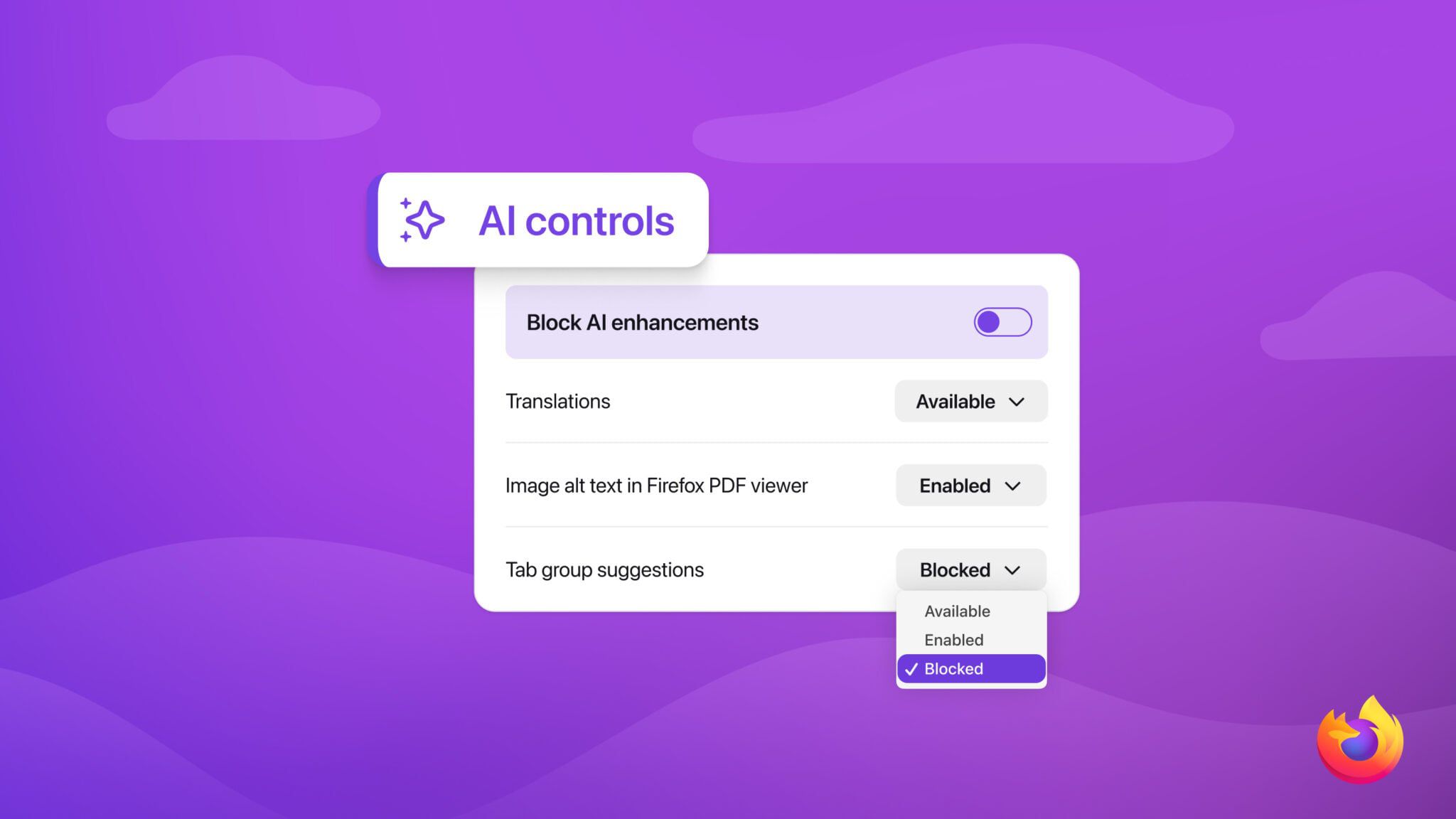
Mozilla will add user controls in Firefox 148 (rolling out Feb. 24) to disable AI features either individually or via a master 'Block AI Enhancements' toggle. The options cover translations, PDF alt text, AI-enhanced tab grouping, link previews and an in‑sidebar AI chatbot (supporting third‑party models such as Anthropic Claude, ChatGPT, Microsoft Copilot, Google Gemini and Le Chat Mistral), a move intended to preserve user choice and trust while allowing continued development of browser AI capabilities.
Market structure: Mozilla’s toggle is a defensive move that benefits privacy-first platforms (Apple's iOS/Safari positioning) and reinforces user control as a competitive axis. Firefox’s ~3–4% desktop share means direct revenue impact to big AI vendors is small — estimate a 0.5–2% reduction in browser-driven AI interactions if 10–30% of Firefox users opt out — but the precedent increases bargaining power for browsers and regulators. Competitive dynamics favor OS-integrated vendors (AAPL, MSFT) who can monetize AI via hardware/services rather than in‑browser hooks.
Risk assessment: Tail risks include regulatory mandates forcing opt-ins or forced defaults (GDPR-like), and a contagion where Chrome/Safari adopt similar toggles within 6–18 months, which could shave mid-single-digit percentage points off ad/engagement growth for Google/Meta over 1–2 years. Near-term (days–weeks) market moves should be muted; measureable revenue impact will show in quarters (2–4). Hidden dependencies: default search/ad revenue contracts and telemetry signals; catalysts are regulator rulings, or Chrome copying the feature.
Trade implications: Favor AAPL exposure around product/M&A tailwinds: consider a 2–3% notional long via a 3–6 month bull-call spread ahead of expected MacBook Pro (next 4–8 weeks), capping cost and targeting 8–15% upside. Add a modest 1–2% overweight in MSFT (6‑month call spread) to play enterprise AI monetization; run a pair trade long MSFT (1.5%) / short GOOGL (1%) to express relative enterprise strength versus ad-reliant search exposure. Use 30–90 day options to harvest premium on event volatility and set stop-trims: trim AAPL if >10% post-launch, cut pair if MSFT/GOOGL relative moves >8%.
Contrarian angle: The market likely underprices the precedent: privacy toggles historically produce gradual not abrupt headwinds (see cookie opt-outs: 3–7% ad revenue impact over 1–2 years), so aggressive shorting of major AI vendors is premature. Watch for unintended consequence: stronger OS-level AI integrations (Apple/Windows) could accelerate device attach and services ARPU — a trigger to add to AAPL/MSFT if Firefox opt-out rates exceed 20% or if Chrome adopts parity within 6 months.
AI-powered research, real-time alerts, and portfolio analytics for institutional investors.
Request DemoOverall Sentiment
neutral
Sentiment Score
0.10
Ticker Sentiment
