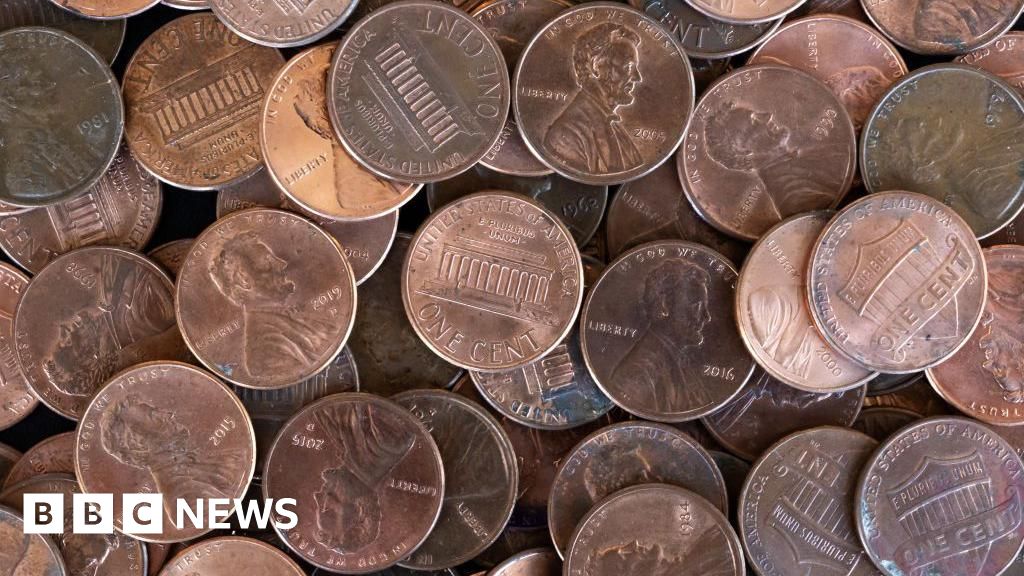
The US Mint's cessation of penny production in May has led to an earlier-than-anticipated and severe shortage of one-cent coins, significantly impacting businesses. Retailers, unable to secure pennies, are frequently forced to round down cash transactions to the nearest five cents, incurring substantial revenue losses, exemplified by Kwik Trip's projected $3 million hit. This situation not only disproportionately affects lower-income cash users but also underscores a critical lack of federal guidance for transaction handling, while raising questions about the actual cost savings given the high production cost of alternative denominations like nickels.
The US Mint's cessation of penny production in May, following a Trump administration directive, has precipitated an acute and earlier-than-anticipated shortage of one-cent coins, beginning in late August/early September instead of the Treasury's projected 2026. This immediate scarcity has forced businesses, particularly those reliant on cash transactions like convenience stores, to adapt rapidly without federal guidance. The situation is characterized by a moderately negative sentiment and an uncertain tone, reflecting the operational challenges.
Many retailers are now rounding cash sales down to the nearest five cents, a practice the National Retail Federation deems "unsustainable" due to potential losses of up to four cents per transaction. Kwik Trip, for example, projects a $3 million loss this year from this policy, highlighting significant revenue erosion for cash-heavy businesses. This situation disproportionately impacts lower-income consumers who rely on cash, as rounding transactions effectively increases their cost of goods.
The absence of clear federal guidelines for handling cash transactions during this shortage creates legal and operational risks for retailers, especially in jurisdictions requiring exact change. Furthermore, while the penny's production was deemed wasteful (costing nearly four cents to make), concerns arise that government savings may be offset by the high production cost of nickels (nearly 14 cents to make a five-cent coin), questioning the overall fiscal benefit.
AI-powered research, real-time alerts, and portfolio analytics for institutional investors.
Overall Sentiment
moderately negative
Sentiment Score
-0.55
