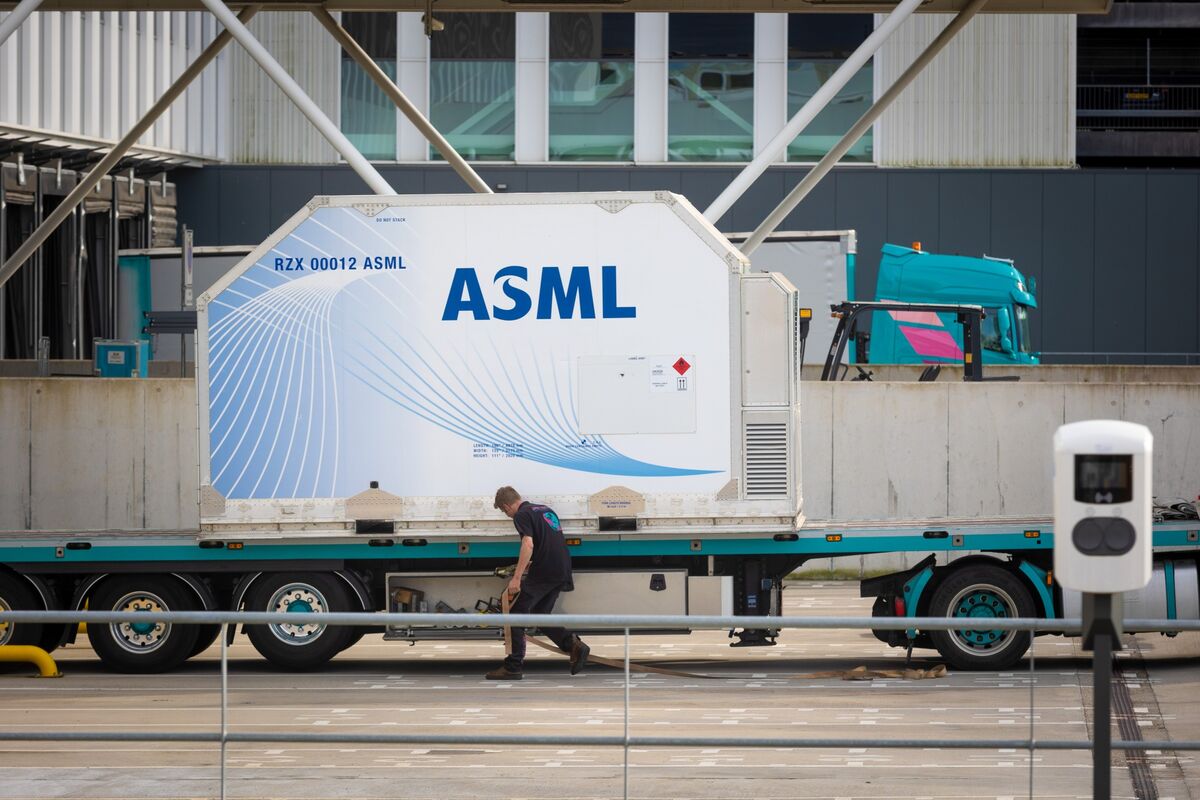
ASML CFO Roger Dassen reported that clients are now significantly more concerned about the global trade war than in April, leading the firm to attribute tariffs for clouding its sales outlook for next year. This highlights how escalating trade tensions are increasing uncertainty and impacting revenue projections for critical players within the global semiconductor supply chain.
ASML Holding NV's management has explicitly flagged deteriorating client sentiment as a direct result of escalating global trade tensions. Chief Financial Officer Roger Dassen's statement that customers are "more concerned about the tariffs discussion today than they were three months ago" provides a clear timeline for this worsening outlook. Crucially, the company has directly linked this uncertainty to a clouded sales forecast for the upcoming year, indicating that geopolitical risks are now translating into tangible business headwinds. As a lynchpin in the global semiconductor supply chain, ASML's commentary serves as a significant bellwether for the broader industry, suggesting that capital expenditure plans among chipmakers may be at risk of being deferred or reduced due to the tariff environment, which the CFO described as countries being in "full battle mode."
AI-powered research, real-time alerts, and portfolio analytics for institutional investors.
Request DemoOverall Sentiment
strongly negative
Sentiment Score
-0.65
Ticker Sentiment
