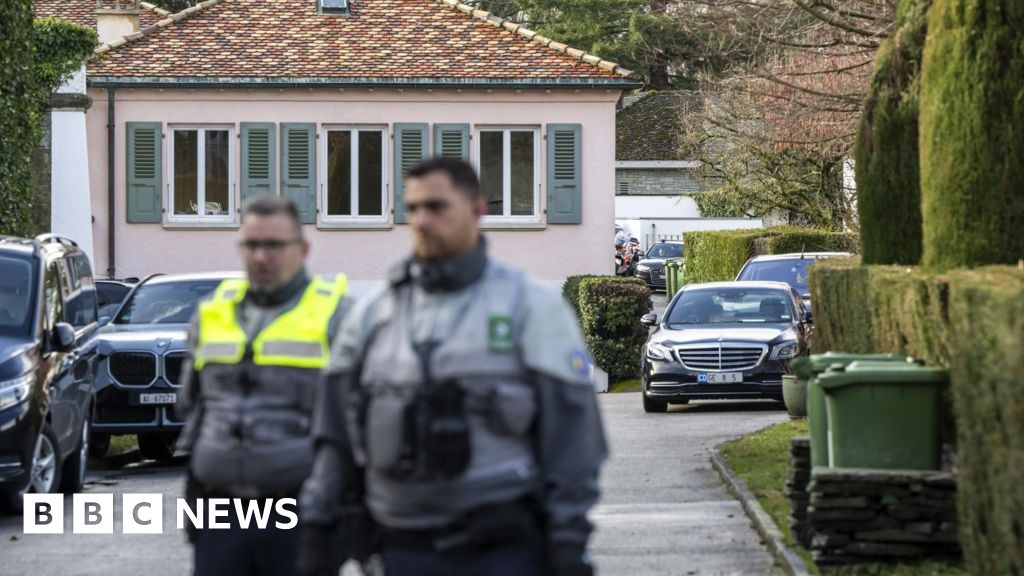
US and Iranian delegations are scheduled for a third round of indirect talks in Geneva as President Trump threatens limited strikes if a nuclear deal is not reached; the talks follow the largest US military build-up in the Middle East since 2003, including two aircraft carriers and thousands of troops. Iran has rejected demands to cease uranium enrichment but may offer concessions, while Washington seeks sanctions relief conditions; failure of diplomacy raises material tail-risk of strikes on Revolutionary Guard units or nuclear sites and the potential for a wider regional conflict, creating elevated market volatility and downside risk to risk assets and energy/defense-sensitive securities.
Market structure: geopolitical risk is a near-term bid for defense primes (Lockheed LMT, Northrop NOC, Raytheon RTX, General Dynamics GD), oil majors (XOM, CVX) and safe-havens (GLD, TLT). Expect a 5–20% volatility-driven re-rating in defense and gold within 1–3 months and a conditional oil risk premium that can push Brent +$10–20/bbl if shipping through Strait of Hormuz is disrupted (a 2–4 mb/d supply shock scenario). Travel, leisure (AAL, CCL) and EM equities (EEM) are immediate losers from travel disruption and risk-off flows.
Risk assessment: assign ~25–35% probability to limited strikes in the next 2–4 weeks, 5–10% to broader regional war lasting months; a full escalation could send Brent >$100 and S&P -10–15%. Immediate (days) -> volatility and safe-haven flows; short-term (weeks–months) -> credit spread widening and defense revenue upgrades; long-term (quarters) -> persistent higher defense budgets and possible sanctions-led energy reshaping. Hidden dependencies include insurance/premia on shipping, Iran’s clandestine stockpiles, and Congressional/Israeli pressure that could accelerate kinetic action.
Trade implications: favor modest sized, time-boxed exposures: long defense equities and gold, buy index tail protection, and widen credit hedges. Use options to control cost: 1–3 month SPY 1.5–2% OTM put protection and 3-month call spreads on LMT/NOC to capture re-rating while capping premium. Rotate away from airlines/cruise and reduce EM cyclicals; monitor Brent at $85 and VIX at 25 as tactical triggers to add/trim positions.
Contrarian angles: consensus may overstate permanence of risk—past Gulf shocks (2019 tanker incidents, 1990 Kuwait) saw large oil spikes that faded within 3–6 months once chokepoints avoided and spare capacity returned. If Geneva talks yield a limited deal or sanctions relief chatter (~within 7–14 days), defense and oil could retrace 8–20% quickly—short-duration protection sellers and mean-reversion trades on inflated VIX are tactical opportunities. Unintended consequence: sanction relief would deliver significant downside to oil/defense; size positions accordingly.
AI-powered research, real-time alerts, and portfolio analytics for institutional investors.
Request DemoOverall Sentiment
moderately negative
Sentiment Score
-0.60
