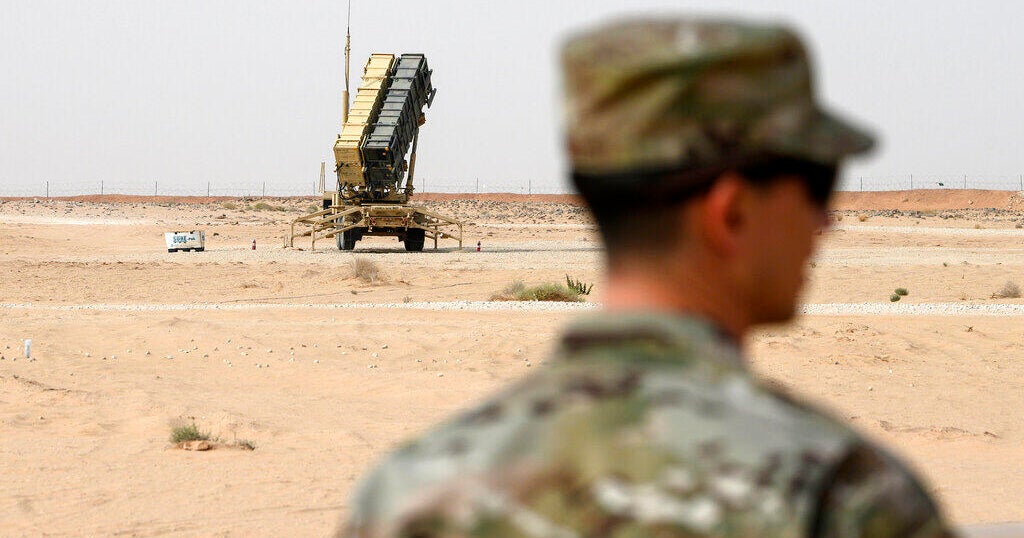
10 U.S. service members were injured (2 very seriously, 8 seriously) in an Iranian missile-and-drone strike on Prince Sultan Air Base in Saudi Arabia, a facility used by the USAF 378th Air Expeditionary Wing ~60 miles from Riyadh. Since the U.S.-Iran conflict began, 13 U.S. service members have been killed and 300+ wounded; the strike highlights regional escalation and reported shortages of missile interceptors among U.S. allies, raising near-term geopolitical risk and likely prompting risk-off moves and increased volatility in defense and energy-related markets.
This event magnifies an already-visible supply mismatch: demand for interceptors, munitions and integrated air‑defense C2 will reprice faster than primes can deliver. Expect a stepped pattern — immediate reorders and emergency buys for existing inventories (weeks), followed by multi-quarter capacity additions (3–18 months) that lift margin visibility for suppliers who own production tooling and niche missile subcomponents.
Second-order winners are companies that sell sustainment, radar upgrades, EW suites and logistics support rather than just airframes — these contracts are shorter to award and higher margin in the initial rush. Conversely, regional insurers, civilian logistics providers and airlines that rely on Gulf overflight corridors will see input-cost and premium shocks; that raises operating leverage risk for carriers and freight forwards with concentrated Middle East exposure.
Tail risks are asymmetric and time-dependent: a limited escalation peak causes a 1–2 week risk‑off impulse and a 5–12% bid in safe havens, while a broader kinetic campaign or US direct operations creates an oil‑supply shock that could spike energy prices and cut global risk assets (days–weeks). Reversal catalysts include rapid diplomatic de‑escalation or an emergency build-up of interceptor inventories provided by allies within 4–12 weeks, which would re-rate cyclicals back toward pre‑crisis levels. The market is likely underpricing two realities simultaneously — near-term defense repricing and multi‑quarter execution lag — making option structures preferable to outright single‑name bets.
AI-powered research, real-time alerts, and portfolio analytics for institutional investors.
Request DemoOverall Sentiment
strongly negative
Sentiment Score
-0.75
