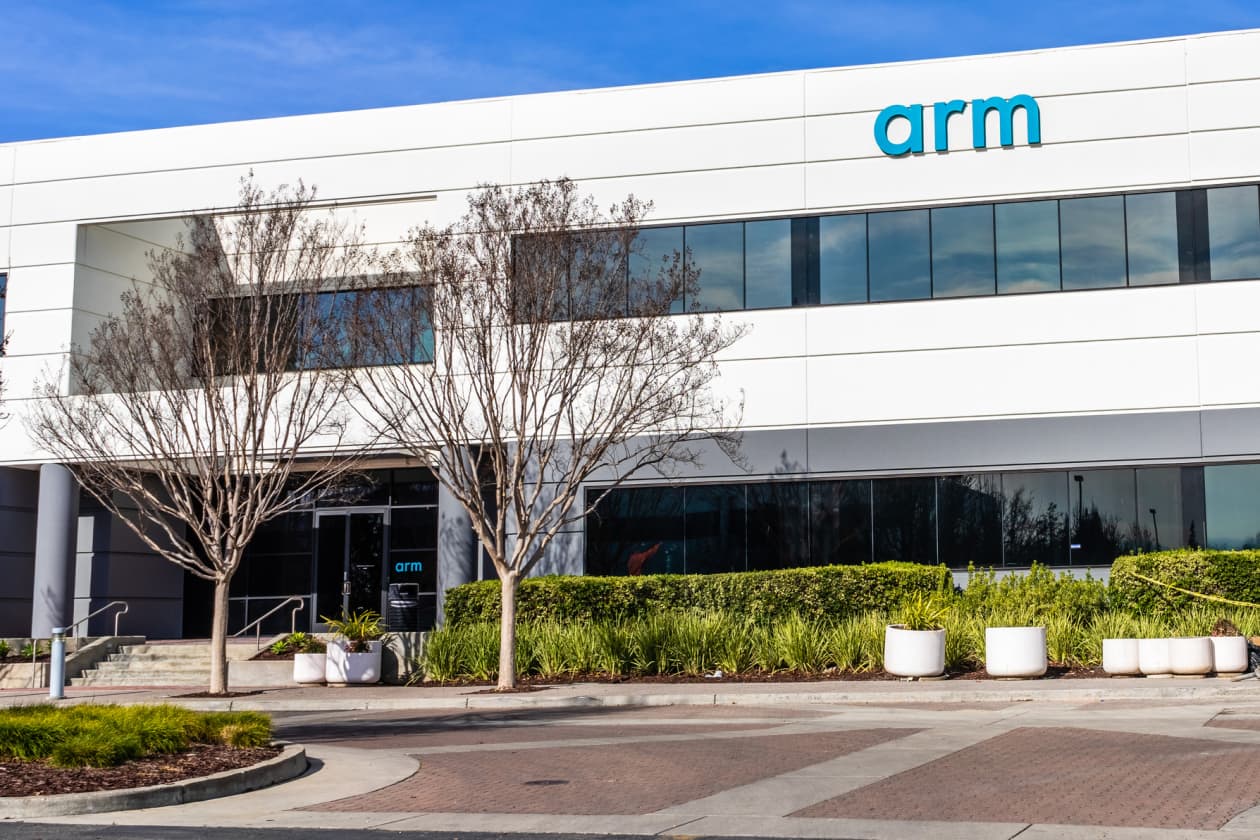
Bernstein sees Arm as a potential winner in the 'renaissance of CPUs,' with server CPUs projected to quadruple to $137 billion by the end of the decade. The analyst says AI agents are increasing demand for general-purpose chips, positioning Arm to expand beyond its dominant mobile-processor market. The note suggests the stock could rise another 45%.
The market is starting to price a second-order shift: server CPU share is no longer just a data-center procurement story, it’s a control point for AI inference economics. If agents push workloads toward always-on, latency-sensitive, and mixed precision tasks, the winning architecture is the one that delivers the best perf-per-watt and software portability rather than the highest raw accelerator throughput. That creates a broader monetization path for ARM than a simple handset-cycle rerate: more sockets, more licensing leverage, and a longer runway for ecosystem lock-in as hyperscalers optimize fleet-level TCO.
The key competitive implication is pressure on incumbent x86 vendors and on any OEMs or cloud vendors that are under-exposed to ARM-native tooling. The biggest second-order beneficiary may be the broader ARM ecosystem — chip foundries, silicon IP suppliers, and server OEMs — because adoption tends to be multiplicative once one large cloud customer proves workload migration at scale. The loser is not necessarily one company but the legacy operating model around centralized, power-hungry server design; margin risk shows up first in pricing power, then in design wins, then in utilization rates.
The risk is timing: the rerate can outrun the fundamental revenue inflection by quarters, but execution risk remains high over the next 6-18 months. If AI agents disappoint on real-world autonomy, if software compatibility remains a bottleneck, or if x86 vendors respond with aggressive pricing and architectural concessions, the thesis can compress quickly. There is also a valuation trap: a better market opportunity does not automatically translate into linear earnings upside if ARM’s take-rate and customer concentration limit capture.
The contrarian view is that the market may be overestimating how fast CPU demand expands relative to accelerator demand. In the near term, inference economics could still be dominated by GPUs/NPUs, with CPUs acting as the orchestration layer rather than the primary beneficiary. That would mean the narrative is directionally right but financially overstated; the right trade is exposure to adoption optionality, not a full-size momentum chase.
AI-powered research, real-time alerts, and portfolio analytics for institutional investors.
Request DemoOverall Sentiment
moderately positive
Sentiment Score
0.55
Ticker Sentiment
