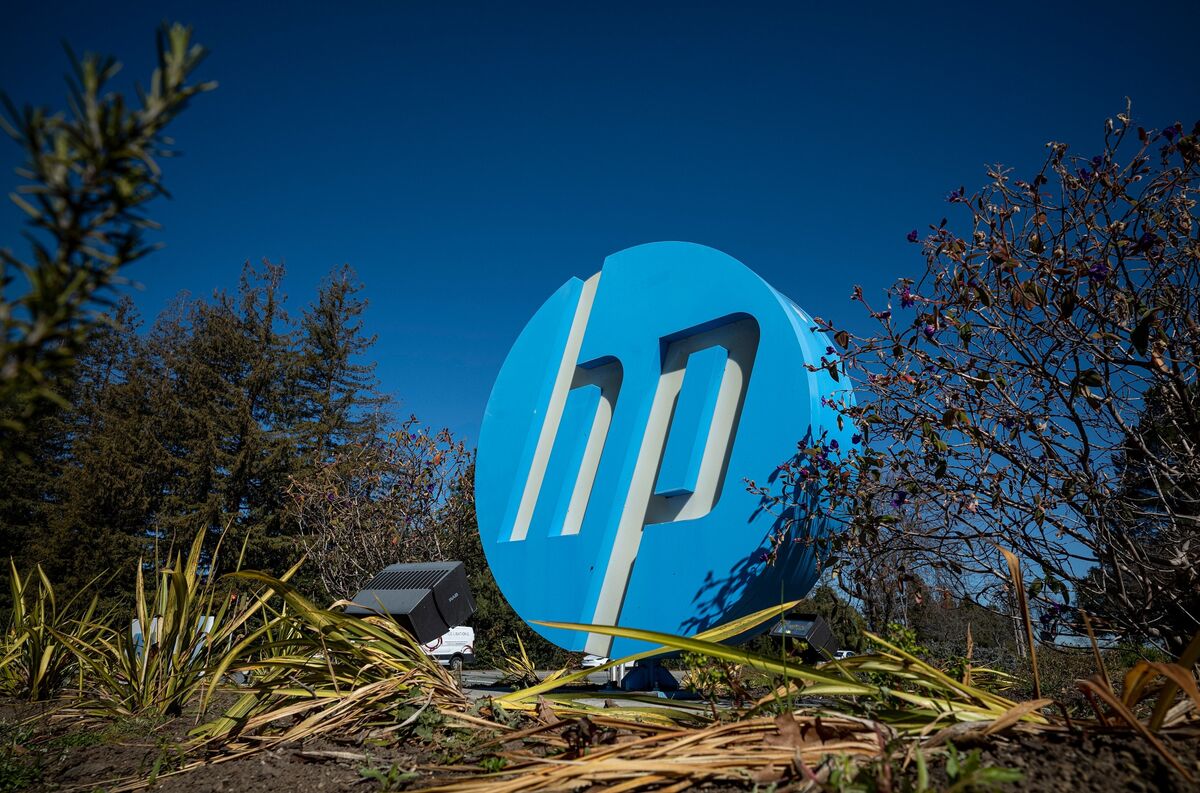
HP Inc. said its profit outlook for the current year came in below estimates and announced plans to cut 4,000–6,000 employees through fiscal 2028, targeting roughly $1.0 billion in annual gross savings by the end of 2028. Management intends to achieve the reductions by deploying AI across product development, customer support, sales and manufacturing—a margin-accretive restructuring that may relieve longer-term cost pressure but poses near-term execution and sentiment risks for the stock.
Market structure: HPQ’s 4k–6k job cut plan and $1bn annual gross savings by FY2028 (announced to be achieved via AI) benefits AI tooling vendors, systems integrators and cloud/GPU providers (NVDA, MSFT, GOOGL) that sell automation and infra, while hurting legacy staffing suppliers, reseller services and short-cycle consumer PC demand. Pricing power could improve modestly for HP (gross margin lift ~1–2% of revenue by 2028 if savings realized), but revenue risk exists if customer service/product delays erase gains. Cross-asset: expect near-term equity downside and rising HPQ implied vols; modest widening of HP credit spreads if profit outlook revisions persist; limited FX/commodity impact aside from marginally lower demand for consumables (printers/ink).
Risk assessment: tail risks include execution failure on AI integration (loss of >$500m of expected savings), regulatory/PR backlash over mass layoffs, or litigation costs; worst-case could trim liquidity and force deeper cuts. Time horizons: immediate (days) = sell-the-news, vol spike; short-term (weeks–months) = analyst downgrades and guidance resets; long-term (2026–2028) = structural margin improvement if AI replaces costs without revenue erosion. Hidden dependencies: savings hinge on capex and supplier contracts (GPU/AI stack), and on retention of high-skill R&D staff; erosion in customer satisfaction could depress FY25–26 revenue. Key catalysts: next quarterly guide, analyst revisions (30–60 days), customer satisfaction KPIs.
Trade implications: near-term tactical: establish a small outright short (1–2% NAV) or buy 3-month HPQ puts 5–7% OTM to capture earnings/guidance risk; size options relative to portfolio vega. Relative-value: pair trade long DELL (or LNVGY) vs short HPQ — expect Dell’s enterprise services/servers to outperform PCs if HP self-inflicts execution risk; equal-dollar pair for 3–6 months. Rotate sector: reduce weight in discretionary PC/hardware by 2–5% and reallocate to AI infra (NVDA 1–2% overweight, MSFT 1–2%). Entry/exit: initiate shorts/puts within next 5 trading days on continued weakness, cover/assess at next quarterly call or when HPQ drops another 8–12%.
Contrarian angles: the market may over-penalize HP for a $1bn run-rate saving which is ~1–2% of revenue — an execution success would be mildly EPS-accretive, not transformative; if HP executes, downside may be limited and recovery could be sharp into 2026–28. Historical parallels: cost-cut programs announced with tech automation often compress revenue transiently but restore margins over 18–36 months when execution is competent; failure risk is operational, not strategic. Unintended consequence: aggressive automation could hollow out product development and accelerate OEM share losses — monitor R&D headcount and NPS trends as leading indicators.
AI-powered research, real-time alerts, and portfolio analytics for institutional investors.
Request DemoOverall Sentiment
moderately negative
Sentiment Score
-0.45
Ticker Sentiment
