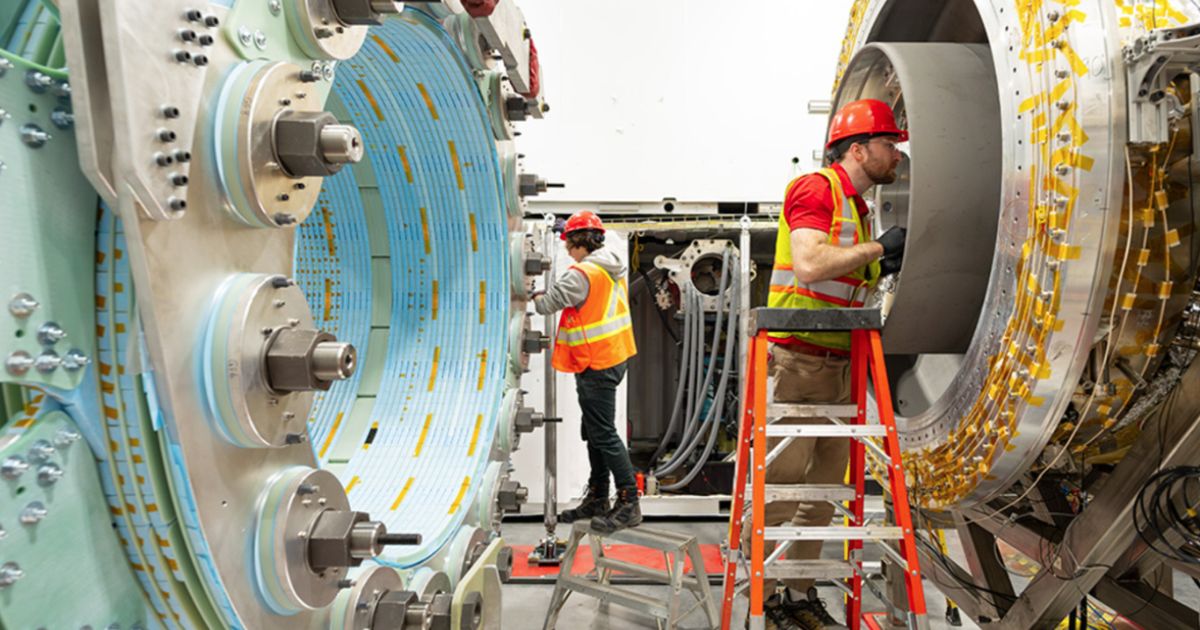
Trump Media & Technology Group agreed to merge with fusion developer TAE Technologies, sending TMTG shares up ~34%; the deal values TAE at $53.89 per share (based on TMTG’s 30-day VWAP) and will split the combined company 50/50 on a fully diluted basis. TMTG will provide up to $200m at signing plus $100m upon initial S-4 filing, the boards have approved the transaction and the close is expected mid-2026 subject to approvals; post-combination leadership will be Devin Nunes and Michl Binderbauer and the board will include Donald Trump Jr. TAE, backed by >$1.3bn private capital, holds ~1,600 patents, has built five reactors and plans to begin construction of a 50 MW plant in 2026, an outcome that could accelerate commercialization but remains conditional and speculative.
Market structure: The immediate winners are TAE’s backers and DJTWW holders as the transaction converts private fusion optionality into public equity and injects up to $200m cash now + $100m on S‑4 — a material liquidity kicker for a pre‑commercial energy developer. Near‑term incumbent thermal generators and LNG exporters see negligible demand shock; materially lower fossil demand is a multi‑decade scenario only if 50–500MW plants scale beyond pilot (2026 construction target is an early trigger, not commercial proof). Cross‑asset effects are muted short term; longer term successful commercialization would be disinflationary (downward pressure on energy CPI), pressuring long‑dated inflation breakevens and select commodity prices (natural gas, uranium), while boosting industrial capex names.
Risk assessment: Tail risks include SEC/SEC‑S‑4 scrutiny and political/regulatory blocking (CFIUS/DOE permits), technical failure of TAE reactors, and cash shortfalls forcing dilutive financings; each can cause >50% equity drawdown. Time horizons: days–weeks driven by filings and market sentiment; months to mid‑2026 by S‑4 and merger closing; years for commercial ramp and true demand impact. Hidden dependency: governance/operational mismatch — a media company with political optics leading a strategic energy program raises reputational and permitting complexity that can delay projects by 6–18 months.
Trade implications: Use concentrated, optionality‑biased bets: small equity exposure to DJTWW to capture re‑rating into 2026, supplemented by long‑dated calls to cap downside. Hedge political/regulatory shock by sizing positions to 1–3% notional and setting hard stops (25–35%). Sector rotation: reduce cyclical utility overweights by 1–2% and rotate into industrials/engineering suppliers (steel, turbines) that win from accelerated fusion plant builds if milestones hit.
Contrarian angles: The market likely overprices near‑term commercialization probability — history (early nuclear promises, SPAC clean‑energy blowups) shows multi‑year scaling delays and heavy dilution. Consensus misses governance/permitting friction and the capital intensity beyond the $1.3bn already raised; treat current pop as a binary, low‑probability high‑payoff event and prefer asymmetric, capped‑loss structures rather than full equity stakes.
AI-powered research, real-time alerts, and portfolio analytics for institutional investors.
Request DemoOverall Sentiment
strongly positive
Sentiment Score
0.60
Ticker Sentiment
