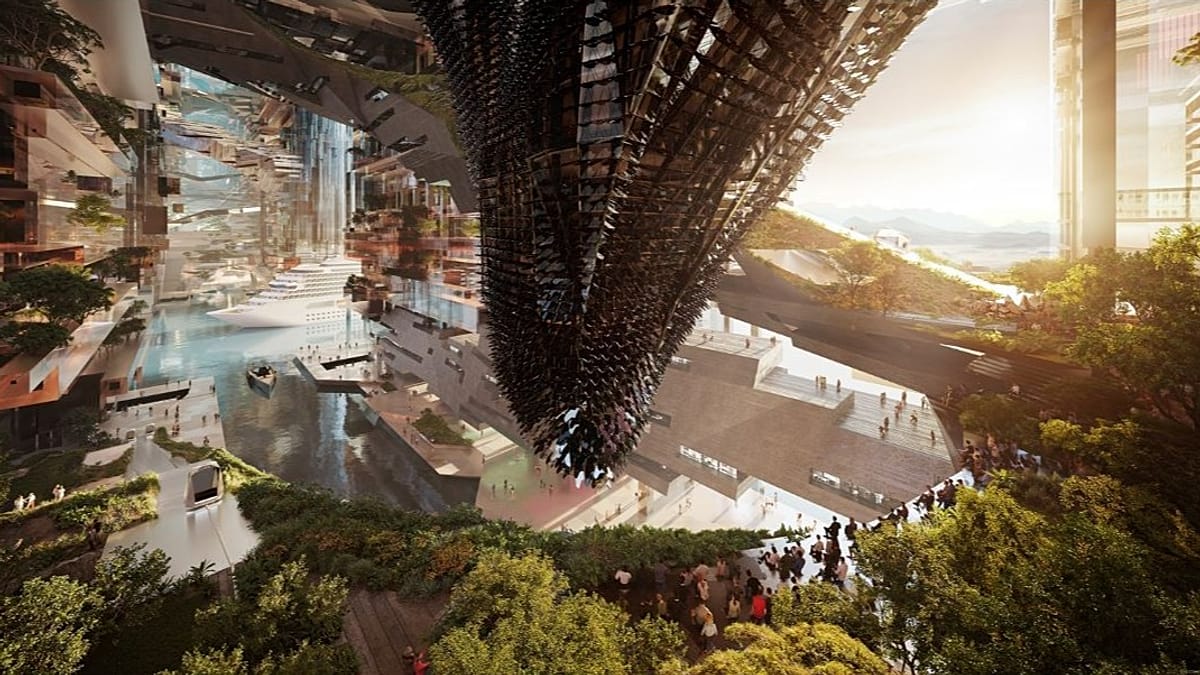
Saudi Arabia is significantly scaling back its flagship Neom megaproject after years of cost overruns and delays, indefinitely postponing the 2029 Asian Winter Games at Trojena and planning a radical redesign of The Line. Originally projected at around $500 billion (with some reports claiming up to $9 trillion), Neom is being refocused toward industrial uses such as data centres and AI hubs, backed by the Public Investment Fund (~$1tn), as Riyadh contends with subdued oil prices (Brent ~ $60/bbl) and pressure to show returns under Vision 2030. The downsizing raises execution and fiscal risk for PIF‑backed investments and delays expected economic diversification and tourism infrastructure ahead of major events like the 2030 Expo and 2034 World Cup.
Market structure: Downsizing Neom reallocates capital away from heavy EPC, hospitality and large-scale renewables toward digital infrastructure and industrial uses. Direct winners: data‑centre operators and cooling/desalination vendors (colocation REITs like DLR, EQIX), subsea/telecom suppliers; losers: global megaproject contractors (Vinci ACS.MC), luxury hospitality and on‑island real estate developers. Expect pricing power to shift from construction inputs down to land/utility providers and hyperscale colo operators over 12–36 months.
Risk assessment: Tail risks include a PIF liquidity shock forcing rapid asset sales, or political reprioritisation that cancels other Vision 2030 projects — both could widen Saudi sovereign spreads by 50–150bps in stressed scenarios. Near term (days–weeks) watch risk‑off flows; short term (3–12 months) contractor earnings revisions and capital reallocation; long term (1–5 years) secular upside in Middle East data‑centre demand if Saudi pivots fully to AI. Hidden dependency: desalinated cooling capacity and reliable power remain binding constraints for colocations.
Trade implications: Tactical long exposure to DLR/EQIX (1–3% each) and selective KSA ETF (KSA) on weakness captures the data‑centre pivot; short selective EPC names (DG.PA, ACS.MC) via puts or CDS to profit from orderbook downgrades over 6–12 months. Use options to time convexity: buy 6–12 month DLR/EQIX calls (5–10% OTM) and buy put spreads on large EPCs to limit premium spend; trim if PIF publishes a contrary capex plan within 60 days.
Contrarian angles: Consensus treats this as pure negative for Saudi growth, but PIF redeployment could spark M&A into global AI/cloud assets — a liquidity recycling that would lift tech infrastructure equities. The market may be overpricing permanent demand loss for Saudi real estate; historical parallels (post‑Expo Dubai corrections) show temporary pain then reallocation into higher‑growth sectors. Unintended consequence: construction weakness could force attractive asset sales by PIF, creating acquisition opportunities in 12–24 months.
AI-powered research, real-time alerts, and portfolio analytics for institutional investors.
Request DemoOverall Sentiment
moderately negative
Sentiment Score
-0.45
