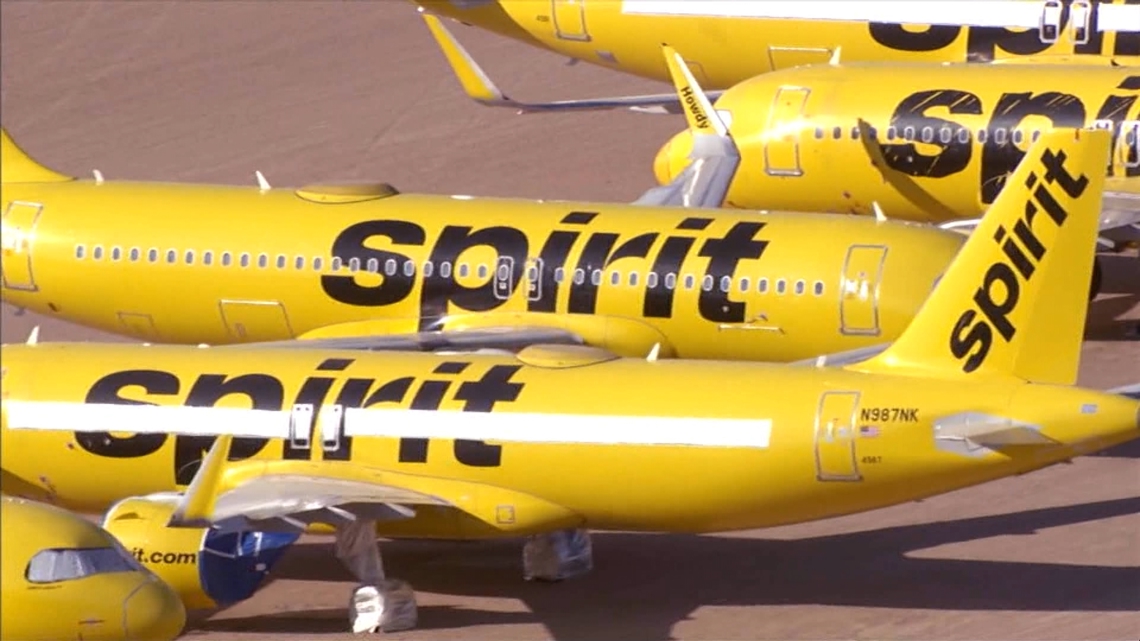
Spirit Airlines' collapse left about half a billion dollars of leased aircraft stranded, forcing rapid repossession efforts and the relocation of more than two dozen jets to Arizona. The article highlights operational shutdown, abandoned aircraft at airports, and potential outcomes including re-lease, sale, or scrapping. The impact is material for Spirit, its lessors, and the broader commercial aircraft leasing ecosystem, though it is not a market-wide shock.
The immediate winners are the aircraft lessors and the service ecosystem that facilitates rapid re-marketing of stranded assets. The key second-order effect is that repossession speed materially improves recoveries: every day an idle narrowbody sits outside maintenance cycles and revenue service, the pool of buyers narrows and storage costs accumulate, so the “fire-sale” discount is far more about operational execution than aircraft quality. That argues less for a long-duration impairment story and more for a short, sharp recovery event that shifts value from the operating carrier to the lessor stack. The more interesting implication is for competitors in ultra-low-cost travel. Capacity removal is bullish for surviving peers because it tightens short-haul seat supply faster than the market can reallocate it, especially on leisure-heavy routes where demand is price elastic but not perfectly substitutable. However, this is only a temporary pricing tailwind if larger network carriers backfill selectively; the real gain accrues to operators with strong ancillary monetization and the ability to absorb distressed aircraft at favorable lease rates. For the restructuring tape, the risk is that this becomes a template for other overlevered airlines: lessors will likely price future deals with tighter maintenance covenants, higher security deposits, and more aggressive repossession rights, raising the cost of capital for marginal operators across the sector. The catalyst horizon is days to weeks for asset recovery headlines, but months for lease-rate resets and carrier margin pressure. Contrarian view: the market may overestimate residual value destruction here; if engines are separable and airframes can be redeployed quickly, recoveries could be better than the headline bankruptcy suggests, limiting downside for the better capitalized lessors.
AI-powered research, real-time alerts, and portfolio analytics for institutional investors.
Overall Sentiment
strongly negative
Sentiment Score
-0.55
