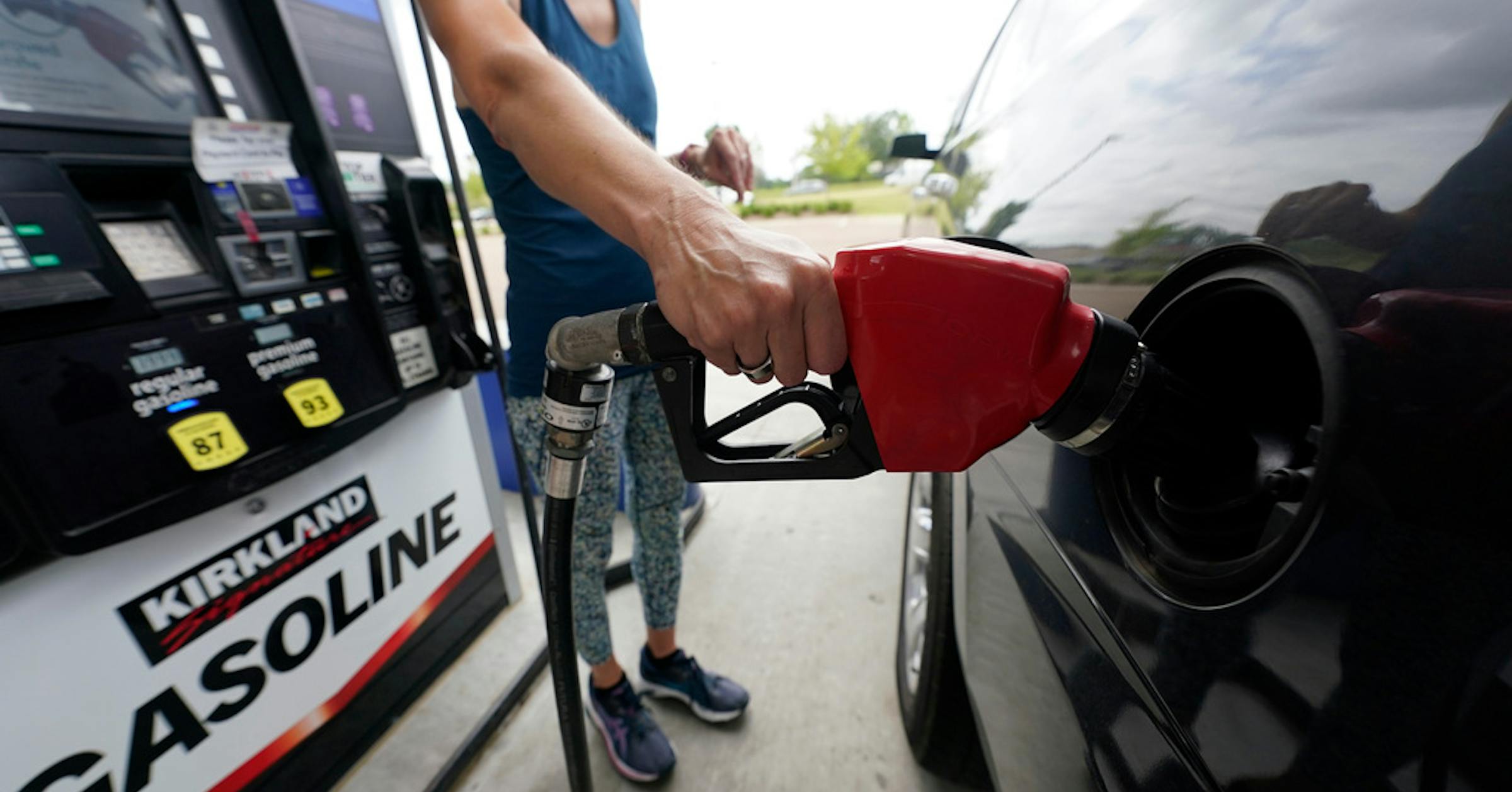
Minnesota's gas average climbed to $3.68/gal (up about $0.18 over the past few days), with several stations near $4; national averages are $4.08 (GasBuddy) and $4.16 (AAA). Crude oil is trading above $110/barrel — roughly a 60% rise since Feb. 28 amid the U.S.-Israeli conflict with Iran — and crude now represents about $2.03 of the $3.68/gal state average. The crude-driven increase is exerting upward pressure on consumer fuel costs and could weigh on consumer spending and transportation-cost sensitive sectors.
A fast, regional uptick in retail gasoline typically reflects an outsized move in local gasoline crack spreads rather than a one-to-one pass-through from crude. Midwest pipeline and refinery configuration makes PADD2/Midwest prices more sensitive to shortfalls of blending components and to localized refinery maintenance — meaning spot retail moves can persist even if headline crude stabilizes.
Demand-side elasticity remains the key governor: in the first 1–3 months consumers are price-inelastic and substitution is muted, so refiners capture most of the margin expansion. Over 3–12 months, however, sustained higher pump prices depress non-essential consumption and can re-route spending away from discretionary categories concentrated in lower-income and rural Midwestern cohorts.
Second-order beneficiaries include regional refiners with complex conversion capacity and associated logistics owners (pipeline/terminal operators) that can monetize tighter spreads; losers are small-format discretionary retailers and local freight/transport operators facing higher input costs and compressed margins. Political or market interventions (strategic product releases, rapid refinery turnarounds, or an easing in geopolitical risk) are the main short-term reversal mechanisms; structural responses (demand destruction, fleet efficiency) play out over quarters to years.
Watch the gasoline-to-crude crack and pipeline throughput nominations as near-term trading signals: a sustained 20–30% move higher in Midwest gasoline cracks versus national cracks would be the clearest conviction signal to rotate into refiners and midstream exposure for a 1–3 month sized trade, while a cross-Atlantic easing or SPR-like release would be the fastest route to roll back exposure.
AI-powered research, real-time alerts, and portfolio analytics for institutional investors.
Request DemoOverall Sentiment
mildly negative
Sentiment Score
-0.25
