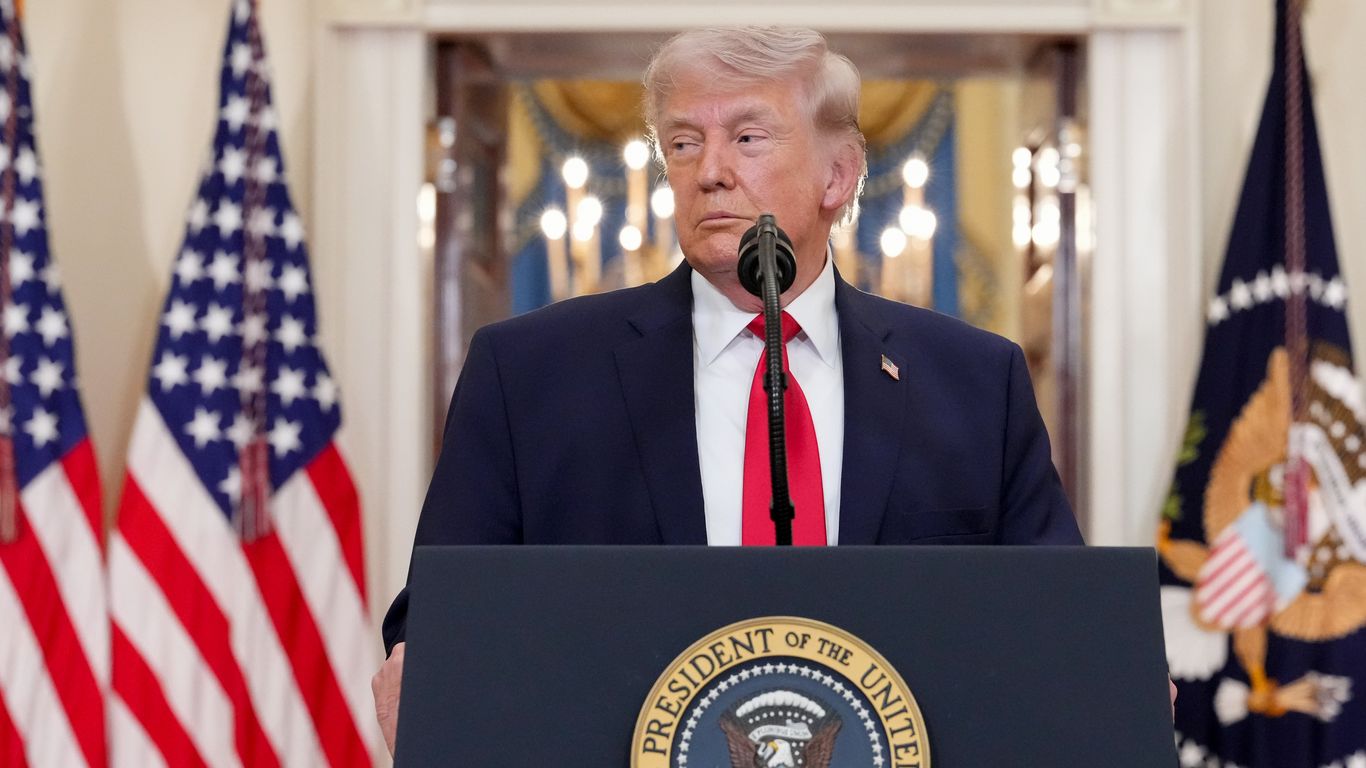
10-day deadline expires Monday: President Trump threatened to bomb Iranian power plants and bridges starting Tuesday if Iran does not open the Strait of Hormuz. Indirect talks via Pakistan, Egypt and Turkey have produced no significant progress; Tehran has threatened retaliatory attacks and accused the U.S. of planning war crimes. The escalation poses a clear risk to shipping through the Strait and could materially increase oil-price volatility and broader market risk.
Markets are already repricing a non-linear premium into energy, shipping and defense via elevated forward volatility rather than a gradual supply shock; a short closure or targeted strikes would translate into a fast, front-loaded spike in Brent/WTI over 1–4 weeks followed by mean reversion if shipping lanes reopen. If seaborne flows are interrupted at even ~15–25% of previous volumes, expect crude differentials to widen, bunker and war‑risk surcharges to add the equivalent of $3–8/bbl to delivered cost, and product arbitrage to break as cargo rotations lengthen.
Second-order winners will be assets that capture time-charter or spare-capacity rents: global tanker owners and selective LNG sellers (fixed long-term offtakes insulated from spot volatility). Losers extend beyond energy producers — integrated trade, containerised supply chains and just-in-time manufacturers face route-driven lead‑time inflation (conceivably +10–20% in transit times) that will compress near-term margins and push inventories higher, benefiting logistics operators with excess capacity but hurting regional tourism/airlines and ports exposed to Gulf traffic flows.
Tail risk is asymmetric: an escalation to wider kinetic exchange or regional strikes on export infrastructure would propagate into sustained price dislocations lasting months and force structural rerouting investment (naval escorts, larger tanker builds), while credible diplomatic deterrence or a limited negotiated reopening would rapidly unwind most premia. The options market currently overstates probability of protracted closure; tactical spread plays and pairing volatility buys with directional hedges provide superior risk-adjusted exposure versus naked long oil positions.
AI-powered research, real-time alerts, and portfolio analytics for institutional investors.
Request DemoOverall Sentiment
strongly negative
Sentiment Score
-0.85
