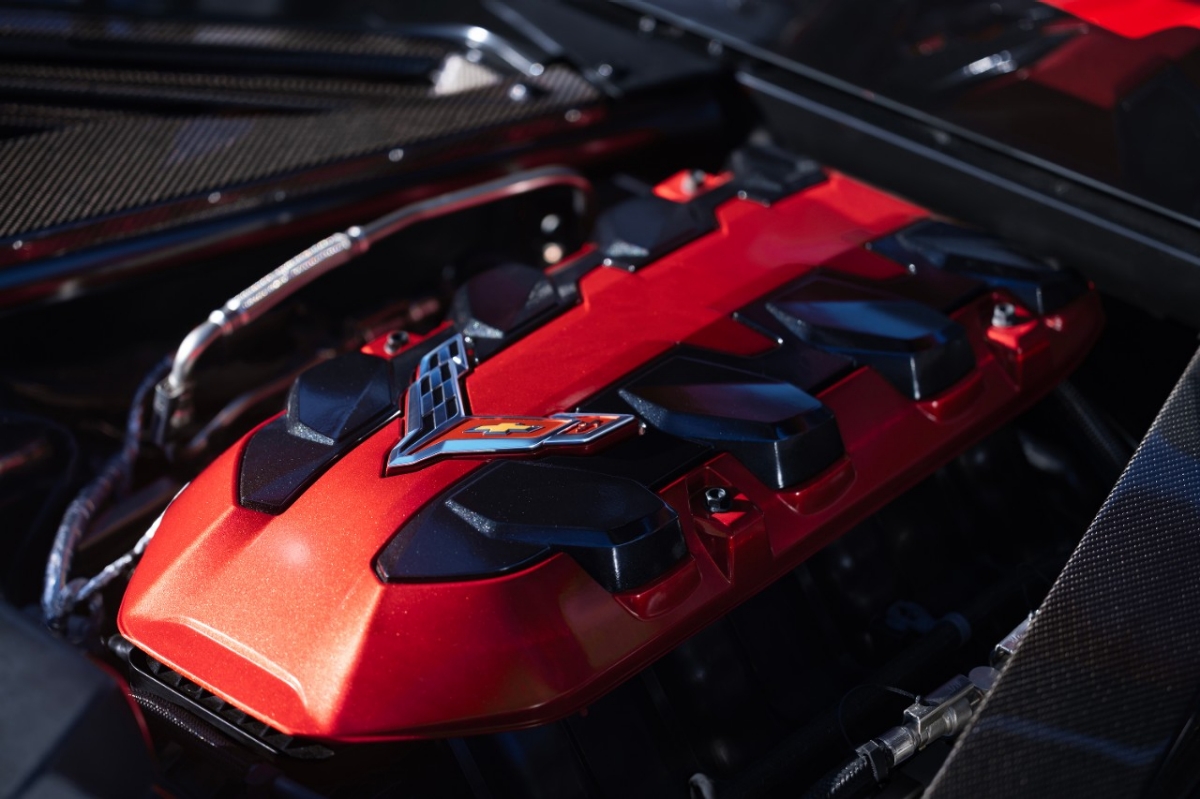
GM unveiled the 6th-generation Chevrolet Small Block 'LS6' — a 6.7L naturally aspirated V8 delivering 535 hp @ 6,100 RPM and 520 lb-ft @ 4,600 RPM, with a 13.0:1 compression ratio. The engine debuts in the 2027 Corvette Stingray, Grand Sport, and Grand Sport X and achieves displacement via stroke increase from 92 mm to 100 mm (bore 103.25 mm), plus forged internals, port+direct injection, and a new oiling system; assembly will be in Flint, MI. This is a product-halo event that should bolster Corvette demand and GM’s performance credentials, but it is likely to have only modest near-term impact on GM equity prices.
The technical choices behind GM’s new small‑block generation (longer stroke, much higher compression coupled with advanced control systems) shift value from raw mechanical components toward software, calibration, and fuel‑system subsystems. That creates recurring revenue and higher margin expansion opportunities for Tier‑1 suppliers that own ECU/fuel‑injection stacks and OTA calibration services, and it raises the bar for aftermarket players who can monetize performance upgrades and calibration remaps.
Bringing assembly back to Flint is more than symbolic — it shortens specialized supply chains for high‑precision forged components and centralizes quality feedback loops, compressing NPI cycles. That improves time‑to‑volume for performance variants (high‑ASP trims) but also concentrates operational and labor risk on one facility; a single stoppage there would have outsized knock‑on effects to inventory and dealer deliveries in the first 6–12 months.
Strategically, the car gives GM a product halo that can lift average transaction prices and dealer gross on performance trims, creating immediate P&L leverage even as industry economics push toward EVs. The primary reversal risks are regulatory shifts (credit regimes, stricter city emissions), fuel‑price shocks that change buyer priorities, or any software/controls recall that undermines the “advanced controls” premise — each could compress the premium GM expects to capture within 3–12 months. Key near‑term catalysts to watch: first customer deliveries, option‑mix on performance packages, supplier sell‑in cadence, and EPA certification outcomes.
AI-powered research, real-time alerts, and portfolio analytics for institutional investors.
Request DemoOverall Sentiment
strongly positive
Sentiment Score
0.60
Ticker Sentiment
