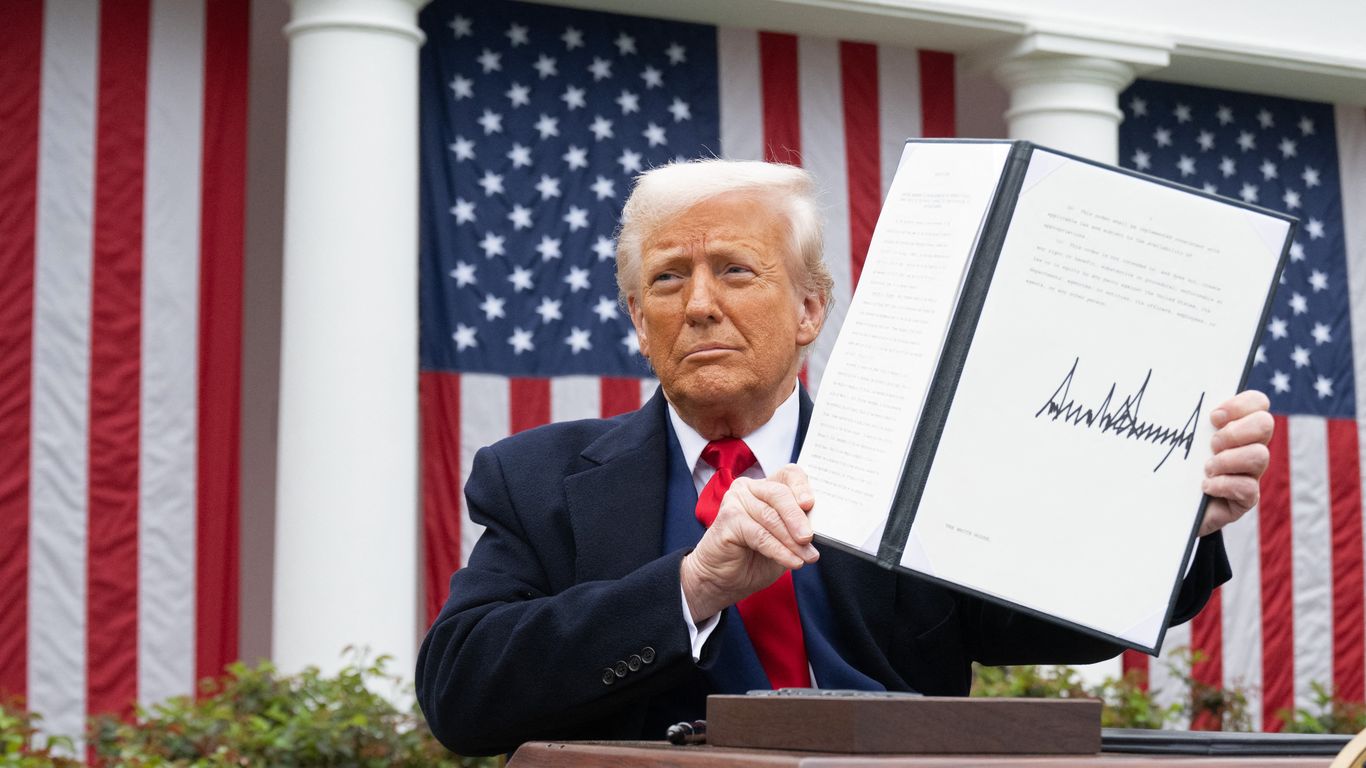
The Supreme Court has expedited an appeal concerning the legality of President Trump's tariffs, a high-stakes case that will significantly impact future trade policy and potentially hundreds of billions of dollars in government revenue. This follows a May ruling by the Court of International Trade which found Trump exceeded his authority under the International Emergency Economic Powers Act. With initial briefs due September 19 and oral arguments set for the first week of the November session, the expedited review underscores the critical nature of this decision for global trade.
The Supreme Court's decision to expedite an appeal regarding the legality of presidential tariffs introduces a significant, near-term catalyst with major macroeconomic implications. The case, which will be argued in the first week of November, centers on the President's authority under the International Emergency Economic Powers Act (IEEPA) and follows a lower court ruling that found the tariffs were an overreach of executive power. The outcome has the potential to directly impact hundreds of billions of dollars in U.S. government revenue and fundamentally alter the landscape of global trade policy. The high market impact score of 0.8 is justified by these stakes, as a ruling could either dismantle or solidify the current administration's protectionist trade framework, creating a binary and highly uncertain event for markets.
AI-powered research, real-time alerts, and portfolio analytics for institutional investors.
Request DemoOverall Sentiment
neutral
Sentiment Score
0.00
